

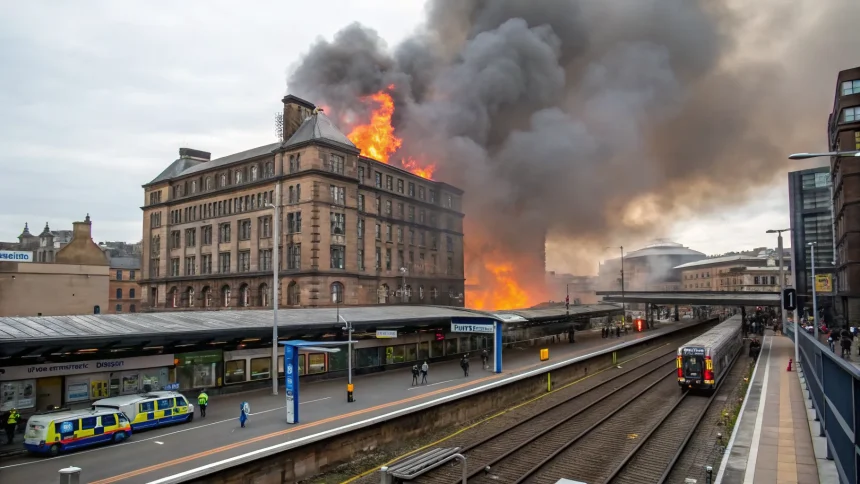
A fierce blaze near Glasgow Central Station shut down Scotland’s busiest rail hub on Monday, stopping trains across the network and forcing commuters to seek other routes. Fire crews battled flames that engulfed a four-story building steps from the station concourse, triggering a rapid closure of platforms and halting travel to, from, and through the city center.
“A major fire in the heart of Glasgow crippled Scottish train services Monday as firefighters worked to douse the blaze that destroyed a four-story building near Scotland’s busiest railway station.”
Authorities closed Glasgow Central as a safety measure while crews contained hotspots and checked for structural collapse. The shutdown rippled across regional and intercity lines, affecting passengers from the Central Belt to long-distance services.
What happened near the station
Flames broke out in a building adjacent to the station footprint, sending thick smoke over the tracks. The fire destroyed the structure and prompted an immediate response from firefighters and transport officials. Teams focused on preventing spread to nearby properties and critical rail infrastructure.
“Glasgow Central Station was closed and all travel to, from and through the station was …”
Officials did not give an immediate cause. Investigators are expected to inspect the site once it is safe. Early efforts centered on cooling the building shell and securing streets to allow emergency access.
Impact on travel and the wider network
The closure hit a station that handles tens of millions of entries and exits each year. Disruption extended well past Glasgow, with knock-on delays across the network as trains and crews were displaced. Commuters faced crowded buses, limited taxis, and longer walks between alternative stops.
- Regional services into Central were suspended or diverted where possible.
- Some trains terminated early to keep lines clear for emergency work.
- Passengers were advised to check live updates and consider non-rail options.
Industry planners often say major hub closures can take hours or days to unwind. Staff must reposition rolling stock, reopen platforms in phases, and test signaling before full service returns. That process reduces the risk of fresh delays after the initial disruption.
Emergency response and safety checks
Firefighters used aerial appliances to attack flames from above, a common tactic around dense city blocks. Thermal imaging is likely being used to search for hotspots and confirm the building is stable enough to approach. Rail engineers will inspect overhead lines, track circuits, and station roofs for heat and smoke damage.
Passenger safety drove the closure decision. Large stations carry electrical and signaling equipment that can be sensitive to heat. Debris, falling glass, and smoke can also create hazards on open platforms.
Recent history and why it matters
Glasgow has experienced high-profile urban fires in recent years, including blazes that damaged historic buildings and disrupted central streets. City authorities have since sharpened evacuation plans and rapid cordons for incidents near transport hubs. Monday’s actions followed that playbook, prioritizing containment and public safety over keeping limited services running.
Large fires near rail lines are rare but costly. They interrupt freight paths and strain bus and road networks. Retailers in the city center can see footfall drop when stations close. For travelers, even a few hours of closure can turn into missed shifts or canceled appointments.
What passengers should do next
Officials are urging riders to check operator websites and social feeds for step-by-step reopening plans. Staggered service is common after an event like this, with a slow rebuild through off-peak periods.
- Confirm your train before leaving home, and expect crowding.
- Allow extra time and have a back-up route by bus or subway.
- Keep tickets or receipts for possible delay compensation.
Travelers may see temporary timetables as operators reset train locations and crew shifts. Some late-night services could be prioritized to position trains for the morning peak.
The road to recovery
Full restoration depends on structural inspections and rail safety checks near the burned building. Once emergency teams hand back the site, engineers can reopen tracks and platforms in stages. Station retail units closest to the scene may stay closed longer as insurers and surveyors assess damage.
Monday’s fire shows how a single incident can stall a national network built on tight schedules and shared assets. The coming days will test how fast managers can clear backlogs while keeping riders safe.
For now, the focus is on stabilizing the site, restarting core services, and giving clear guidance to passengers. The next key updates will likely cover platform reopenings, diversion removals, and whether any speed limits remain near the affected area.