

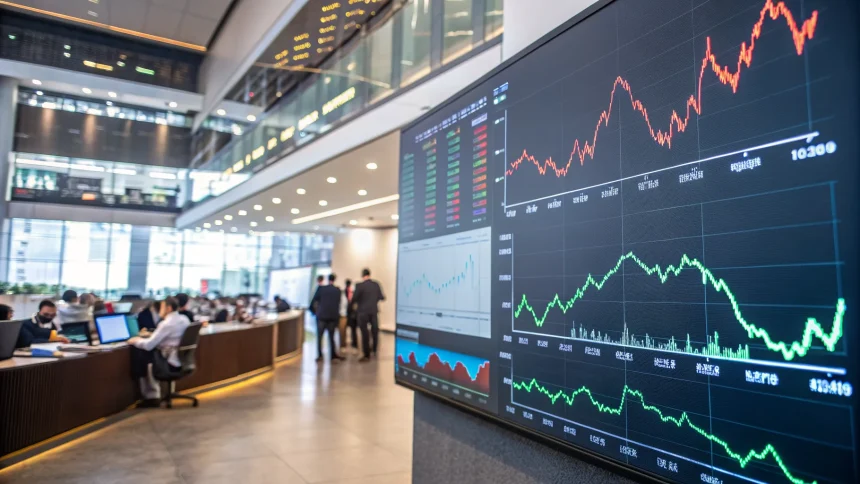
Midday stock surges and slides often set the tone for the rest of the session, shaping headlines and investor mood before the closing bell. On a busy trading day, sharp moves around lunch can signal changing views on earnings, policy, or risk. Traders scan these swings for clues on where the market may head next and why.
These crosscurrents tend to build between the opening rush and the final hour, when volume can thin and single headlines carry more weight. While afternoon reversals are common, midday action helps investors spot which themes are driving the market and which sectors are lagging.
“These are the stocks posting the largest moves midday.”
Why midday moves matter
By noon, Wall Street has processed the morning’s earnings, economic data, and remarks from business leaders. Price reactions can reveal how expectations lined up with reality. A strong jump can show confidence in a company’s outlook. A steep drop can reflect doubts about margins, debt, or growth.
Midday also captures the first read on sector rotation. If a handful of industry groups lead or lag at once, that can hint at a shift in sentiment. It is a window into positioning before the heavier trading of the close.
- Earnings surprises often drive the biggest single-name moves.
- Economic releases can sway rate-sensitive shares and banks.
- Guidance changes can outweigh past-quarter results.
- Regulatory news can spark fast re-pricing across a sector.
Reading the signals without overreacting
Large intraday shifts can tempt quick trades, but context is key. Veteran market watchers look beyond the headline to volume, breadth, and options activity. A jump on light volume may fade. A fall with heavy selling across peers may have staying power.
Risk management shapes how investors respond. Some trim winners after sharp spikes to lock in gains. Others add during weakness if the long-term thesis holds. Many wait for the close to confirm a move, reducing the chance of a midday head fake.
Earnings, rates, and policy: the usual catalysts
Corporate results remain the top driver. When companies beat on sales but miss on profit, stocks can swing as traders debate costs and pricing power. Guidance for the next quarter often matters more than the backward-looking figures.
Interest rate expectations can move markets in minutes. Hints about inflation or central bank policy tend to sway banks, homebuilders, and high-growth names. A shift in the outlook for borrowing costs can reset valuations across the board.
Policy and regulation also spark sharp moves. A new rule, merger review, or court ruling can reprice entire industries. Investors watch official statements and filings mid-morning, when many updates hit the wires.
How professionals track midday leaders and laggards
Portfolio managers use watchlists, price alerts, and sector dashboards to spot outsized movers by lunchtime. They compare moves to recent volatility to judge whether the swing is unusual or within range.
They also scan peer reactions. If only one company in a group is rising, the story may be company-specific. If several move together, a broader theme may be at work. That check helps separate signal from noise.
What to watch through the close
The final hours test whether midday momentum holds. Closing auctions can add volume and change prices, especially for index names. Many investors look for confirmation from market breadth and new highs versus new lows.
For long-term savers, large midday moves can create entry or exit points but should fit a plan. Diversification and a clear time horizon help avoid whipsaw decisions driven by one headline.
Midday action will continue to flag the day’s strongest stories. Investors watching volume, sector trends, and guidance can better judge if a move reflects a lasting shift or a brief swing. The next catalysts to monitor include fresh earnings, updated corporate outlooks, and any signals on rates. Those will likely decide whether the day’s early leaders finish on top—or give way into the close.