

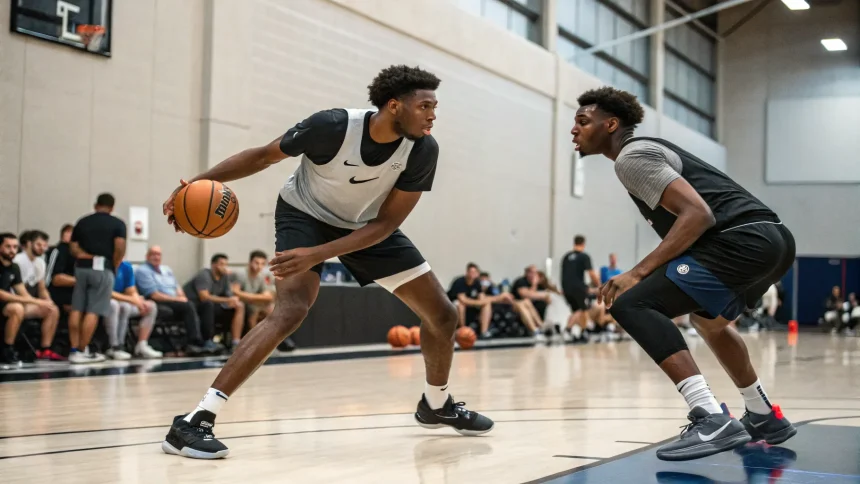
A draft class headlined by A.J. Dybantsa and Darryn Peterson is sharpening the fight for every inch of the board, where a small slide can cost a fortune. With scouts calling the group deep and top-heavy, the race to secure early slots is shaping every showcase, workout, and medical screening ahead of draft night.
“In an NBA draft that most experts think is loaded with talent, led by A.J. Dybantsa and Darryn Peterson, any player who drops even a spot or two will miss out on millions.”
That warning captures the money math of the rookie scale. In recent years, the gap between adjacent picks has been wide enough to change a player’s first contract, their extensions, and endorsement leverage. As front offices stack their boards, prospects are calibrating risk, from which events to attend to how hard to push through nagging injuries.
Why draft position matters
The NBA’s rookie scale locks in salaries for first-round picks, with teams often signing players at 120% of the scale. The difference between pick Nos. 1 and 5 can be more than $10 million over four years, and even a one-slot slide can trim seven figures from guaranteed money.
Recent cap sheets show the first pick entering year one above $10 million, while the fifth pick starts several million lower, with each year escalating. Second contracts often build on early usage and awards tied to team investment, which tracks closely with draft slot. A higher pick gets more minutes, more patience, and more chances to trigger bonuses or meet criteria for escalators down the line.
- Top-five picks can see eight-figure differences in four-year totals.
- Adjacent first-round slots often vary by more than $1 million across the deal.
- Higher picks command stronger endorsement terms and appearance fees.
The race at the top: Dybantsa, Peterson, and a crowded elite tier
A.J. Dybantsa and Darryn Peterson sit at the front of early boards, according to scouts and draft analysts. Both wings offer modern size and scoring skill, the profile teams crave. The question is less who is worthy of No. 1 and more how many teams view the top five as interchangeable. In a class this strong, the tie-breakers grow more granular: off-ball defense, free-throw rate, screening effort, and medical histories.
For prospects just outside the top group, the pressure is sharper. A slow combine sprint or a shaky pro day can push a player from the back of the lottery into the teens. That shift changes not only guaranteed salary, but also the odds of landing with a franchise that can offer immediate minutes.
High-stakes decisions for prospects
Agents and players face a series of choices that can steady or sink a draft range. Some limit workouts to teams within a perceived window to prevent negative comparisons. Others bet on volume, meeting with many teams to widen interest.
Medical transparency has become a swing factor. Teams prize full imaging and clear timelines for any prior injuries. With money on the line for every slot, players are weighing when to compete, when to rest, and how much data to share.
Name, image, and likeness income further complicates the calculus. For elite teenagers, NIL earnings can bridge the gap if they choose a development path with less immediate pay. But the rookie scale is still the largest guaranteed pool on the table, and it is inseparable from draft position.
What teams stand to gain—or lose
Front offices see opportunity in a deep class. If five or six prospects carry similar grades, a franchise drafting fifth might land a talent with top-three upside. That dynamic can reward patience and scouting discipline, especially for teams that lean on developmental track records rather than short-term needs.
Trade chatter often spikes when the class is thick near the top. A team targeting a single player may pay more to move up one or two spots, knowing the rookie-scale difference is marginal compared with the value of landing a franchise piece. Conversely, a club comfortable with a cluster of prospects might trade down, add future picks, and still secure a starter.
Looking ahead
As workouts begin and analytics teams refine models, the spread between picks will take shape. Players will jostle for interviews, fine-tune shooting mechanics, and manage the calendar to stay fresh. Teams will probe for maturity, role fit, and medical clarity, knowing one red flag can change millions on both sides.
The takeaway is simple: in a class this strong at the top, the market punishes even small slips. Expect cautious scheduling, selective workouts, and intense medical vetting to define the run-up. If early signs hold, the first five picks could set off a chain reaction across the board, with real money—and long-term careers—riding on every decision.