

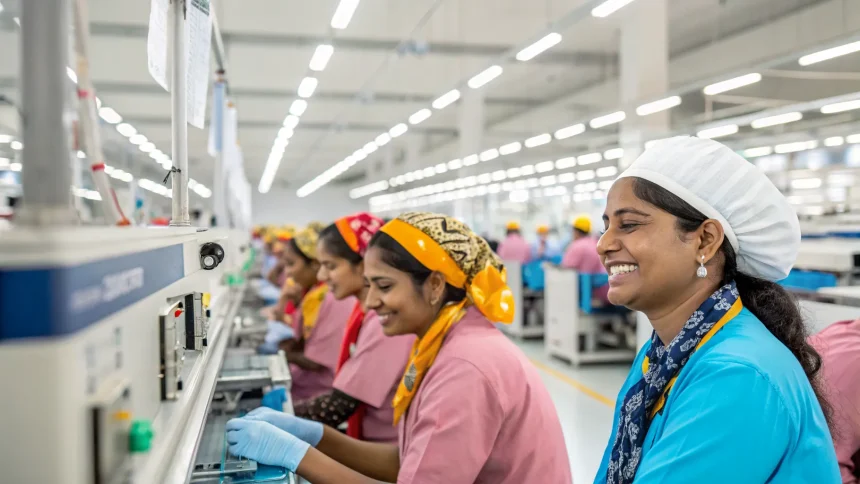
Women are gaining ground in India’s economy, with a growing number of female founders building firms in manufacturing and hiring more women along the way. The shift is visible in non-agricultural work, where participation has risen. It is strongest in own-account enterprises and factory floors, pointing to a quiet but steady change in who runs businesses and who gets hired.
Background: A Shift From Farms to Firms
India has long seen most women concentrated in farm work or unpaid household roles. That is changing as urbanization expands and supply chains formalize. Micro and small enterprises, often started with family savings, are pulling more women into paid work. The rise of self-run ventures—known as own-account enterprises—shows women taking control of income and hours, even when capital is limited.
“Women’s economic involvement in India is growing.”
Several factors are nudging this shift. Cheaper digital tools make it easier to sell and manage inventory. Contract manufacturing and vendor networks lower entry barriers. Local training schemes and peer networks help first-time founders learn compliance and quality control.
Manufacturing Leads the Way
Manufacturing stands out as a hub for female-led firms. Many women-owned units begin with familiar product lines—textiles, apparel, food processing, home goods—then move into higher-value items as orders grow. Production work can be scheduled and measured, helping small teams scale without large upfront staffing costs.
“More female entrepreneurs are leading businesses, especially in manufacturing.”
These businesses also serve as anchors for local hiring. Owners often recruit women from nearby neighborhoods, train on the job, and set shift timings that fit caregiving needs. That creates a loop where female ownership expands female employment.
“These businesses are also creating jobs for women.”
Rising Participation Outside Agriculture
The most visible change is in non-agricultural roles. Retail, logistics support, assembly lines, and procurement are drawing more women with secondary education. As factories adopt safer transport and predictable shifts, retention improves. This widens the talent funnel for supervisors and quality leads.
“Overall workforce participation for women in the non-agricultural sector has increased.”
Own-account enterprises remain a key entry point. They demand limited floor space and allow flexible schedules. For many, they are a bridge to formal registration and bank credit.
“Their presence is particularly strong in own-account enterprises and the manufacturing sector.”
Challenges and Policy Signals
Barriers persist. Credit access is uneven, and collateral rules can shut out first-time founders. Compliance and tax filings are time-consuming for small units. Social norms still restrict late shifts and long-distance travel for work.
Public and private programs are trying to ease these limits. Key measures include:
- Targeted credit lines and guarantee schemes for women-owned MSMEs.
- Cluster-based training for quality standards and packaging.
- Safe transport and shift planning to support retention.
Industry groups report that firms with vendor diversity targets are bringing more women-run units into supply chains. Large buyers that offer steady purchase orders help small factories plan cash flow and invest in machinery.
Societal Impact and What Comes Next
The ripple effects extend past wages. When women move into paid roles, household spending tends to shift toward education and health. Local economies benefit as small factories source inputs and services nearby. Visibility matters too. A woman running a workshop can spark others to start or seek training.
Analysts expect steady gains where three conditions align: predictable demand from buyers, basic infrastructure, and mentoring networks. Data gaps remain, but the trend line is clear in industrial belts and tier-two cities.
India’s next test is scale. If more own-account ventures formalize and move up the value chain, the hiring impact could grow. Clear procurement pathways, simple tax compliance, and affordable credit will be key levers.
For now, the signal is positive. Female founders are building in factories, women are filling new roles off the farm, and communities are adjusting to a different map of work. The coming year will show whether these gains hold as firms face input costs and export swings. Watch for larger buyers to expand vendor pipelines and for states to back safe transport and training—moves that can turn early progress into lasting change.