

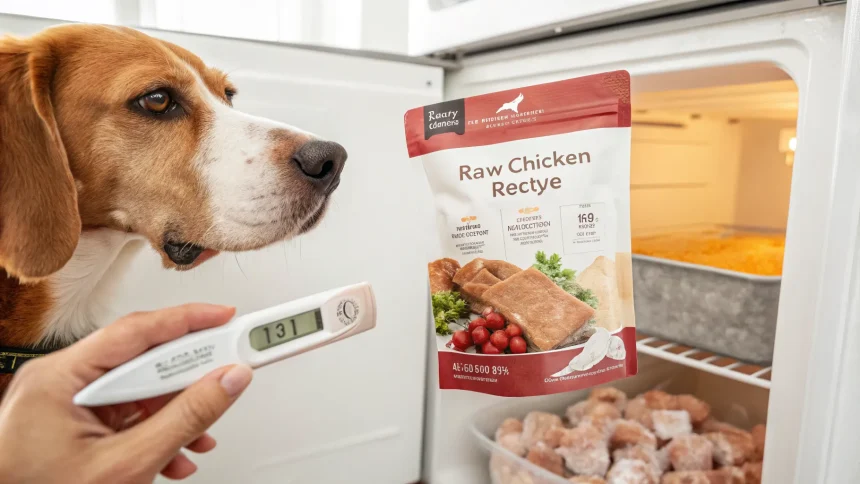
Albright’s Raw Pet Food of Fort Wayne, Indiana, is pulling a popular raw dog food from the market after a contamination alert. The company said it is recalling its Chicken Recipe for Dogs Complete and Balanced due to a possible salmonella risk. The move affects pet owners nationwide and raises fresh concerns about raw pet diets and food safety.
Albright’s Raw Pet Food of Fort Wayne, Indiana, is recalling its Chicken Recipe for Dogs Complete and Balanced due to the risk of salmonella contamination.
The notice signals stepped-up caution for households that feed raw diets. Salmonella can sicken pets and spread to people handling the food, bowls, or surfaces. Public health agencies advise immediate action to prevent illness.
What was recalled and why it matters
The recall involves Albright’s Chicken Recipe for Dogs Complete and Balanced, a raw product meant to serve as a full diet. The company identified a contamination risk and initiated the removal from distribution. No lot numbers or dates were disclosed in the announcement provided, so families are urged to check any Albright’s chicken recipe products on hand and take precautions.
Raw pet foods are more likely to carry harmful bacteria than cooked products. That risk extends to people, especially children, older adults, and anyone with weakened immunity. Even healthy pets can shed salmonella without looking sick, spreading germs in homes.
Known health risks from salmonella
Salmonella infections can cause fever, diarrhea, stomach cramps, and vomiting. The illness can be severe in vulnerable groups. The U.S. Centers for Disease Control and Prevention estimates salmonella causes about 1.35 million infections and 420 deaths in the United States each year.
- Pets: Lethargy, loss of appetite, fever, vomiting, and diarrhea, sometimes with blood.
- People: Diarrhea, fever, stomach cramps; severe cases may require medical care.
Anyone who handled the product and now feels sick should contact a healthcare provider. Pet owners who see signs of illness in their animals should call a veterinarian.
Company response and consumer steps
By issuing a recall, the company is attempting to remove potentially unsafe food from circulation. Retailers typically pull affected items, and distributors pause shipments. Consumers are the last line of defense at home.
- Stop feeding the product immediately.
- Seal and discard it in a secure trash bin, or follow retailer guidance for returns.
- Clean and disinfect refrigerators, freezers, bowls, utensils, and surfaces that touched the food.
- Wash hands with soap and warm water after handling pet food or waste.
Households should also clean pet bedding and any area where the food may have been prepared or eaten. Use a bleach solution or a disinfectant labeled to kill salmonella.
Regulatory and industry context
Most U.S. pet food recalls are voluntary and posted by the Food and Drug Administration. The FDA warns that raw pet foods can carry pathogens, and it advises careful handling. In 2020, Albright’s issued a similar recall for a chicken recipe due to salmonella, highlighting a recurring risk linked to raw poultry formulas.
Scientists note that pathogens in raw diets pose a dual hazard: direct illness in pets and secondary transmission to people. The risk is higher in kitchens where raw pet food is thawed alongside human food. Experts recommend dedicated preparation tools and strict hygiene if families choose raw feeding.
What to watch next
Investigators typically review production records, supplier testing, and sanitation practices after a recall. Further details may include lot numbers, distribution dates, or lab results. Retailers may offer refunds or replacements. Consumers should monitor company updates and FDA alerts.
Veterinarians advise owners to consider the trade-offs of raw diets. If families stay with raw food, they should follow safe handling steps. If they switch, gradual transitions can protect digestive health.
This latest recall is a reminder that pet food safety affects the whole household. Prompt disposal, careful cleaning, and close attention to symptoms can reduce the risk. Families who suspect illness should seek medical or veterinary care and report concerns to authorities. Continued surveillance and transparent testing data will be key to rebuilding confidence.