

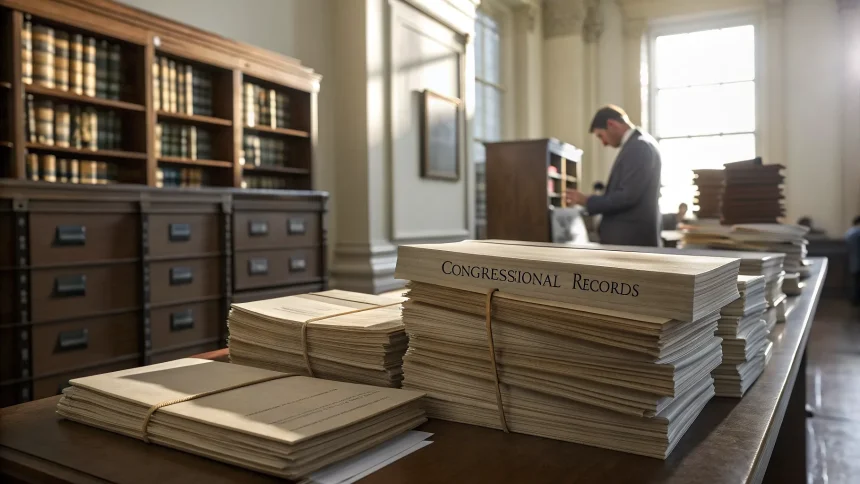
The Congressional Record appears each day Congress meets, steady and quiet, yet vital to how the nation’s legislature works and how the public learns what it did. Produced in Washington and distributed in print and online, it logs debates, amendments, votes, and speeches that shape laws. Its regular arrival gives citizens, courts, scholars, and reporters a common record of who said what, when, and why.
The production of the Congressional Record is one of the unseen cogs in the congressional machine, arriving with little fanfare like a newspaper on the Capitol’s doorstep every day.
That description captures both its routine nature and its weight. While floor speeches draw cameras, the Record is where the talk becomes traceable history.
What the Record Does
The Congressional Record is the official chronicle of each chamber’s daily proceedings when Congress is in session. It is compiled from stenographic notes, member submissions, and official documents, then checked for accuracy before release.
Readers use it to follow the evolution of bills and to verify statements. Staff rely on it to prepare summaries and track legislative intent. Courts and agencies consult it to interpret laws.
- House and Senate debates and remarks
- Roll-call votes and procedural actions
- Amendments and bill texts entered in the record
- Member statements added as “Extensions of Remarks”
From Floor to File: How It Gets Made
On a typical day, official reporters record proceedings in real time. Editors then review transcripts for clarity and accuracy. Members have brief windows to make limited corrections to their remarks. The Government Publishing Office assembles the material into a daily issue. Digital versions are posted on federal websites, with searchable text and PDFs. Print copies are also produced for archival use and institutional readers.
Speed matters. Each edition must reflect a fast-moving chamber while meeting high standards. This balance of timeliness and precision is why the process, though routine, remains exacting.
Why a Daily Record Still Matters
In an age of clips and posts, a full, official transcript remains a guardrail. It offers context, continuity, and a neutral format. Researchers trace themes across sessions. Journalists verify quotes and track shifts in position. Constituents read how their representatives argued and voted.
The Record also anchors transparency laws and public access. It supports archivists who preserve legislative history. Without it, long-term understanding of policy would fracture into fragments.
Checks, Edits, and Public Trust
Accuracy is central. Edits are limited to grammar and minor clarifications, not changes to substance. Procedural notes mark when comments are inserted rather than spoken live. These guardrails help maintain trust in the document’s integrity.
Experts often warn that selective clips can mislead. The Record counters that risk by showing the full exchange, including questions, objections, and rulings from the chair. It gives the public the full story, not only the highlight reel.
Access and the Digital Shift
Today’s Record is easier to find than ever. It is available online for free, searchable by bill number, date, or topic. That shift has widened its audience beyond law libraries and Capitol offices. Students, civics teachers, and small local newsrooms now use it to check claims and understand policy debates.
Digitization also improves preservation. Search tools reveal patterns across sessions, helping analysts compare debates over time. Still, the print edition remains important for archival stability and citation.
Looking Ahead
The core challenge is the same as it was generations ago: be fast, be accurate, and be complete. As speech recognition improves and more data comes in real time, editors will face pressure to publish even faster. The risk is that speed can blur the careful review that gives the Record its authority.
The path forward likely blends quicker digital drafts with clear labels, followed by finalized editions for the permanent file. Clear standards and public education about what the Record is—and is not—will remain essential.
The daily issue may not draw headlines, but it sets the baseline for truth in the nation’s lawmaking. As long as debate continues, the work of recording it will carry quiet importance. Readers who want to know what happened, not just what trended, will keep turning to it.