

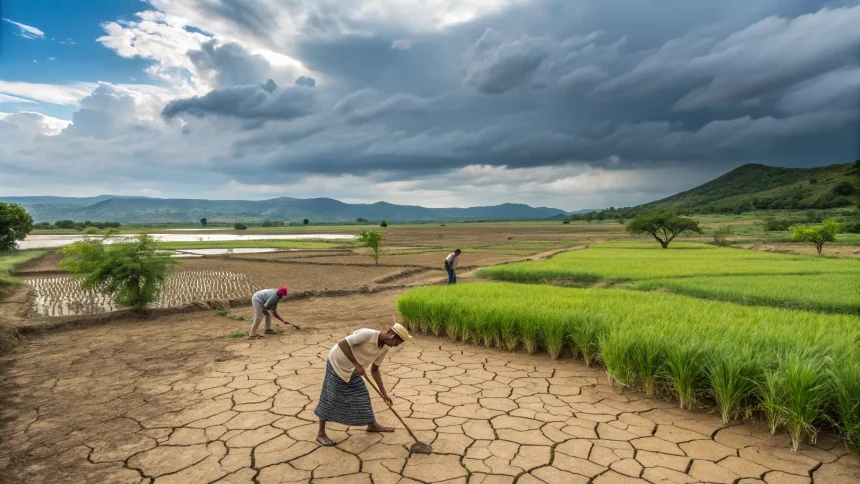
India is preparing for a weaker monsoon in 2026, with rainfall projected to fall short of the seasonal norm. The outlook has set off early concerns for food output, prices, and rural demand across the year. The forecast suggests a nationwide impact, though some pockets could avoid the worst. The India Meteorological Department plans to refine its view in May 2026 as new data arrives.
What the Forecast Says
“Precipitation is projected to be 8% below the Long Period Average.”
The projection points to a broad shortfall. Officials also caution that “most of the country is expected to receive less” rain than usual. At the same time, they note that “some regions may see normal to above-normal” rainfall. That split matters for sowing, irrigation, and power demand. An updated national forecast is due in May 2026.
Why the Monsoon Matters
The summer monsoon delivers about three-quarters of India’s annual rain. It feeds rivers, recharges aquifers, and sets up the farm year. A weak season can dent yields for rice, pulses, oilseeds, and sugar. It can also push up food prices. Rural wages, construction activity, and consumer spending often slow when rains falter.
The “Long Period Average,” or LPA, is a benchmark built from decades of rainfall data. A shortfall against the LPA signals stress for rain-fed districts. It also raises the risk of tighter water supply for cities and industry later in the year.
Regional Variations Could Shape Outcomes
The headline number masks large regional gaps. If the deficit lands mainly in central and western belts, rain-fed cotton, soybeans, and coarse cereals could be hit first. If the east holds up, paddy may fare better. Northeast and foothill regions often show separate patterns, which may spare tea and horticulture in some areas.
Reservoir levels at the start of June will be key. Full reservoirs can buffer a weak first half of the season. Low levels amplify risks for irrigation and power generation.
Food Inflation Risks and Policy Levers
“This forecast raises concerns for crop output and inflation.”
Food inflation often rises after weak rains. Prices for vegetables, pulses, and edible oils tend to move first. The pass-through to headline inflation depends on buffer stocks, imports, and taxes. The government can ease pressure through limits on exports, lower import duties, and the release of grain from public stocks.
The central bank tracks such shocks closely. A short monsoon can delay interest rate cuts or prompt a cautious stance. Fuel and power demand may rise if irrigation pumps run longer and hydropower falls, adding to input costs.
Farm Planning and Risk Management
States usually activate drought plans early when deficits loom. Extension workers advise on short-duration seeds, staggered sowing, and soil moisture retention. Crop insurance claims can rise if rainfall gaps persist into July and August.
Key steps that could blunt impact include:
- Pre-positioning seeds suited to late or erratic rain.
- Encouraging micro-irrigation and mulching to save water.
- Monitoring reservoir releases to balance farm, city, and power needs.
- Managing food stocks and imports to steady prices.
What to Watch Before the Update
The IMD will issue updated forecasts in May 2026. That release will refine regional maps, onset timing, and intra-seasonal breaks. Farmers and markets will look for signs of relief in core farm belts. Early June rainfall and sowing progress will set the tone for the Kharif season.
If the deficit narrows and distribution improves, damage may be limited. If the shortfall deepens and spreads, risks to output and prices will grow.
India’s farm economy has weathered weak monsoons before, helped by irrigation gains and policy support. Yet an 8% shortfall against the LPA calls for careful planning. The next forecast, reservoir readings, and sowing data will show whether the country faces a mild setback or a tougher season. Policymakers, farmers, and consumers will be watching the May update for clear signals on the path ahead.