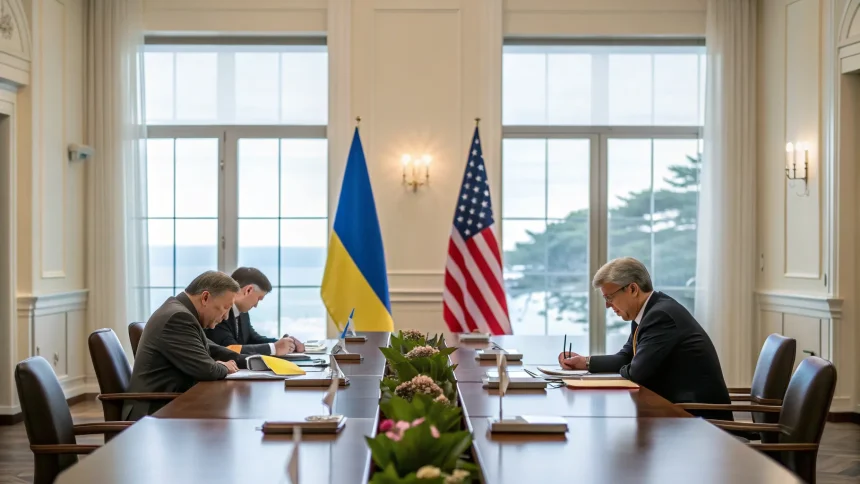
Ukraine has stepped back from its long-held goal of joining NATO, opting instead for Western security guarantees, President Volodymyr Zelenskyy said, signaling a major shift in wartime strategy with wide regional stakes.
The decision, announced by Zelenskyy, reshapes Kyiv’s diplomatic path as fighting with Russia continues. It raises urgent questions about how Western partners will formalize protections and whether such guarantees can deter further attacks without NATO’s collective defense pledge.
“Ukraine has relinquished its ambition of joining the NATO military alliance in exchange for Western security guarantees,” President Volodymyr Zelenskyy said.
Why This Matters Now
Kyiv’s bid for NATO membership has defined its security agenda since Russia annexed Crimea in 2014. That goal intensified after Russia’s full-scale invasion in 2022. NATO allies voiced strong political support but stopped short of offering a clear path to membership during wartime, citing the risk of direct conflict with Moscow and the need for reform benchmarks.
In recent years, partners created a patchwork of bilateral and multilateral pledges. The G7 issued a joint framework in 2023 outlining long-term defense support. Several countries, including the United States, the United Kingdom, Germany, France, Italy, Canada, and others, signed agreements to fund arms, training, and defense industry cooperation. Still, those deals do not carry NATO’s Article 5 mutual-defense clause.
What Security Guarantees Could Mean
The scope of the new guarantees remains to be detailed. Officials in Kyiv have previously sought multiyear military aid, integrated air defense, and rapid-delivery mechanisms for ammunition and missiles. Allies have debated binding commitments that could include:
- Stable funding for weapons and training over several years.
- Expanded air and missile defense coverage.
- Joint production of ammunition and drones inside Ukraine.
- Intelligence sharing and cyber defense support.
Such measures could harden Ukraine’s defenses and reduce uncertainty caused by shifting political winds in donor countries. The challenge is building a system strong enough to deter Russia without NATO membership.
Reactions From Allies and Opponents
NATO leaders have long said that membership requires unanimous consent and that a country at war faces practical barriers. Some officials argue that a durable guarantee package can provide immediate protection while avoiding alliance escalation risks.
Russia has opposed NATO’s enlargement for decades and used Ukraine’s aspiration as a key grievance. Moscow is likely to claim a strategic win if Kyiv formally abandons the membership path. But stronger Western guarantees could blunt that narrative if they deliver real military effects on the ground.
Inside Ukraine, the shift may divide opinion. Many citizens see NATO as the safest long-term anchor. Others may accept a guarantees-first approach if it brings faster weapons deliveries, tighter air defense, and a clearer path to rebuilding.
Background: A Long Road to a Hard Choice
At NATO’s 2008 Bucharest summit, allies said Ukraine would become a member in the future but set no date. After 2014, Kyiv accelerated reforms, expanded its army, and deepened training with Western forces. In 2022, Ukraine applied for fast-track membership after Russia’s invasion. Subsequent summits reaffirmed support but stopped short of an invitation.
Meanwhile, Ukraine’s defense industry began retooling with European partners. Western aid has included air defense systems like Patriot and IRIS-T, long-range missiles from some countries, and sustained artillery support. Yet delays in funding and ammunition deliveries exposed the limits of ad hoc aid.
What Comes Next
Key questions now center on verification, timelines, and enforcement. Ukraine will seek guarantees that are predictable, long-term, and hard to reverse. Donors will weigh costs, production capacity, and legal constraints. Observers will watch whether the package includes automatic resupply triggers, integrated command support, or new joint training hubs.
The policy shift could also shape peace talks down the line. Strong guarantees might bolster Kyiv’s leverage. Weak or vague promises could embolden Moscow. Markets will track signals for defense production, energy infrastructure security, and reconstruction financing.
For now, Zelenskyy’s statement marks a turning point. If Western partners translate promises into steady firepower and better protection for cities and ports, Ukraine may gain near-term security. If not, stepping away from NATO could carry heavy risks. The coming weeks will show whether the guarantees match the moment—and whether they can endure the pressures of a prolonged war.