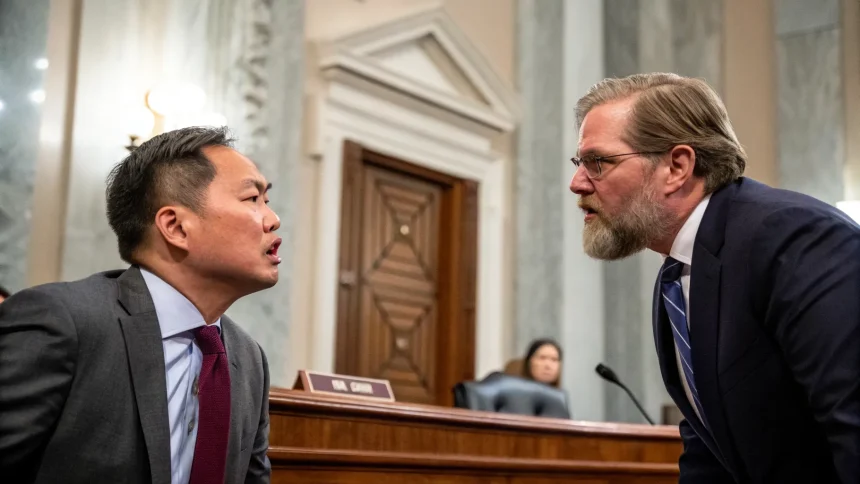
Rep. Gabe Amo clashed with Office of Management and Budget Director Russ Vought during a House Budget Committee hearing, blasting proposed healthcare cuts as harmful to families while war funding grows. The tense exchange, held on Capitol Hill, spotlighted a core fight in federal budgeting: how to balance domestic care with national security spending.
Amo, a Democrat from Rhode Island, said the plan would hurt patients in his state and across the country. He called the approach “cruelty” and demanded to know how leaders could justify it.
The Confrontation
The hearing turned sharp as Amo accused the administration of abandoning people who rely on coverage and clinics. He said the cuts would land hardest on those already living close to the edge.
“Hurting millions of Americans particularly Rhode Islanders” by “slashing healthcare funding while simultaneously pushing for massive spending on wars.”
He pressed Vought on values and priorities, arguing that budgets show what the government cares about most.
He called the move “cruelty,” and questioned “how leaders can claim to care about people while cutting essential services that families depend on.”
Vought, as the budget chief, sits at the center of the debate over spending levels. While he did not respond in the exchange quoted here, similar proposals have drawn praise from fiscal hawks who argue that the country must slow the growth of federal programs to control deficits.
Background on the Budget Fight
Budget hearings often become flashpoints because they set the terms for health programs, defense spending, and safety-net services. The committee’s work informs broader talks that shape the annual funding bills.
Healthcare funding debates usually focus on costs for Medicaid, marketplace subsidies, community health centers, and hospital reimbursements. Supporters say these dollars protect access to primary care and mental health services. Critics argue that growth in these programs strains the budget and should be trimmed or better targeted.
Lawmakers also face choices on defense and war-related funding. Backers of higher defense spending point to global threats and commitments to allies. Opponents warn that gains for the Pentagon should not come at the expense of clinics, prescriptions, or preventive care.
What’s at Stake for Patients and States
Amo framed the issue as a kitchen-table concern. He said families could lose doctors, face longer waits, or see higher out-of-pocket costs if support shrinks.
Health policy experts often warn that when federal support dips, states face pressure to fill gaps or reduce services. That squeeze can be felt fastest in rural clinics and urban safety-net hospitals.
- Reduced clinic hours or staff may limit appointments.
- Higher premiums or co-pays can deter people from seeking care.
- States may cut optional benefits or tighten eligibility.
For Rhode Island, Amo said the risk is real, with local providers and patients exposed if federal dollars fall.
The Case for Restraint—and the Pushback
Supporters of lower healthcare outlays argue that reforms are needed to curb waste and improve value. They say that unchecked spending today will force deeper cuts later.
Opponents counter that health investments save money by preventing emergencies and hospitalizations. They add that abrupt reductions can backfire, leading to worse outcomes and higher long-term costs.
The split reflects a long-running dispute in Washington: whether fiscal discipline should start with domestic programs or be paired with limits on defense increases.
Political Stakes and Next Steps
The exchange signals hard bargaining ahead as Congress moves through the budget cycle. Committee edits, floor debates, and cross-chamber talks will shape the final numbers.
Moderates in both parties could prove decisive if they insist on a deal that protects core services while addressing deficits. Health providers and patient groups are expected to press lawmakers for safeguards as talks continue.
For Amo, the message was clear: protect essential care first. For Vought and budget cutters, the goal is to realign spending to what they consider sustainable levels.
The outcome will show how Congress ranks domestic health against defense in the coming year. Watch for revised proposals, cost estimates, and state impact analyses as negotiations advance. The choices made now will set the tone for families, clinics, and coverage—well past this budget season.