

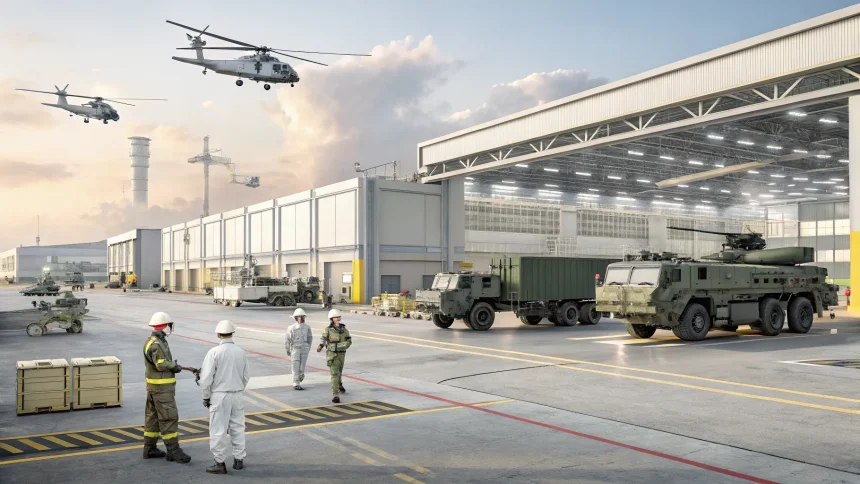
Europe’s defence market is changing fast, and a Czech-owned group known as CSG has moved to the front. The company’s swift expansion reflects a surge in demand, new investment, and a wave of consolidation since war returned to Europe in 2022.
As governments refill stockpiles and support Ukraine, orders have jumped for ammunition, ground vehicles, and repair services. CSG, short for Czechoslovak Group, has positioned itself as a key supplier across Central and Eastern Europe and beyond.
The rapid rise of CSG, Europe’s newest defence giant
A new heavyweight shaped by Europe’s rearmament
Defence spending in Europe has climbed to record levels since 2022, with many NATO members moving closer to the 2% of GDP target. The European Union approved a 500 million euro program to boost ammunition production lines, and member states signed larger, longer-term contracts to secure supply.
That shift opened the door for regional producers to scale up. CSG has grown by reviving legacy plants, expanding ammunition output, and investing in overhaul and maintenance for Soviet- and NATO-standard equipment—an area seeing intense demand as allies back Ukraine.
How CSG built scale: deals, plants, and niche strengths
The group’s rise has come through acquisitions and steady upgrades to manufacturing. It has gathered a range of assets under one umbrella, including firms known for trucks, artillery support, and munitions. It has also partnered with state buyers, using multiyear contracts to justify new capacity.
- Acquiring and modernizing legacy factories in Central Europe.
- Focusing on high-demand items such as small- and medium-caliber ammunition.
- Providing repair, overhaul, and adaptation for legacy platforms in service with Ukraine.
Executives and industry analysts say the strategy has been simple: meet urgent needs quickly, then lock in future orders. That approach allowed faster hiring and capital spending compared with slower-moving peers.
Ukraine, shortages, and the scramble for shells
Artillery shell shortages have shaped the conflict in Ukraine and the European response. Governments pressed industry to add capacity for 155mm shells and propellants, while also refreshing supplies of older calibers still in active use.
Companies like CSG filled gaps by restarting idle lines and coordinating with partners to source components. In parallel, states have pooled demand to reduce unit costs and speed deliveries. The result is a tight market in which backlogs stretch well into the future.
Scrutiny grows with scale
With size comes attention. Large cross-border deals in ammunition and related businesses have faced national security reviews, especially where exports to the United States are involved. Lawmakers and regulators have asked how foreign ownership might affect supply during crises and how export controls will be enforced.
Supporters argue that more capacity anywhere in the transatlantic market benefits NATO. Critics warn that consolidation can reduce competition and leave buyers with fewer choices. Both sides agree that transparency on ownership, governance, and end-use controls is essential.
What it means for industry and taxpayers
For Europe’s defence base, a bigger CSG means one more prime contractor able to handle large, urgent orders. Rival firms may respond with their own investments or mergers. For governments, the question is how to lock in lower prices and reliable output over time.
Three issues will decide the next phase:
- Capacity: Can factories add shifts, skilled workers, and raw materials fast enough?
- Scrutiny: Will future acquisitions clear security reviews without delays?
- Supply chains: Are inputs like powders and metals available at scale and on time?
If demand remains high, production networks in Central Europe could anchor Europe’s resupply for years. If orders fade, firms that expanded too quickly may face pressure to consolidate again.
For now, the direction is clear. European rearmament has created space for new champions, and CSG has seized its moment. The next test is endurance—keeping output steady, prices stable, and oversight tight as wartime urgency gives way to long-term planning.