

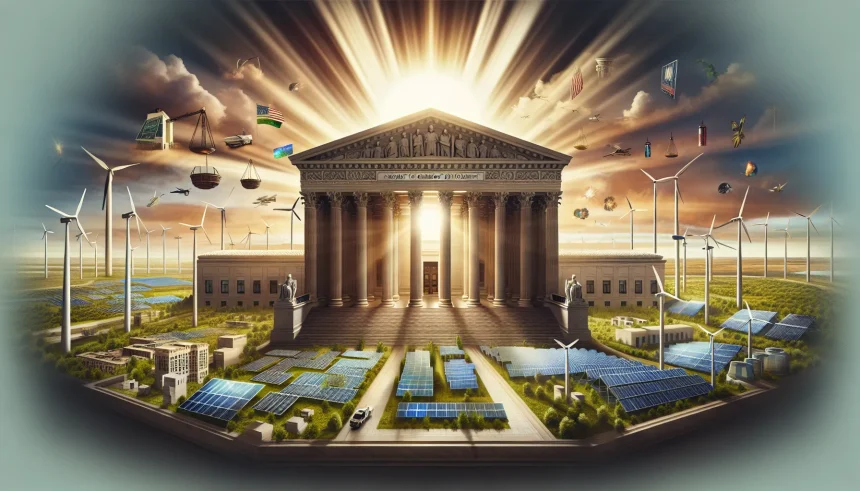
A federal judge in Washington ruled Monday that the Trump administration acted unlawfully when it canceled $7.6 billion in clean energy grants tied to projects in states that voted for Democrat Kamala Harris in the 2024 election. The decision halts the cancellation and revives funding for hundreds of projects across 16 states. The ruling raises urgent questions about political targeting, federal funding rules, and the future of clean energy development.
“A federal judge ruled Monday that the Trump administration acted illegally when it canceled $7.6 billion in clean energy grants for projects in states that voted for Democrat Kamala Harris in the 2024 election.”
The case centers on whether the administration could pull approved grants after the election, and whether the cancellations were motivated by partisan aims. The court’s action signals increased scrutiny of federal decision-making when it appears to single out voters or regions for punishment or reward.
What the ruling says
The judge found the government’s decision violated federal law. The opinion points to established rules that require agencies to provide clear reasons, follow set procedures, and treat states fairly. While full legal details were not released at the time of the announcement, the court’s language indicates the cancellations did not meet those standards.
“The grants supported hundreds of clean energy projects in 16 states.”
Such findings often turn on basic principles: agencies must explain changes to policy, show evidence to support those changes, and avoid actions that appear retaliatory. When those steps are skipped, courts can set the actions aside.
Who is affected and how much is at stake
The decision covers a grant pool worth $7.6 billion. It spans a wide mix of clean energy efforts, from grid upgrades to utility-scale renewables and local projects. The projects are spread across 16 states, which had been facing delays or cancellations after the grants were pulled.
- Total grant funding at issue: $7.6 billion
- Scope: Hundreds of projects
- Geography: 16 states
Developers and state agencies now have a path to resume work. Many had paused construction, procurement, or hiring when the money was withdrawn. A restart could re-open project schedules, contracts, and supply orders that had been on hold.
Political targeting claims and legal risk
The ruling highlights the risk of tying funding decisions to electoral maps. With the court noting the link to states that backed Harris, the case touches on constitutional concerns about viewpoint discrimination and equal treatment. Courts often consider whether the government had a valid policy reason or whether the action punished a group for its political choices.
Legal scholars say such cases typically hinge on evidence and process. Agencies may change direction after an election, but they must do so lawfully. That includes public notice, reasoned analysis, and a record that supports the new course.
Impact on the clean energy sector
Grant stability matters for project finance, labor planning, and grid integration. When money is pulled suddenly, it can raise costs and scare away private partners. The court’s order could steady those plans in the short term.
States counting on these grants to meet climate goals and reliability needs may also get relief. Many state targets rely on federal dollars to expand transmission, add renewables, and upgrade storage and efficiency programs.
What happens next
The administration could appeal. If it does, it may seek a stay that would pause the ruling while a higher court reviews the case. That would create new uncertainty for developers and states waiting for payments.
Agencies may also issue updated guidance. They could outline timelines for releasing funds or set conditions for resuming work. Clear instructions would help contractors and utilities adjust schedules and avoid supply chain penalties.
If the ruling stands, it may shape how future administrations handle grant reversals. Agencies are likely to document reasons more fully and avoid moves that appear to target states based on voting outcomes.
Key questions to watch
- Will the administration appeal, and will a stay be granted?
- How quickly will agencies release held funds and restart payments?
- Can states recover delays in project timelines and grid planning?
- Will Congress seek oversight hearings on political targeting claims?
The court’s decision brings immediate relief to projects that had been thrown into doubt. It also sends a warning that funding shifts must follow the law and avoid partisan motives. The next steps—appeal, guidance, and payments—will determine whether the revived projects keep pace with their original schedules and budgets.