

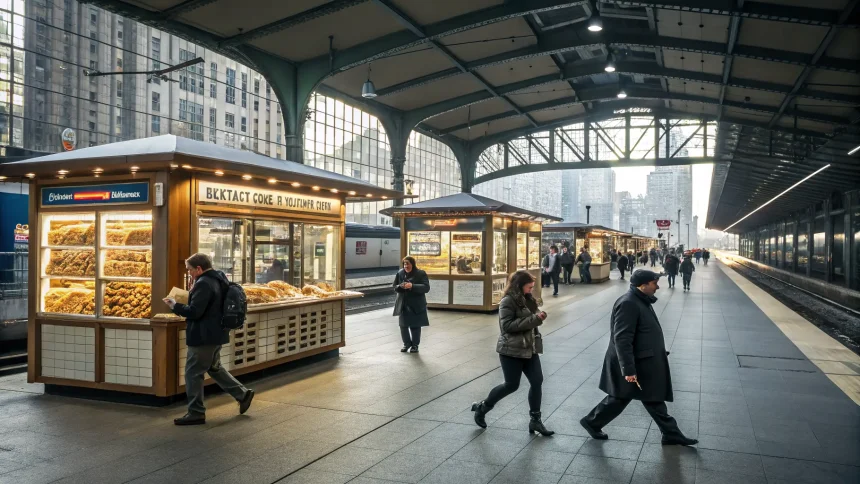
Commuters at Brooklyn’s Atlantic Avenue–Barclays Center station have noticed a curious trend: pretzels everywhere. Multiple Wetzel’s Pretzels outlets sit within steps of one another, raising a basic question about strategy and profit.
Reporters Alex Goldman and Alexi Horowitz-Ghazi set out to understand why these stores cluster in such a tight radius. They spoke with a corporate executive, a franchise owner, and even ran into mall security along the way. The answer says a lot about franchise economics, high-traffic real estate, and how brands think about convenience.
The puzzle at a busy transit hub
The Atlantic Avenue–Barclays Center complex links multiple subway lines, a major arena, and nearby malls. It funnels tens of thousands of riders each day. That crush of movement can support quick-serve food stands that thrive on impulse buys and short lines.
Yet the sight of back-to-back pretzel counters still feels odd. It looks like the stores are competing with themselves. As one question posed it:
“Why are there so many Wetzel’s Pretzels so close to one another at the Atlantic Avenue-Barclays Center Station?”
The investigation followed “the dough all the way to the top,” meeting a cheerful corporate leader and a driven franchisee who sees a path to the American dream through fried dough and salt.
How clustering can work
Food brands often choose dense locations when three conditions line up: huge foot traffic, limited kitchen footprints, and short decision times. A pretzel takes little room to prepare and sells fast. If one kiosk has a long line, a second nearby can catch the spillover.
In malls and transit hubs, landlords like repeatable tenants that pay rent on time and need minimal build-out. If two spaces open near each other, the same brand may fill both before a rival moves in. That keeps quality consistent and prevents market share from drifting to a competitor.
Franchise agreements may allow multiple units if each has a defined “trade area,” even if those areas touch. Boundaries inside large complexes can be tight, which helps explain why storefronts sometimes feel stacked.
What the company and owners say
The corporate side tends to argue that density builds habit. People see the sign, smell the product, and buy. If one spot is swamped after a game, the next offers a shorter wait.
A franchise owner near the station described the appeal in simple terms: steady crowds, bite-size orders, and fast turns. For a small operator, the math can work if rent, fees, and staffing stay in check.
“His journey led him to a jolly pretzel executive, a franchisee with a deep-fried American dream, and a brush with mall security.”
The run-in with security shows the other side of high-traffic retail. Access rules, filming limits, and strict leases shape what can open where, and how stores market themselves on site.
Risks: cannibalization and rising costs
There is a trade-off. Put too many outlets too close and sales can split. Owners still owe rent and royalties, even if each store sells less. Labor pressure adds to the risk. So do shifting commuter patterns if riders stay home more days of the week.
Brands try to manage this with careful placement and staggered hours on event days. Some units lean into arena crowds. Others focus on morning commuters or weekend shoppers.
What it means for riders, malls, and rivals
For riders, more units often mean shorter lines and consistent snacks. For malls and stations, repeatable tenants can stabilize revenue and fill awkward corners. For rivals, entering the hub gets harder when one brand locks up multiple leases.
Yet sameness can dull variety. Local vendors can struggle to win space or match rent. That shapes what people see, smell, and buy as they move through the city.
Signals to watch
- Event calendars: Arena traffic can make or break nighttime sales.
- Lease terms: Shorter leases may push brands to test more dense layouts.
- Commuter trends: Changes in ridership shift demand by hour and day.
- Labor costs: Higher wages increase the risk of overbuilding.
The pretzel cluster at Barclays Center highlights a simple idea: in the right place, more of the same can sell more. But it works only while lines stay short, rent stays payable, and crowds keep coming. The next test will be how these stores adapt to shifting commute habits and a tighter labor market. Watch for brands to fine-tune hours, try mobile ordering windows, and adjust menus for speed. If that happens, the pretzels may keep coming—just as fast as the riders.