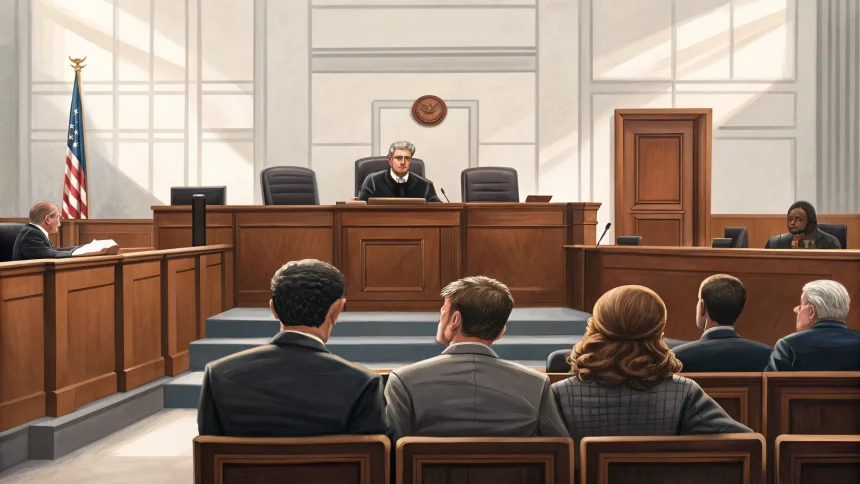
Courts are again weighing how much blame internet providers should bear for piracy on their networks, a question with major stakes for artists, tech firms, and millions of subscribers. The issue has simmered for years, but fresh rulings and policy debates have pushed it back to the center of the copyright fight.
“At issue is whether internet providers can be liable for their users’ committing copyright violations using its services.”
The dispute touches on how companies respond to infringement notices, when they must end service for repeat offenders, and what evidence is enough to prove they looked the other way. The outcome could reshape how internet access is policed and priced.
How the law got here
U.S. law grants online services “safe harbor” under Section 512 of the Digital Millennium Copyright Act. To qualify, companies must adopt and reasonably implement a policy to terminate repeat infringers, respond to takedown notices, and avoid direct financial benefit from known infringement.
Two ideas frame most cases. The Supreme Court’s Sony “Betamax” decision protects services with substantial legal uses. Later, the Court held in MGM v. Grokster that promoting infringement can still create liability. Courts have since applied those guardrails to internet access providers and platforms.
In 2015, a jury found Cox Communications liable in a case brought by BMG, awarding $25 million after evidence that Cox did not enforce its termination policy. In 2019, a separate jury returned a $1 billion verdict against Cox in a suit by major record labels, putting fresh pressure on providers to show real action against repeat infringers. Appeals have focused on standards for knowledge, damages, and policy enforcement.
What makes access providers different
Access providers connect users to the entire internet, unlike platforms that host content. That distinction matters for both detection and remedies. Providers usually do not see what users share inside encrypted services, and they do not control websites where files appear. Rights holders rely on notices tied to IP addresses and timestamps, which can be imprecise if Wi‑Fi is shared or records are incomplete.
- Rights holders argue that failing to act on credible notices invites more piracy.
- Providers say overreaction risks cutting off innocent users and essential access.
Courts look at whether a company had actual or “red flag” knowledge, whether it gained from the activity, and whether it carried out its own policy. In the cases against Cox, internal emails and logs became key to the juries’ findings.
Impacts on consumers and creators
For artists and labels, better enforcement could mean more revenue and a stronger signal that creative work has value online. For households, stricter policies may bring warning letters, bandwidth throttling, or termination if patterns appear in the data. Universities and libraries, which manage shared networks, face extra risk if one person’s conduct triggers penalties for many.
Costs may also shift. If liability grows, providers could pass expenses to customers, invest in new notice systems, or limit certain traffic. That could affect small providers with fewer resources, especially in rural areas.
International moves and policy choices
The European Union treats access services and content-sharing platforms differently. The E‑Commerce Directive protects passive conduits, while the 2019 Copyright Directive makes some platforms directly responsible for user uploads unless they secure licenses or act fast on takedowns. That split underscores a policy choice: who should carry the burden of monitoring and licensing.
In the United States, Congress has debated updates but has not rewritten the core safe harbors. Proposals often center on clearer definitions of “repeat infringer,” standardized notice formats, and transparency reports on how companies respond.
What to watch next
More trials and appeals are likely to refine the standard for knowledge and willfulness, and to test the size of damages. Providers may tighten their policies, keep better records, and automate responses to notices. Rights holders may push for faster termination of flagged accounts and stronger evidence-sharing rules.
Three practical steps are gaining traction among legal and policy experts:
- Publish clear, plain-language repeat-infringer policies and follow them.
- Adopt consistent notice handling with audit trails to show good-faith action.
- Create appeals for subscribers who contest notices, especially on shared networks.
The fight over liability will not end soon, but the direction is clearer. Courts expect real enforcement, not just policies on paper. Providers want workable standards that do not cut off essential access. Artists seek proof that warnings and penalties reduce piracy. The next rulings will set the tone for how those goals fit together and how the cost is shared.