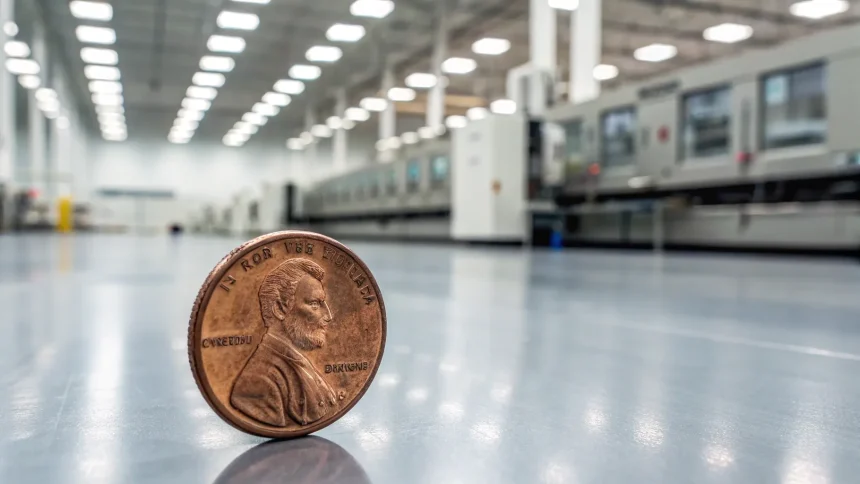
The United States halted production of the penny in November, closing a 232-year chapter in American currency. The move followed years of debate over costs, usefulness, and tradition. A former U.S. Mint director explained the math behind the decision, while an artist honored the coin’s place in American life. Together, their perspectives show why the penny ended and what comes next for cash users and businesses.
Why the Penny Ended
“In November, the U.S. stopped production of the humble penny after 232 years in circulation.”
The penny’s retirement was widely expected. For years, it cost more to make and distribute the coin than its face value. The former Mint leader described how material prices, labor, and transport pushed unit costs above one cent. When production costs exceed value, the Mint loses money with every coin it strikes. That gap is the core reason the coin was discontinued.
The penny also struggled to keep pace with modern spending. Many cash transactions no longer require it. Electronic payments have cut demand for low-denomination coins, and retailers often round totals at the register when coins are scarce.
Fiscal Pressures at the Mint
“A former U.S. Mint director shares the fiscal math that doomed the penny.”
Mint officials have long tracked seigniorage, the difference between a coin’s face value and production cost. When costs exceed value, seigniorage turns negative. The former director said the penny became a persistent loss-maker. Each new batch compounded the deficit. Ending production stops that loss immediately and helps align the Mint’s output with public use.
Budget analysts have warned that small-denomination coins can drain resources. Ending the penny reduces waste and frees capacity for higher-demand coins. It also simplifies coin distribution to banks and retailers.
What Changes for Shoppers and Stores
Daily life will adjust slowly. Existing pennies will remain legal to use. Cash drawers and coin sorters will still accept them for now. Over time, circulation will thin as coins are lost, redeemed, or collected. The main shift will be cash rounding. Many countries have moved to rounding cash totals to the nearest five cents, while electronic payments charge the exact price.
- Cash purchases may round to the nearest five cents.
- Card and digital payments continue to the exact cent.
- Existing pennies stay valid during the phaseout.
Consumer groups will watch rounding closely to ensure fairness. Retailers will need clear signage and consistent policies. Banks will set timelines for accepting penny deposits. The Mint and Treasury are expected to issue guidance to avoid confusion during the transition.
A Cultural Icon, Reimagined
The penny’s end is not only a financial story. It is also cultural. Artist Robert Wechsler has used coins in installations that rethink value and pattern. His work highlights the coin’s texture, color, and shared history. For many people, the penny is tied to memory, from Lincoln’s profile to “lucky pennies.”
Wechsler’s tribute shows how an object can hold both economic and emotional weight. By reworking coins into geometric forms, he reframes a familiar item as art. The gesture mirrors the public’s mixed feelings: relief over sensible budgeting, and nostalgia for a small but recognizable piece of everyday life.
Debate Over Small Change
Supporters of an end to the penny argue the coin wastes taxpayer money and time. Counting large volumes at stores and banks slows lines and adds labor costs. Detractors worry about price rounding and the impact on charities that collect spare change. Both sides stress transparency. Clear rules on rounding and visible receipts can protect consumers while keeping checkout fast.
There is also a question of material markets. Suppliers tied to penny production will shift capacity. The Mint may adjust orders for other coins to balance demand. Economists note that any effect on prices should be small if rounding is evenhanded over time.
What to Watch Next
Key steps now include public guidance, retailer training, and bank deposit policies. The Mint will monitor coin circulation to see how quickly pennies fade from daily use. Lawmakers may consider whether other low-value coins need similar scrutiny. International examples suggest the transition can be smooth if communication is clear.
Ending penny production stopped an ongoing loss and aligned policy with modern spending habits. The decision brings modest savings and a simpler cash system. It also closes a long chapter in U.S. currency design. As the phaseout unfolds, fairness in rounding and clear instructions will matter most. The penny leaves behind a practical lesson in cost and value—and a lasting image in art and memory.