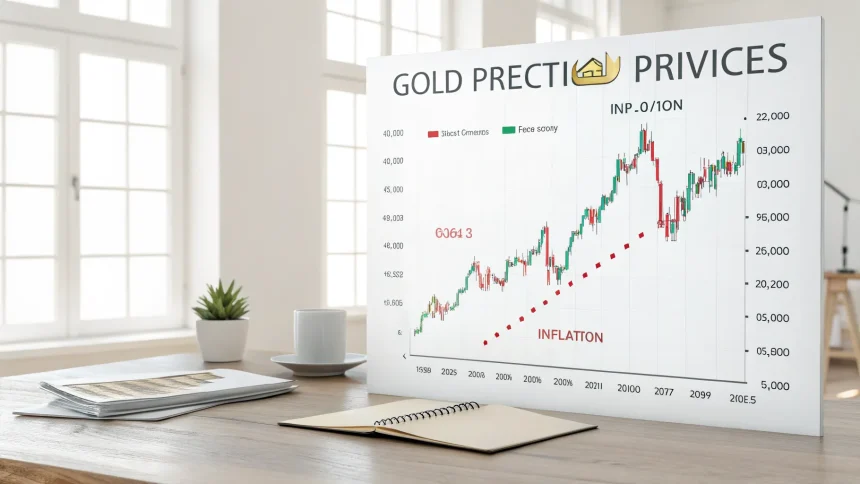
Investors are watching gold for clues about inflation protection, as fresh moves in the metal test its role as a safe store of value. The question is timely for households and funds weighing how to shield savings if prices rise again. Market action today offers another snapshot of how the metal behaves when costs, interest rates, and the dollar shift.
“Trends in gold prices could indicate whether the asset can protect against inflation. Here’s a look at how the precious metal is doing today.”
Why gold’s signal still matters
Gold has long been seen as a hedge when living costs climb. In the 1970s, high inflation was matched by sharp gains in the metal. In the decades that followed, when inflation fell and cash earned higher real returns, gold often lagged. The mixed record has sparked debate about when the hedge works and when it stalls.
Analysts tend to agree on one point. Over very long periods, gold has kept up with the price level. Over shorter stretches, performance depends on the path of interest rates, the strength of the U.S. dollar, and investor demand for safety.
How inflation, rates, and the dollar shape moves
Gold does not pay income. That makes its price sensitive to “real” interest rates, which adjust for inflation. When real yields fall, the cost of holding gold drops, and prices often rise. When real yields rise, the trade can reverse.
The dollar also matters. Gold is priced globally in dollars, so a stronger dollar can pressure prices for non-U.S. buyers. A weaker dollar can offer support. Shifts in central bank policy, currency moves, and energy prices all filter into these dynamics.
- Falling real yields often support gold.
- A weaker dollar can lift demand from overseas buyers.
- Rising inflation expectations can draw in hedge demand.
What today’s action may be saying
Traders scanning today’s tape are looking for confirmation on two fronts. First, whether inflation pressures are easing or sticking. Second, whether rate cuts or hikes are next. If markets price a slower economy and lower real yields, gold can gain. If data point to sticky inflation but also higher real rates, the message gets mixed.
Even without a single day’s number, recent sessions show a familiar push and pull. Headlines on prices and wages can spark quick rallies. Comments from central bankers can cool them just as fast. For individual investors, the key is not a single print but the trend in real yields and the dollar.
Does gold hedge inflation? The time horizon test
Research often finds that gold aligns with inflation over long spans but can lag during multi-year windows. In the early 2000s and during parts of the pandemic, gold rose as policy rates fell and money flowed into safe assets. During stretches when rates climbed faster than inflation, returns were uneven.
For planning, that means gold may help protect purchasing power across long horizons, but it is not a perfect shield each year. It works best as one part of a broader mix that also considers cash, bonds linked to inflation, and equities with pricing power.
How to read the signals and set expectations
Three gauges help translate the daily moves into a plan. Watch market-based inflation expectations. Track real yields on government bonds. Monitor the dollar’s trend. Together, they explain much of gold’s short-term swings.
- If real yields fall and the dollar weakens, gold’s hedge case strengthens.
- If real yields rise faster than inflation, gold can chop sideways or dip.
- Sudden risk events can trigger safe-haven buying, independent of inflation data.
What this means for investors now
For savers worried about rising prices, gold can play a role, but sizing and patience matter. Short bursts of volatility are common. Costs, storage, and product choice also affect outcomes, whether through bullion, funds, or mining shares.
A measured approach can help. Set a target range for gold within a diversified plan. Revisit it as inflation and real yields evolve. Use automatic rebalancing to avoid chasing rallies.
Gold’s latest moves are another reminder that the metal’s hedge power is tied to real yields, the dollar, and steady demand. The core takeaway is simple: watch the trend, not the headline tick. If inflation cools and real yields ease, gold may offer more cover. If policy tightens into firm real rates, expect a tougher path. The next checkpoints are the coming inflation readings and central bank guidance, which will set the tone for where the metal heads next.