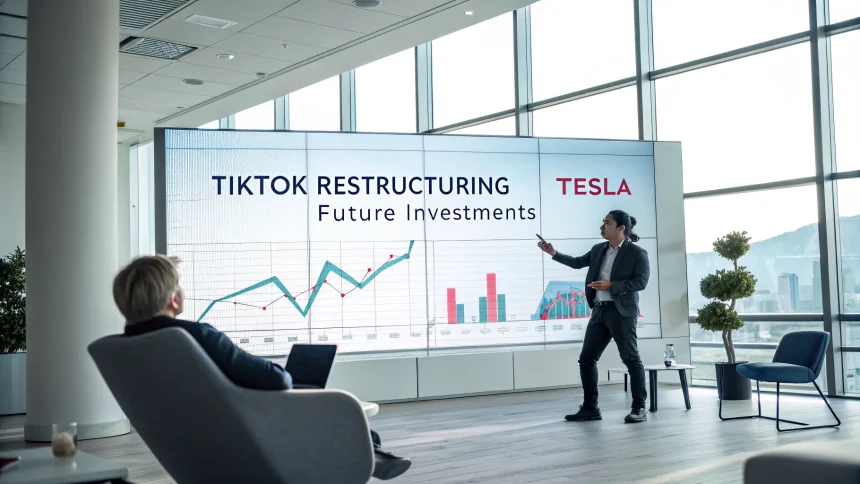
A prominent tech analyst says two high-stakes shifts are taking shape at once: a U.S.-controlled TikTok structure and new bets on Tesla’s future products. Constellation Research founder R “Ray” Wang described a governance change for TikTok’s U.S. operations and argued that Elon Musk’s humanoid robots and robo-taxis could drive Tesla’s next wave of growth. His comments come as policymakers and investors gauge how policy and product plans may reset the tech and auto sectors.
TikTok’s U.S. Control Push Gains New Urgency
For years, lawmakers have pressed TikTok over data access and influence risks. They have treated a forced divestiture or tight U.S. oversight as the clearest path to reduce security concerns. Wang pointed to a “new U.S.-controlled TikTok entity” as the latest step meant to address those issues and keep the app available to American users.
Wang appeared to frame the shift as a governance answer to national security scrutiny, calling it “the new U.S.-controlled TikTok entity.”
Such structures typically focus on safeguards: data localization, vetted code bases, independent audits, and boards with American oversight. The aim is to limit foreign access to U.S. user data and moderation policies. Prior proposals in Washington have leaned on that mix of technical and corporate controls, though final terms are often complex and subject to court review.
Consumer stakes are high. TikTok has tens of millions of U.S. users and is a major advertising channel for brands and creators. Any reorganization must protect user trust while keeping the service responsive and profitable. Advertisers may welcome clearer guardrails if the result delivers stability and reduces political risk.
What a U.S.-Controlled Model Could Include
- Independent board oversight for U.S. operations.
- Data storage and processing within the United States.
- Regular third-party security audits and reporting.
- Controlled code updates and source review processes.
- Clear escalation paths for content and influence concerns.
The bigger test is durability. Oversight must withstand changes in political leadership and court challenges. It must also adapt to new features and algorithm updates without slowing product cycles. Companies often need to balance compliance with speed, especially in social apps with rapid engagement shifts.
Tesla’s Next Act: Robots and Robo-Taxis
Wang also argued that Tesla’s future growth may come from two advanced bets rather than its core car business. He highlighted humanoid robots and autonomous ride-hailing as key levers for valuation and revenue expansion.
He said Elon Musk’s “humanoid robots and robo-taxis will fuel Tesla growth.”
Tesla has previewed a humanoid robot program for repetitive or risky tasks. The company also continues to promote a vision for self-driving fleets that earn income while owners are not using their cars. These ambitions, if realized, could create new revenue lines and higher-margin software or services.
Investors have long priced Tesla as more than a carmaker. New categories support that view but demand technical and regulatory breakthroughs. Progress will likely be staged, with pilot programs, limited use cases, and ongoing software updates.
Regulatory And Technical Hurdles Remain
Skeptics caution that timelines have slipped before. Autonomous driving faces a thicket of rules, liability questions, and safety validation. City-by-city approvals vary, and public trust can swing quickly after any high-profile incident. Robotics also requires big advances in dexterity, perception, and cost control before large-scale deployment becomes economical.
Tesla is not alone in this race. Established automakers, chip designers, and AI startups are investing in autonomy and robotics. Some focus on narrow industrial tasks with clear returns. Others pursue full driverless systems on specific routes. Differing strategies may shape which business models become viable first.
Implications For Consumers And Markets
If a U.S.-controlled TikTok model holds, consumers could see the app continue under stricter safeguards. Creators may gain stability, and advertisers could resume longer-term plans. But additional oversight could change how features roll out and how quickly updates reach users.
For Tesla, new products could diversify revenue and push the company deeper into AI and services. Yet near-term results still rely on car sales, pricing discipline, and software attach rates. A cautious path suggests incremental wins rather than a sudden shift.
What To Watch Next
- Legal and regulatory filings that define TikTok’s U.S. control structure.
- Independent audits or transparency reports on data access and code review.
- Tesla pilots for humanoid robots in controlled workplaces.
- Municipal approvals and safety data for limited robo-taxi trials.
- Capital spending trends that signal priority and timing.
Wang’s message is clear: policy choices and bold product bets could reshape two major platforms at once. The TikTok structure will test whether governance can head off security concerns while preserving consumer value. Tesla’s roadmap will test whether autonomy and robotics can move from showcase to scale. Investors and users should watch for verified milestones, transparent metrics, and steady safety progress in the months ahead.