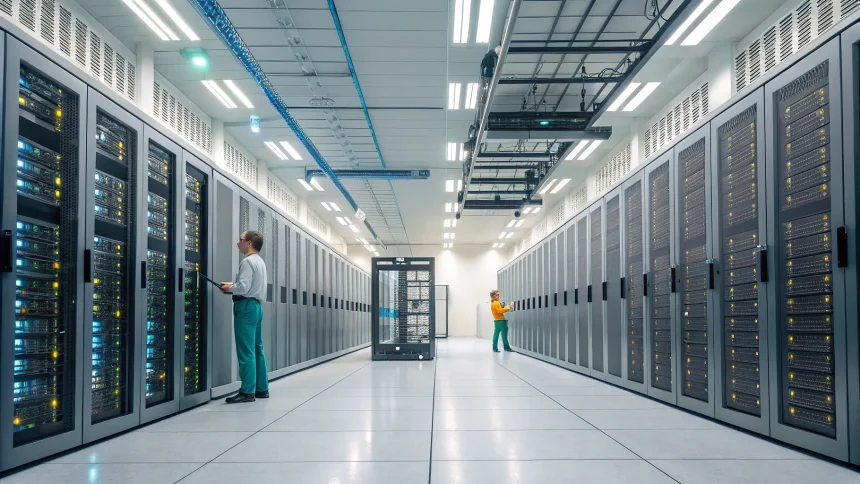
As demand for artificial intelligence surges, some crypto miners are retooling their operations to supply power, racks, and cooling for AI servers. The shift shows how quickly data center needs are reshaping energy-hungry industries across the United States and abroad.
The move comes as miners face volatile coin prices and thinner margins. Operators with access to cheap power and industrial sites now see a new market: hosting GPUs and other AI hardware for cloud providers and startups. The timing is urgent as companies race to secure data center space and electricity.
From coins to compute: a change in the business model
The core idea is simple. Bitcoin mines and AI clusters both run on dense computing and heavy electricity use. As one host put it:
“If you want to make Bitcoin, you need powerful computers and a lot of energy.”
Another line from the show captured the turn many are considering:
“The same infrastructure needed for Bitcoin mining is pretty valuable in the era of AI.”
That overlap is not one-to-one. Bitcoin mining is dominated by specialized ASICs, while AI training relies on GPUs and custom accelerators. But the shells of these operations—secure buildings, high-voltage interconnects, cooling systems, and 24/7 operations staff—look similar. Retrofitting can be faster than building new facilities from scratch.
Why the pivot now
Two pressures are pushing miners to reconsider their focus. First, coin price swings make revenue unpredictable. Second, AI buyers are signing multi-year contracts for capacity, offering steadier cash flow.
Industry observers also point to a broader investment wave. A recent episode referenced efforts to fund massive AI data centers for top platforms. These projects require long-term financing and reliable power. Miners with existing grid connections and land use permits may have an edge in winning contracts.
- Existing sites often have 50–300 megawatts of power capacity.
- Cooling systems can be upgraded for high-density AI racks.
- Staff already trained for round-the-clock maintenance.
Energy use and public scrutiny
Energy is the common denominator. Bitcoin mining has drawn criticism for its electricity use. AI is on a similar path. Communities are now asking who gets priority on limited grid capacity.
Some miners argue the pivot can cut local conflict. Hosting AI may support jobs with higher wages and longer-term stability. Others say the total load will still rise, pressuring prices and grids. Utility regulators are weighing new rules and incentives.
Winners, losers, and the transition costs
Not every miner can make the switch. ASIC-heavy operations optimized only for Bitcoin may face costly upgrades. Sites with intermittent or high-priced power will struggle to attract AI tenants.
Meanwhile, miners with flexible facilities could benefit. Those that previously hosted GPU-based crypto rigs, or built immersion cooling, may adapt faster. The host summed up the calculus:
“Some miners are starting to throw in the towel on crypto in favor of supporting AI infrastructure.”
That choice carries risk. If crypto prices climb again, miners that retooled may miss a rebound. Conversely, if AI demand cools or hardware cycles shift, contracts could be renegotiated or delayed.
What to watch next
Financing will be decisive. Hosting AI clusters often requires tens or hundreds of millions in capital for power upgrades and new buildings. Partnerships with large tech companies could unlock loans and tax incentives, but they also reduce operators’ flexibility.
Policy is another variable. State-level incentives for data centers, local noise and water rules, and grid interconnection timelines can speed—or stall—projects. Communities will press for transparency on jobs, emissions, and peak load management.
For now, the early movers are betting that steady demand for AI training and inference will outweigh crypto’s unpredictability. The strategic shift highlights a practical lesson from the show’s discussion: infrastructure built for one boom can be repurposed for the next—if operators can finance the changes and win community support.
The next year will reveal how many miners can secure long-term AI contracts, upgrade their sites, and navigate power constraints. The stakes are clear: those who adapt quickly could lock in stable revenue, while others may be left competing in a tougher crypto mining market.