

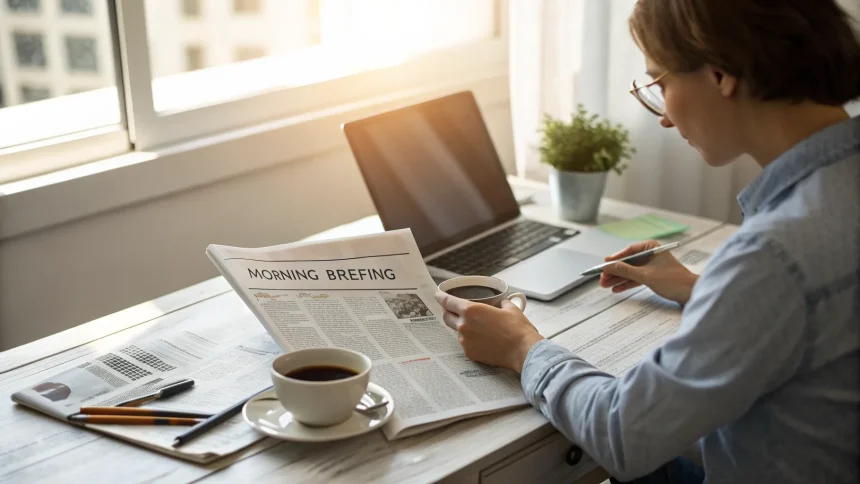
A short daily briefing promises to deliver what many people want at dawn: a quick, clear summary of what matters before the day begins. CNN’s “5 Things AM” positions itself as a morning guide for readers and listeners who want context fast. It arrives early, sets priorities, and helps shape how people follow events across the day.
The idea is simple: present a handful of key items, explain why they matter, and move on. That model has spread across media because mornings are crowded and attention is brief. CNN aims to meet that moment with a package built for commutes, coffee lines, and calendars.
“CNN’s 5 Things AM brings you the news you need to know every morning.”
The rise of condensed morning news
Morning roundups grew with smartphones and push alerts. People now expect fast updates as they wake up, check the weather, and scan their schedules. Daily briefings answer that habit with short items that can be read or heard in minutes.
For newsrooms, this format creates a consistent touchpoint. It can guide audiences to deeper stories later in the day. It also sets a shared starting line for national and global conversations.
What the format promises—and what it leaves out
A “five things” approach offers clarity. It makes choices for the audience and saves time. Each item usually explains who is involved, what happened, and why it matters now. That focus can help reduce noise.
The trade-off is depth. Five stories cannot capture every angle or every region. Some critics worry that a quick list may compress complex issues into headlines. Supporters argue that a brief is a door, not a wall—an entry point that encourages people to explore further coverage.
How audiences use morning rundowns
Many readers and listeners treat a morning brief as an agenda-setter. It can flag developments to watch at work, at school, or on the road. It can also help people manage news fatigue by limiting the early scroll and saving longer reads for later.
Others prefer a voice in their ear. Audio versions allow multitasking, which helps people fit news into daily routines. A short format also makes it more likely that listeners will finish an episode and stay current.
Editorial choices and trust
Any briefing must choose what to include and what to leave for later. Those choices shape the audience’s first look at the day. Clear writing, careful sourcing, and visible corrections are key to building trust.
Selection also matters for balance. A mix of national, international, economic, and public health updates can provide range. Short items can still be fair by naming sources and separating facts from opinion.
What to watch for as formats evolve
Expect briefings to keep refining how they group stories and explain cause and effect. The best versions do more than list headlines. They add a line or two of context, a key quote, and a pointer to deeper reporting.
As breaking news surges, the value of a stable morning check-in often rises. When the day is noisy, a clear start can help people focus on what will move markets, policy, or communities.
Tips for getting the most from a morning brief
- Skim the five items to set priorities for the day.
- Pick one story to read or hear in full later.
- Note unfamiliar terms and return to them with deeper sources.
- Compare updates across outlets when topics are fast-moving.
“5 Things AM” targets a simple need: start smart, then go deeper as time allows. That promise fits how many people live and work. It does not replace full reporting, and it is not meant to. It is a daily map that points to the nearest roads.
As news cycles speed up, this kind of brief will likely keep its place in morning habits. Readers and listeners will watch for clarity, balance, and fast updates when events break. The measure of success is straightforward: a few minutes at dawn that make the rest of the day easier to follow.