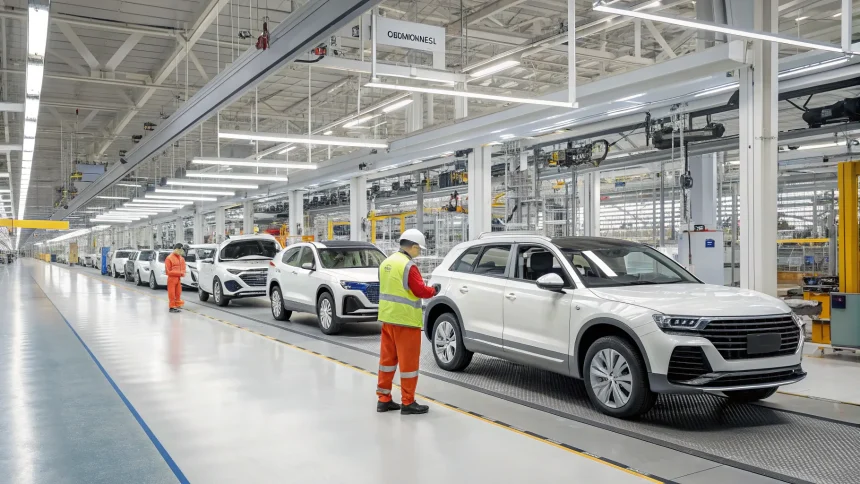
Chery Automobile, China’s top car exporter, has agreed to buy Nissan Motor’s vehicle plant in South Africa, signaling a faster push by Chinese automakers into key export hubs. The deal, involving Nissan’s facility near Pretoria, arrives as South Africa seeks fresh investment to protect auto jobs and output amid shifting global supply chains.
The move links one of China’s fastest-growing carmakers with Africa’s most advanced auto manufacturing base. It also highlights how pressure on legacy brands and rising demand for competitively priced vehicles are changing who builds cars and where.
Chery Automobile Co., China’s top car exporter, agreed to buy Nissan Motor Co.’s vehicle-manufacturing plant in South Africa, the latest evidence of the growing global dominance of Chinese brands.
Why this plant matters
South Africa’s auto industry accounts for a large share of the country’s manufacturing GDP and supports tens of thousands of direct and indirect jobs. The Nissan plant has been a long-standing producer of pickups and compact models for the region. With aging product lines and tougher economics, production had slowed, prompting uncertainty for workers and suppliers.
Chery’s entry offers a lifeline for the site and its network. The company has grown exports at a rapid pace, helped by competitive pricing and a wide model range. Securing a production base in South Africa can cut shipping times to regional markets and tap existing logistics, parts suppliers, and skilled labor.
A bet on regional growth and new models
Analysts say Chery could repurpose the plant for small SUVs and crossovers that sell well across Africa and the Middle East. Local assembly can help meet government rules on local content and unlock tax incentives. It may also prepare the ground for future hybrid or electric models as charging networks improve.
For South Africa, the deal aligns with long-running efforts to attract fresh model investments and keep plants running near capacity. Policymakers have pressed for more local content, supplier development, and exports under trade deals with Europe and neighboring countries.
What it means for competition
Chinese brands have gained share in markets from Latin America to Eastern Europe. Their growth has forced incumbents to rethink pricing and product plans. In South Africa, showroom competition has sharpened as budget-conscious buyers look for value and improved warranties.
Chery’s production could intensify that pressure. Lower costs and short supply lines may allow aggressive pricing. That could challenge rival brands that import vehicles or run smaller lines. For consumers, more choice and sharper price points are likely.
Jobs, suppliers, and local impact
Unions and local officials will focus on job security, retraining, and the pace of model rollout. A smooth transition from Nissan to Chery matters for parts makers who rely on steady orders. Industry veterans say the first 12 to 18 months are critical for stabilizing output and quality.
- Priority one: secure a clear production schedule and model mix.
- Priority two: protect supplier cash flow during tooling changes.
- Priority three: invest in training to meet new process standards.
If Chery commits to higher volumes and local sourcing, the benefits could ripple through logistics, plastics, steel, and tech services. If volumes fall short, the region could face layoffs and shrinking supplier capacity.
Policy and geopolitics
South Africa’s ties with China have expanded in trade and infrastructure. A growing auto footprint fits that trend. At the same time, global trade tensions and shifting rules on emissions and content can add risk. Any future changes to tariffs, incentives, or energy costs could influence the plant’s output and export plans.
Energy reliability is another factor. Stable power supply is essential for painting and welding lines. Industry groups have urged continued investment in grid stability and on-site generation to prevent disruptions.
What to watch next
Key signals will come from the production timeline, the first locally built models, and announced capacity targets. Market share data over the next year will show whether local assembly lifts Chery’s sales and forces rivals to respond with price cuts or new models.
For now, the deal marks a shift in who invests in South Africa’s car sector and why. If Chery pairs competitive products with steady volumes and local partnerships, the plant could regain momentum. If not, the region’s auto ecosystem may face another reset.
The next milestones: regulatory approvals, worker transition plans, supplier contracts, and the formal reveal of the first model off the line. The outcome will shape prices, jobs, and the balance of power in a key African market.