

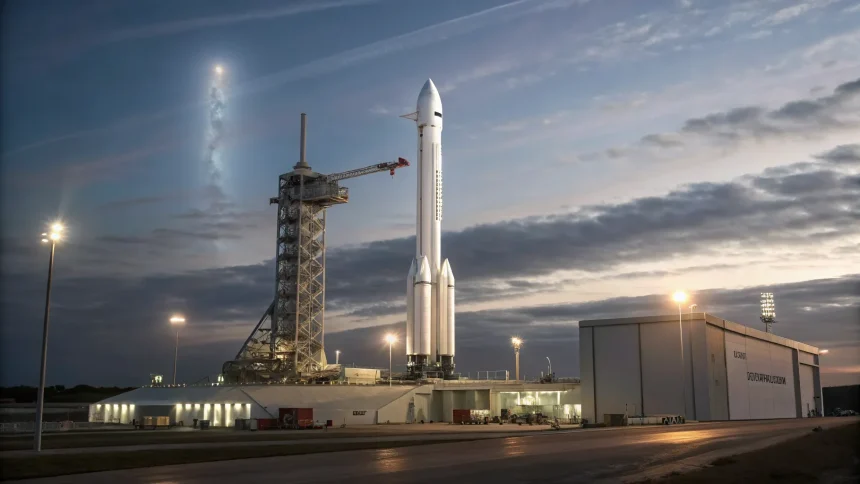
Elon Musk’s rocket maker is poised to list on the Nasdaq on Friday, in what backers say will be the biggest initial public offering ever. The debut is set to test investor appetite for the space sector, gauge faith in Musk’s leadership, and could reset expectations for giant tech listings in U.S. markets.
The company is preparing to sell shares to the public for the first time. The offering is expected to top past records and draw global attention. Traders, institutions, and retail buyers will be watching pricing, first-day volatility, and early guidance.
“Elon Musk’s rocket maker is set to debut on the Nasdaq on Friday in what will be the largest IPO in history.”
Why this deal stands out
Record listings have been rare in recent years. Previous high-water marks include Alibaba’s 2014 U.S. IPO and Saudi Aramco’s 2019 float, which raised tens of billions of dollars. A debut that surpasses those sums would mark a break from a quieter period for new issues.
Investors are drawn to firms with clear growth stories. A rocket business sits at the center of satellite launches, national security contracts, and commercial missions. That mix can support revenue that is less tied to the economic cycle.
Musk is also a central factor. His companies tend to draw large followings and heavy trading. Supporters point to his record of scaling manufacturing and pushing down costs. Skeptics cite management strain and headline risk.
The market context: space is no longer niche
The global space economy has expanded as launch costs fall and satellite uses grow. Internet service from orbit, Earth imaging, and defense systems now drive demand. That creates a long runway for firms that can deliver reliable and frequent launches.
Public investors have had few pure-play options. Several space ventures listed through SPACs, but many struggled to meet forecasts. A large, revenue-generating rocket company could reset the group and set new valuation anchors across the sector.
The listing also arrives as the U.S. IPO market shows signs of life after a slow stretch. A successful sale could open the door for other late-stage tech firms to follow.
What investors will weigh
Profitability and cash flow will be central. Launch businesses are capital-intensive and cyclical by mission cadence. Margins depend on reuse rates, turnaround times, and pricing power with commercial and government customers.
Analysts will look at contract mix. Multi-year government and defense work can stabilize revenue. Commercial launches and satellite partnerships can add growth but may be more sensitive to financing conditions.
There are also operational risks. Test schedules, regulatory approvals, and mission outcomes can move the stock. The company’s pace of innovation can cut costs, but failures can be costly and public.
- Key variables: launch cadence, reuse reliability, and average selling prices.
- Key risks: regulatory delays, mission failures, and supply chain bottlenecks.
- Key supports: defense contracts, recurring satellite services, and backlog visibility.
First-day mechanics and signals
Pricing will offer the first clue to demand. A wide book and an exercised overallotment option would suggest strong institutional interest. A sharp first-day pop may show scarcity, but too much volatility can deter long-only buyers.
Retail flows could be heavy given the brand and Musk’s profile. That can lift volumes and widen intraday swings. Lockup terms for insiders and early holders will shape supply over the next six months.
Index inclusion is another milestone. If the market value and float meet benchmarks, passive funds may become buyers later, adding steady demand. Until then, the stock could trade on news and quarterly targets.
Industry impact and what comes next
A record listing would reset valuations across aerospace and defense. It could pressure rivals to scale faster and seek funding on public markets. It may also push suppliers to expand capacity and reduce costs.
For governments and commercial customers, a stronger balance sheet can mean more launch slots, faster development, and better pricing. For competitors, it raises the bar on reliability and cadence.
If the debut meets expectations, more late-stage space companies could test the market. If it stumbles, boards may delay offerings until volatility cools.
The market is set for a major test on Friday. A smooth opening, clear guidance, and steady execution in the first quarters will be the real proof. Investors will watch contract wins, launch intervals, and cash generation to judge whether this record IPO can deliver long-term returns.