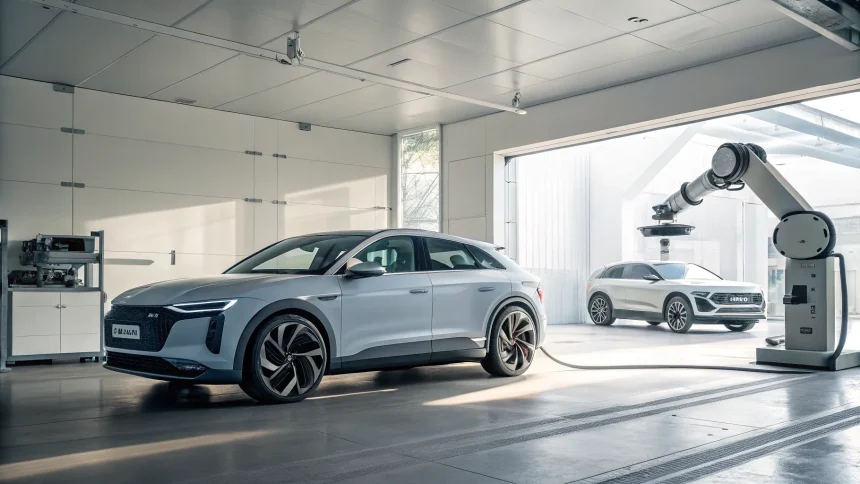
Shares of a major electric vehicle maker are pressing near record levels as investors shift attention from car margins to the promise of robots and self-driving. The move has accelerated this week, with trading desks describing heavy interest in autonomy and robotics as new growth engines. The question now is whether the technology, the rules, and the economics are ready to support that story.
The electric vehicle maker’s shares are near record highs as Wall Street focuses on the company’s plans for robots and self-driving cars.
From carmaker to autonomy and robotics bet
The company’s core business grew up on selling electric cars, helped by tax credits and early-mover brand power. But price cuts, rising competition, and higher borrowing costs have weighed on margins over the past year. Investors are looking past those pressures and assigning more weight to software and automation.
That shift centers on two ideas. First, driver-assistance that could evolve into full self-driving and paid software features. Second, humanoid or warehouse robots that could open new revenue streams outside autos. Both offer higher-margin, recurring revenue if adoption scales.
What the numbers say
Electric cars are no longer niche. The International Energy Agency estimates global EV sales hit roughly 14 million in 2023, about 18 percent of new cars. The IEA expects sales to reach around 17 million in 2024. That growth shows appetite for electrification, even as prices and charging access remain hurdles.
Autonomous driving has advanced, yet true driverless service is limited. A few pilot robotaxi programs operate in specific cities under tight rules. Most systems still require drivers to stay alert. Any wide rollout will depend on proving safety, training models on rare events, and clearing rules city by city.
Bulls see software upside; skeptics flag timelines
Optimists say premium software packages could produce high-margin revenue without building more factories. They also argue that robots in logistics and manufacturing could lower costs and eventually be sold to third parties. If successful, those lines could diversify the business and reduce exposure to car pricing cycles.
Skeptics point to long timelines and regulatory risk. Safety validation for autonomous systems is complex. Insurance frameworks, liability rules, and state approvals vary. Hardware costs for sensors and compute remain high. And humanoid robots must prove reliability, dexterity, and real-world utility outside controlled demos.
Regulation, safety, and public trust
Officials want stronger reporting on crashes, clearer driver expectations, and consistent performance across conditions. That puts pressure on companies to show rigorous testing and transparent updates. Public support will hinge on visible safety gains and fair pricing, not just flashy launches.
Labor questions are also rising. Warehouses and factories already use automation. Wider use of general-purpose robots could reshape jobs and training needs. Companies that invest in reskilling and safety standards may face fewer roadblocks.
Competition is fierce
Global automakers and tech firms are racing on autonomy stacks, chips, and mapping. Chinese EV makers compete aggressively on price and features. Suppliers offer white‑label driver-assist systems to rivals, narrowing the software gap. Winning may require both vertical integration and smart partnerships.
What could validate the rally
- Clear milestones: city approvals, safety metrics, and paid subscriber growth for advanced driving features.
- Unit economics: data on gross margin for software and service bundles tied to autonomy.
- Robot pilots: sustained, real‑world deployments that reduce costs or generate revenue outside auto.
- Supply chain: reliable compute, sensors, and batteries to support scale.
Risks that could slow momentum
A serious safety incident, a regulatory pause, or slower-than-hoped software adoption could dent confidence. Macro factors matter too. Higher rates raise financing costs for buyers and can compress valuations for growth stories. Strong EV competitors can limit pricing power, forcing more discounts.
The stock’s surge shows a market eager for the next chapter. Autonomy and robotics promise higher margins and new markets, but they also demand patience, capital, and trust. For investors, the near term will be about proof, not promise. Watch for measurable safety records, paying users, and robots that do real work at scale. If those arrive on a reasonable timeline, the current enthusiasm may be justified. If not, the core car business will need to carry more of the load again.