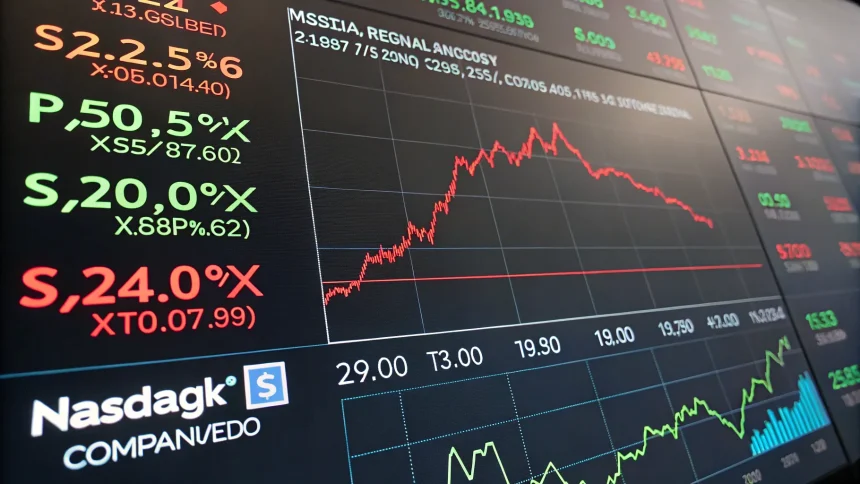
U.S. technology shares slumped in early trading, snapping a calm open and rattling investors who had grown used to steady gains. The Nasdaq Composite fell after starting flat, pulling major averages lower on a day when many stocks were actually rising.
By midday, the tech-heavy index was down 0.8% and still sliding. The S&P 500 also dipped 0.2%, even though a majority of its constituents traded higher. Traders said the move signaled a rotation away from mega-cap tech that has led markets this year.
“Tech stocks are getting crushed.”
“The Nasdaq Composite fell suddenly after opening flat.”
“The S&P 500 was down 0.2%, even though 382 stocks in the index were on track to close higher.”
What’s moving the market
The selloff centered on large technology names that dominate major indexes. Because a handful of companies carry heavy weights, sharp drops in those shares can pull the benchmarks down even when most stocks are up. That is what appeared to happen as the day wore on.
Strategists pointed to a few forces. Some investors took profits after a strong run in tech this year. Others cited concerns about valuations as earnings season approaches. A rise in caution often hits the highest-growth names first.
Market breadth, however, told a different story. With 382 stocks in the S&P 500 trading higher, gains in banks, industrials, and defensive shares helped cushion the blow. That split hints at a rotation rather than a full risk-off move.
Background: concentration risk comes into view
Market concentration has been a recurring theme over the past two years. A small group of mega-cap companies has driven a large share of index returns. That has lifted portfolios that track the S&P 500 or Nasdaq, but it has also raised risks if leadership stumbles.
Days like this make those risks visible. When leadership weakens, cap-weighted indexes can fall even as a majority of stocks rise. Equal-weight indexes often hold up better in such sessions, reflecting broader participation.
Historically, similar episodes have surfaced around earnings announcements, policy shifts, or sudden moves in bond yields. The common thread is sensitivity in high-growth sectors when investors reassess the price they are willing to pay for future profits.
Inside the rotation: winners and laggards
The day’s action suggested money flowed from high-multiple tech into steadier sectors. That can happen when managers look to reduce risk or lock in gains. It can also happen when the revenue outlook for software, chips, or cloud services becomes less certain.
Several analysts said the price action fit a familiar pattern. Weakness clustered in the most crowded trades, while areas left behind this year found buyers. That can continue for days or reverse quickly if a major catalyst changes the tone.
- Leaders under pressure: Mega-cap tech weighed on index performance.
- Broad participation: Most S&P 500 stocks traded higher despite the index dip.
- Rotation theme: Defensive and cyclical names showed relative strength.
What this means for investors
For long-term investors, the message is about balance. Heavy exposure to a few dominant names can drive performance, but it can also magnify down days like this. Diversifying across sectors and market caps can reduce the impact of sharp swings in one corner of the market.
Short-term traders will watch whether breadth remains positive. If it holds, the damage may stay contained to overowned areas. If breadth weakens, the pullback could broaden.
What to watch next
Eyes turn to upcoming earnings from large technology firms, guidance on spending, and any signs of slower growth in key end markets. Moves in Treasury yields and policy headlines could also influence risk appetite.
For now, the message is clear from the tape: leadership is wobbling. As one trader put it, “When the biggest names slip, the indexes feel it fast.” The counterweight is healthy participation elsewhere, captured by the 382 S&P gainers, which hints at resilience under the surface.
The next few sessions will show whether this was a brief shakeout or the start of a longer handoff from mega-cap tech to the rest of the market. Watch breadth, earnings guidance, and sector leadership for the tell.