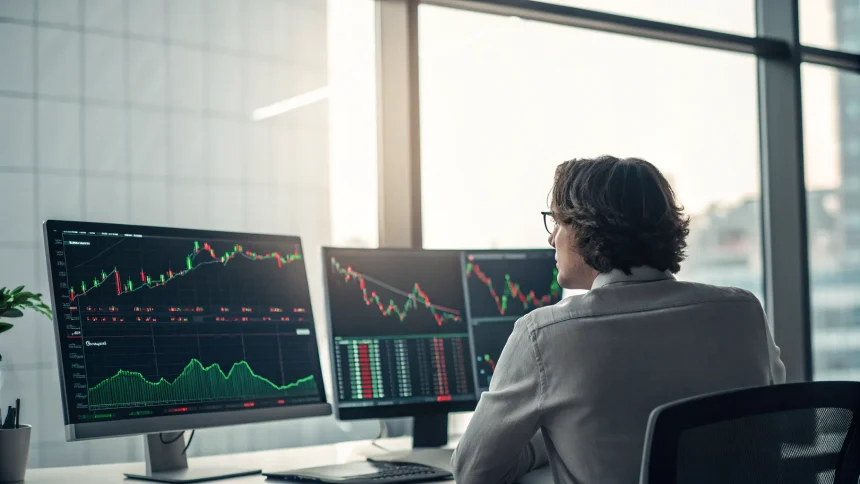
U.S. shares saw sharp price swings after the closing bell as traders reacted to fresh headlines and company updates. The moves came in the extended session, when fewer orders can magnify price changes. Investors watched for clues on profits, guidance, and demand as companies shared new information.
Extended trading takes place on electronic networks after the regular session ends. It allows orders to match outside normal hours. It also reacts quickly to news that drops late in the day. That speed can create sudden gaps, both up and down.
What Extended Trading Means
After-hours trading begins once the main exchanges close. It runs on electronic communication networks that match buyers and sellers. Fewer participants trade at this time, which often leads to wider spreads and bigger jumps.
Lower liquidity can exaggerate moves. A single large order can push prices farther than it would during the day. That can benefit fast movers. It can also punish late entrants who chase a move that fades by morning.
“These are the stocks posting the largest moves in extended trading,” a market presenter said, signaling a busy session after the bell.
Why Prices Move After the Bell
Company news often lands once regular trading ends. Earnings reports, guidance, and management comments set the tone. Traders recalibrate their views in real time and place orders into the thinner market.
Several forces tend to spark the biggest moves:
- Earnings beats or misses against analyst expectations.
- Forward guidance changes on revenue, margins, or cash flow.
- Surprise updates on product launches, customers, or delays.
- Mergers, divestitures, or leadership changes.
- Regulatory actions or legal rulings with near-term impact.
Economic releases and policy headlines can also spill into the evening. Currency and futures markets move first. Equity traders then adjust to the new backdrop before the next day’s open.
Signals and Noise for Investors
Not every after-hours move holds through the next session. Early reactions can be emotional and order-driven. As more participants join, prices often retrace part of the move. The next morning brings more volume, more data, and a broader view.
Investors should separate headline risk from lasting change. A margin slip from higher input costs may pass. A cut to full-year guidance suggests deeper strain. Color from earnings calls can help decode which forces are temporary and which are structural.
Price action alone can mislead. Consider context such as backlog, pipeline, and customer mix. Check whether revenue quality is improving or if growth relies on discounts. Free cash flow, inventories, and churn rates can confirm the story behind the move.
How Professionals Approach the Session
Institutional desks plan scenarios before results hit the wire. They track expected ranges, key metrics, and risk limits. If results diverge from the playbook, they act quickly but size trades with care.
Retail traders face extra execution risk at night. Limit orders help control entry and exit prices. Stop orders can slip in thin markets. Spreads may widen without warning, and price quotes can jump between prints.
Many long-term investors wait for the open. They prefer to see full liquidity and digest management’s comments. Patience can reduce slippage, though it may mean missing the first wave.
What to Watch Next
The next milestones are the earnings calls that follow the numbers. Management tone often steers the stock more than a single line item. Watch for detail on demand, pricing, and cost controls.
Guidance remains the central driver. Markets reward clarity and punish uncertainty. If companies raise visibility on orders and margins, the initial jumps may extend. If they dodge tough questions, gains can fade fast.
Sector read-throughs matter as well. A supplier’s warning can ripple across customers. A strong update from a category leader can lift peers. Cross-check peers, supply chains, and channel data for confirmation.
The late session’s sharp moves highlight how quickly sentiment can swing when new facts arrive. For traders, speed and discipline matter. For investors, process and patience help filter signal from noise. The next wave of guidance and call commentary will show which jumps are here to stay—and which were just the first reaction in a thin market.