

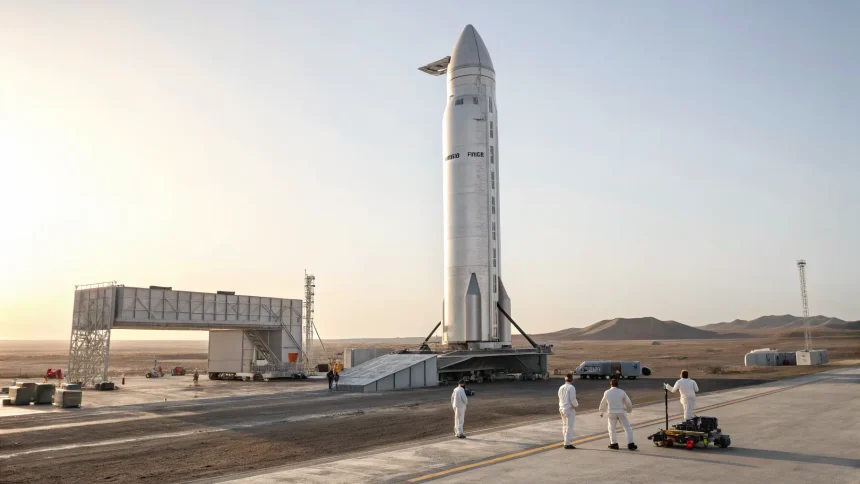
SpaceX’s giant Starship system is edging forward, yet a clear message is emerging: more work is needed before a full orbital flight is routine. The company has logged rapid progress at its South Texas site, but crucial tests remain before the rocket can reach and operate in low-Earth orbit. The outcome will shape NASA’s lunar schedule and the future price of access to space.
Background: Big targets and early results
Starship is the tallest and most powerful rocket ever built. It stands about 120 meters high and uses 33 methane-fueled Raptor engines on its first stage. The design goal is full and rapid reuse of both stages.
Test flights since 2023 have moved from short hops to high-altitude missions. Early attempts lost vehicles soon after liftoff. Later flights demonstrated hot-stage separation, higher ascent performance, and controlled splashdowns. Each step closed gaps, but full orbital insertion and controlled recovery are still ahead.
The Federal Aviation Administration has overseen mishap reviews after each loss of vehicle. Environmental groups and local agencies are also watching operations on the Gulf Coast. These checks shape the tempo of tests and upgrades.
What remains before orbit
“SpaceX has more to prove before flying Starship all the way to low-Earth orbit.”
Reaching orbit demands more than thrust. The ship must survive ascent loads, achieve orbital velocity near 7.8 kilometers per second, and then handle intense reentry heating. Thousands of heat-shield tiles must stay in place and perform on time.
Propellant transfer, on-orbit relight, and precise guidance are also on the to-do list. SpaceX plans in-space refueling to support deep-space missions. That requires chill-down procedures, leak-free plumbing, and stable fluid handling in microgravity.
Recovery and reuse are key to lowering costs. The first stage aims to return for controlled landing and eventual catch on the launch tower. The upper stage must manage a targeted descent and reuse with minimal refurbishment.
Regulatory pathway and public oversight
Each flight needs an updated license. The FAA assesses risk to people and property and reviews anomalies. Mitigation steps can add design changes or new ground procedures.
Local environmental reviews continue around Boca Chica. Night launches, sonic booms, and debris handling remain under scrutiny. Community impact and wildlife protection shape operating windows and recovery plans.
NASA’s moon program and the wider market
NASA selected Starship as the human landing system for a crewed lunar mission later this decade. The agency delayed timelines in early 2024 to allow more testing across its programs. A proven Starship is important for that schedule.
Industry analysts say a reusable heavy-lift vehicle could reset launch economics. If Starship flies often and reuses hardware, per-kilogram prices to orbit could drop. That could unlock larger satellites, fuel depots, and on-orbit assembly.
Competitors are advancing, too. Blue Origin’s New Glenn and national heavy-lift vehicles seek their own milestones. Multiple options would reduce risk for government and commercial users.
Key milestones to watch
- Longer-duration flights that hit target velocities and planned splashdown zones.
- Heat-shield performance through peak reentry heating without major tile loss.
- First demonstrations of in-space propellant transfer.
- Return, landing, and reuse of both stages with short turnaround times.
- FAA licensing updates and environmental compliance steps after each test.
Expert views and risk outlook
Engine reliability remains a central risk. Thirty-three engines must ignite, throttle, and shut down on command. Even small faults can cascade. Avionics, stage separation timing, and plume effects add complexity.
Thermal protection is another make-or-break area. A few missing tiles can create hot spots and structural damage. Recent flights showed improved tile retention, yet full orbital reentry is harsher.
Supply chain and ground systems also matter. Tank farms, deluge systems, and pad shielding must support higher cadence without major repairs. Each fix between flights slows learning cycles.
The road to orbit is getting shorter, but it is not finished. The next flights will test heat shields, engine reliability, and operations that enable reuse. If those pieces come together, Starship could lower costs and support NASA’s moon plans. If not, schedules will slip and competitors will gain ground. Watch for licensing updates, reentry results, and the first in-space fueling tests as signs of what comes next.