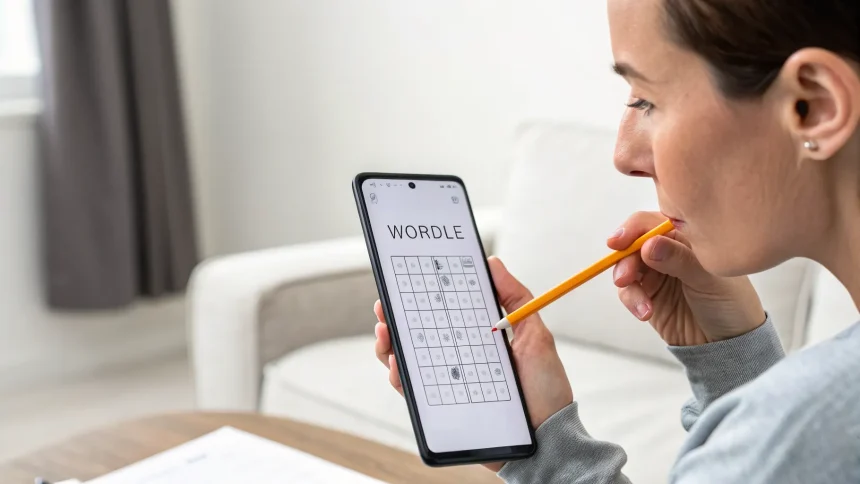
As another daily Wordle lands, a familiar surge of players looks for guidance, seeking not spoilers but smarter paths to a clean solve and a protected streak. The five-letter puzzle from the New York Times continues to draw a massive audience each morning, and with it, a steady market for hints, clues, and quiet coaching that keeps the game fair and fun.
Created by software engineer Josh Wardle in 2021 and acquired by the Times the following year, the game’s simple rules—six guesses to find a hidden word—disguise a deeper contest of pattern recognition, probability, and restraint. The latest wave of advice stresses method over miracles: careful starts, informed letter choices, and calm endgame tactics.
“Here are some expert hints, clues and commentary to help you solve today’s Wordle and sharpen your guessing game.”
How a simple grid became a daily ritual
Wordle spread across social media in late 2021, when players began sharing results as grids of colored squares. The format allowed bragging without revealing the answer. That clarity helped it travel quickly and made streaks a point of pride. The New York Times bought Wordle in 2022 and kept it free, integrating analytics tools such as WordleBot to teach stronger play without spoiling the day’s word.
The appeal lies in limits. One puzzle per day, one solution for the world, and six tries to get there. With only three colors—green for correct spot, yellow for correct letter, gray for not used—the feedback loop is tight. That restraint draws in casual solvers while giving serious players enough data to build a system.
The case for smarter starts
Strategists argue that the first guess sets the tone for the entire solve. Many recommend opening with a word that covers common letters and multiple vowels, reducing uncertainty fast. Others prefer a consonant-first approach, targeting letters such as S, T, R, N, and L. Both camps agree on one rule: avoid repeating letters in the opener, which wastes coverage.
- Use an opening word with common letters and at least two vowels.
- On guess two, cover new letters unless green or yellow feedback narrows the field.
- Avoid reusing gray letters; it drains guesses without adding information.
Wordle’s “Hard Mode” makes this discipline mandatory by forcing players to use known greens and yellows. Even off Hard Mode, advanced solvers tend to mimic that behavior. It speeds the path to a unique candidate set and preserves the fifth and sixth guesses for tie-breakers.
When hints help—and when they hurt
There is a difference between a nudge and an answer. General clues—such as noting a double letter or warning of common traps like -ATCH families—can protect streaks without spoiling the fun. Overly specific hints, or direct reveals, erase the challenge and the shared social moment that made the game popular in the first place.
The balance matters because Wordle has weathered controversy when answers felt off-limits or out of step. In 2022, the puzzle briefly served an answer that many players found poorly timed, prompting the Times to adjust its word list and distribution. That episode highlighted the care needed when one word becomes a daily headline.
Probability, patience, and the endgame
Late in the solve, players face the toughest choice: lock a guess or keep gathering data. Experts often recommend a “probe” word when multiple candidates remain—one that tests several uncertain letters at once. It may sacrifice a guess, but it prevents a loss to a coin flip among lookalikes like SLATE, STALE, and STEAL.
Letter frequency helps, but position patterns help more. English tends to place common consonants at the start and vowels in slots two and three. Watching for silent letters and typical endings like -ER or -ED can narrow the field faster than raw frequency charts.
A growing ecosystem of spinoffs and tools
Wordle’s success has fed a cottage industry of variants and analysis. Some players migrate to harder modes and sister games once they secure the daily solve. Others use data tools to review their choices and learn how a different opener might have saved a guess. These add-ons keep engagement high while reinforcing best practices.
Still, the core remains intact: a shared puzzle, no rerolls, and a quiet race against the clock. The playbook is open, but the joy comes from making it work under pressure.
As today’s grid resets social feeds and group chats, the message from seasoned solvers is simple: start wide, track feedback, and protect the final guess. Smart hints can steady the hand without taking over the solve. Expect the community to keep trading clean, spoiler-free nudges—and watch the streaks grow longer as players refine the craft one square at a time.