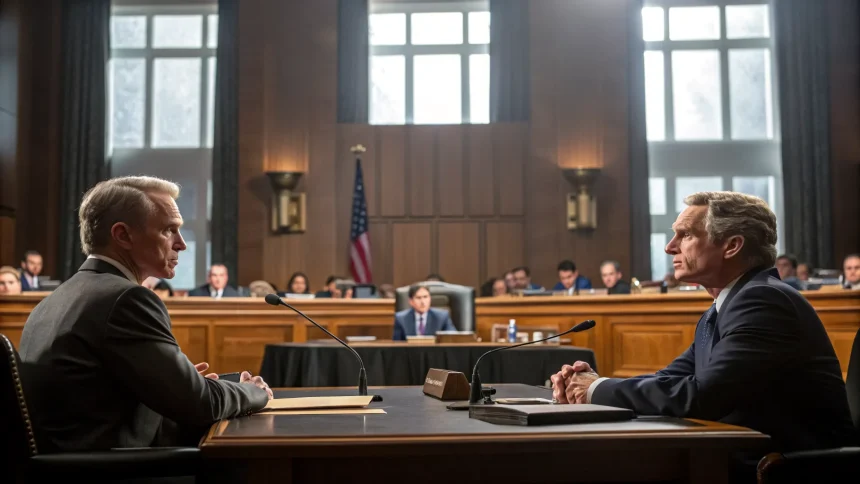
A tense Senate hearing put vaccine access and safety back in the national spotlight as Robert F. Kennedy Jr. defended recent moves to restrict availability, while Senator Ron Johnson cited a study claiming vaccinated people face higher risks of chronic illness. The exchange, held in Washington this week, highlighted deep divisions over public health policy and the evidence guiding it.
Lawmakers pressed Kennedy on how tighter limits on certain vaccines would affect schools, employers, and healthcare providers. Johnson’s reference to a study alleging long-term harm from vaccines drew immediate pushback from public health advocates and some committee members.
Background: Long-Running Tensions Over Vaccination
Vaccination policy has been a political flashpoint for years, intensifying during and after the COVID-19 pandemic. Debates often center on balancing personal choice with population-level protection. School requirements, workplace mandates, and funding for immunization programs remain recurring points of contention.
U.S. health agencies, including the Centers for Disease Control and Prevention (CDC) and the Food and Drug Administration (FDA), state that authorized vaccines undergo rigorous trials and continuous monitoring. Serious side effects are rare, and the benefits of preventing disease generally outweigh known risks.
At the hearing, Kennedy said the goal of tighter access is targeted caution and transparency, not blanket rejection of vaccines. He argued that select products warrant closer review before broad use.
Inside the Hearing: Arguments and Pushback
“We are tightening access where signals suggest caution, and we are being honest with the public about what we know and what we do not,” Kennedy said.
Several senators questioned whether new limits could disrupt routine childhood immunizations and reduce community protection against outbreaks. They warned that even small drops in vaccination rates can lead to resurgences of measles, whooping cough, and other preventable diseases.
Public health groups say access limits can have wide ripple effects. Pediatricians often rely on predictable supply and clear guidance to plan clinics and school-based programs. Shifts in policy, they argue, risk confusion and missed doses.
The Study Cited by Senator Johnson
“A recent study indicates vaccinated people may be more prone to chronic illness,” Johnson said, urging the committee to investigate further.
Johnson did not detail the study’s design, population, or peer-review status during the exchange. Experts often warn that associations in observational studies do not prove causation. Confounding factors, such as healthcare-seeking behavior or differences in age and underlying conditions, can distort results.
Major reviews from the CDC, the National Academies of Sciences, Engineering, and Medicine, and international regulators have not found credible evidence that routine vaccines increase long-term chronic disease risk in the general population. Safety monitoring systems, including the Vaccine Safety Datalink and the FDA’s Sentinel Initiative, track signals in real time and publish regular updates.
- Causation requires consistent, high-quality evidence across studies.
- Single studies with limited data can mislead if taken in isolation.
- Regulators adjust guidance when strong safety signals emerge.
Implications for Public Health and Policy
If access narrows, even temporarily, clinics may postpone appointments and parents may face longer wait times. Health systems could see lower coverage rates, especially in communities with limited resources. That poses risks for outbreaks, which tend to hit the most vulnerable first.
Industry groups warn that shifting policies can complicate manufacturing and supply chains. Vaccine makers plan production months ahead. Sudden changes at the federal or state level can result in surpluses of some doses and shortages of others.
Advocates for more caution counter that closer scrutiny can strengthen trust. They say clear communication of benefits and risks helps patients make informed choices and reduces backlash when rare side effects appear.
What To Watch Next
Committee members signaled interest in obtaining the full methodology of the study Johnson referenced and scheduling briefings with federal safety monitoring teams. They also requested updated risk-benefit assessments for any vaccines under access restrictions, including data on hospitalizations and deaths prevented.
Several senators asked for contingency plans to protect routine immunization programs, such as school-entry checks and back-to-school clinics. Providers want simple, consistent guidance to avoid missed doses and gaps in protection.
The hearing ended without a final policy shift, but with a clear promise of more data and more oversight. Kennedy said he would provide a timeline for reviewing the restricted products and for public updates on safety findings.
The debate now turns on evidence. Lawmakers will need clear study designs, transparent data, and timely public updates. The next steps will show whether new limits can coexist with strong vaccination coverage—or whether the policy risks a setback in disease prevention.