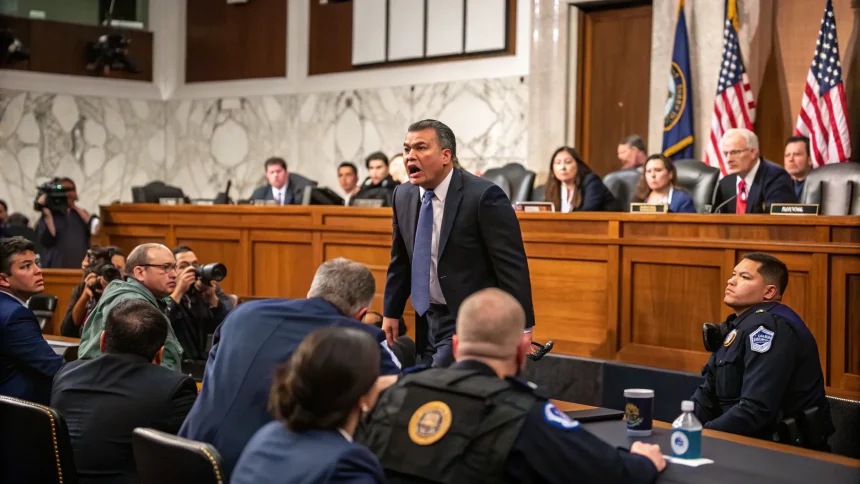
A Senate Judiciary Subcommittee hearing on immigration enforcement turned tense as Sen. Alex Padilla walked out in protest, accusing colleagues of staging a political event. The session, held on Capitol Hill, featured testimony from law enforcement officials, policy experts, and journalists. Lawmakers argued over the goals and tone of the hearing, which was titled “Radical Left’s Crusade Against Immigration Enforcement.”
The dispute showed how sharply divided Congress remains on border security and interior enforcement. Supporters framed the meeting as a response to public safety concerns. Critics warned that the approach risks inflaming rhetoric rather than solving problems.
Background and Context
Immigration enforcement has long been a flashpoint in national politics. Enforcement policy often swings with changes in the White House and Congress. Cities and states also debate their roles, including cooperation with federal agencies and detention practices.
Past congressional hearings have focused on asylum processing, the capacity of border facilities, and the use of local jails for federal holds. Courts have weighed in on issues such as detainers, due process, and limits on executive action. These legal fights shape what agencies can and cannot do on the ground.
Public opinion remains mixed. Many voters want stronger border controls, while others stress protections for asylum seekers and long-settled families. This split leads to frequent standoffs over funding, staffing, and legal authority.
What Witnesses Brought to the Table
The panel drew a wide range of voices. Witnesses described local impacts, policy trade-offs, and media reporting on enforcement practices. Their accounts tracked both operational needs and civil liberties concerns.
- Law enforcement officials discussed on-the-ground challenges and resource gaps.
- Policy experts examined legal standards and federal-state coordination.
- Journalists detailed public narratives and reported case trends.
Supporters of tougher enforcement argued that local agencies need clearer authority and more coordination with federal officers. They urged faster proceedings and stronger interior checks. Critics pushed for safeguards in detention and screening, warning against sweeping policies that catch nonviolent residents or long-time workers.
A Title and a Walkout
The hearing title itself became a point of contention for Democrats and some advocates, who saw it as loaded language. It framed the discussion as an ideological battle rather than a policy review.
“Radical Left’s Crusade Against Immigration Enforcement.”
Tensions peaked when Sen. Alex Padilla left the room during the session. He objected to the premise and tone of the event.
Sen. Padilla called the proceedings “politically motivated.”
Republicans on the panel defended the framing, saying communities are calling for action. They argued that recent policy choices have strained officers and courts. Democrats countered that real solutions require measured debate and workable legislation.
Policy Stakes and Possible Paths
The discussion pointed to several policy fronts that could see movement. These include interagency data sharing, detention standards, and court backlogs. Witnesses stressed the need for clarity on when local police should cooperate with federal officers.
Some experts urged Congress to invest in immigration courts and legal staffing. That could reduce delays and improve screening for asylum and removal cases. Others pressed for tighter employment checks and penalties on repeat offenders. Several called for careful oversight to protect due process.
There was limited agreement on the value of better data and transparency. Clear reporting on arrests, releases, and outcomes could inform future debates. It could also help communities track the effects of policy changes.
Public Impact and Next Steps
Communities will feel the effects of any shift in enforcement, from workplace checks to local jail holds. Business groups, schools, and health providers often face hard choices when policies change quickly. Families also carry the burden when cases drag on for years.
The subcommittee may use the testimony to draft proposals on coordination and oversight. Any bill will face tough negotiations in both chambers. The hearing’s tone suggests that bipartisan deals will be hard without neutral framing and shared facts.
The walkout highlighted the gap between the parties. It also signaled how campaign-season messaging can shape official proceedings.
The session ended without a clear resolution. But it set the terms for the next round of debate on border security and interior enforcement. Lawmakers now must decide whether to pursue narrower agreements or keep the fight going. Watch for moves on court funding, detention standards, and data reporting in the months ahead.