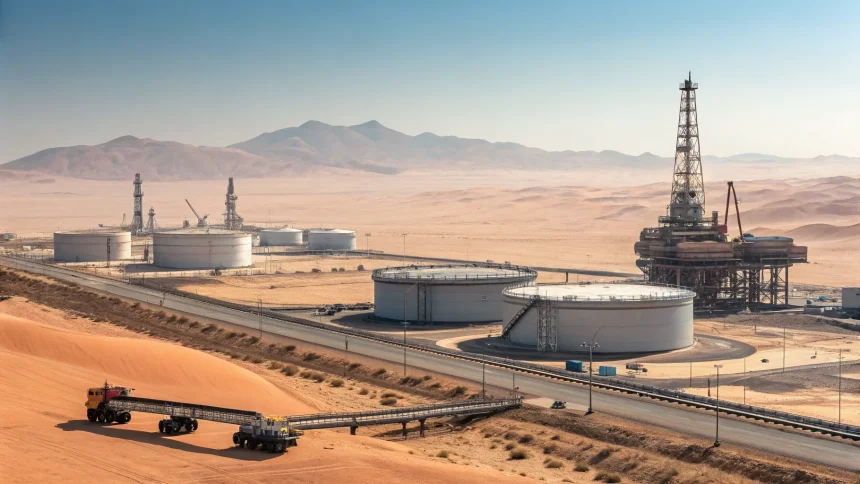
Fears of excess supply in the Middle East are dragging crude benchmarks lower as traders weigh weak buying interest against steady export programs. Producers, refiners, and shipping firms across the region are reacting to a market that looks long on barrels and short on buyers.
The Middle Eastern oil market has weakened in recent weeks on concern that regional supplies will outstrip demand, adding to signs of a softening global picture that’s weighed on benchmark crude futures.
The shift arrives as seasonal refinery maintenance in Asia overlaps with fragile demand in key consuming countries. It also follows months of cautious output policy from OPEC+ and a bumpy global growth outlook. The result is a thinner bid for regional grades and renewed pressure on forward prices.
Why the market softened
Supply from core Middle East exporters has stayed consistent even as buyers trimmed runs or delayed cargo nominations. Physical trading for spot barrels shows weaker differentials, a sign that sellers are making price concessions to move cargoes. Traders point to contango in prompt futures, which can reflect a near-term surplus and encourage storage.
Several drivers line up at once. Asian refiners, the region’s largest customers, often reduce throughput during spring and autumn maintenance. Petrochemical margins have been uneven, limiting appetite for feedstocks. Economic signals from large economies remain mixed, dampening demand growth for diesel and gasoline.
OPEC+ calculus and price signals
OPEC+ has tried to manage balances with coordinated curbs. Yet the group must weigh market share against price stability. If differentials for Middle East grades continue to slip, pressure could build for tighter guidance on exports or longer voluntary cuts. The group has used official selling prices to steer flows toward core customers, but softer benchmarks complicate that task.
Forward curves and time spreads offer an early warning. When prompt barrels trade at a discount to later months, physical buyers gain leverage. Freight costs and insurance add another layer, especially when disruptions or reroutings shift tanker availability.
Refiners’ view: margins, inventories, and timing
Refiners benefit from cheaper feedstock, but weak product cracks can blunt the advantage. If gasoline and diesel margins fail to improve, utilization rates may stay muted. That leaves tanks relatively full and reduces the urgency to lock in crude cargoes.
- Seasonal maintenance reduces short-term crude demand.
- Weak product cracks curb run rates and buying interest.
- Contango encourages storage rather than prompt consumption.
Inventory management is central. Reports of higher onshore and floating stocks around major hubs point to comfortable supply. A warmer winter or slower freight could extend the overhang. Conversely, a heat-driven power demand surge or a rebound in travel could tighten balances faster than expected.
Traders’ and producers’ responses
Physical traders are adjusting terms, including wider quality allowances and longer laycan windows, to place cargoes. Some sellers are signaling flexibility on loading schedules. Others are leaning on term contracts to clear volumes at set formulas tied to benchmarks.
Producers face a choice. They can accept lower differentials to defend market share, or hold ground and risk deferred liftings. The path they take will influence how quickly benchmarks stabilize. Any hint of deeper cuts or firmer guidance could spark a rebound in timespreads.
What could change the outlook
Several catalysts could shift sentiment. Stronger travel demand would lift jet fuel use heading into peak seasons. Industrial activity in major economies could revive diesel consumption. Geopolitical risks that affect shipping lanes might tighten prompt availability, even without a change in total output.
On the bearish side, persistent macro weakness or new refinery capacity coming online without matching demand would keep the market heavy. A strong dollar can also weigh on price levels by making imports more expensive for non-U.S. buyers.
Analysts are watching:
- Official selling prices and differentials for key Middle East grades.
- Refinery runs and product cracks in Asia and Europe.
- Time spreads in Brent and Dubai benchmarks for signs of tightening or easing.
The current softness reflects a tug-of-war between reliable supply and uneven consumption. As refiners exit maintenance and travel patterns firm up, balances could improve. For now, weaker differentials and a flatter forward curve show that buyers hold the upper hand.
Market direction will hinge on OPEC+ guidance, refining margins, and inventory trends over the next few weeks. If demand picks up and stocks draw, differentials should recover. If not, producers may need to throttle exports more decisively to firm prices.