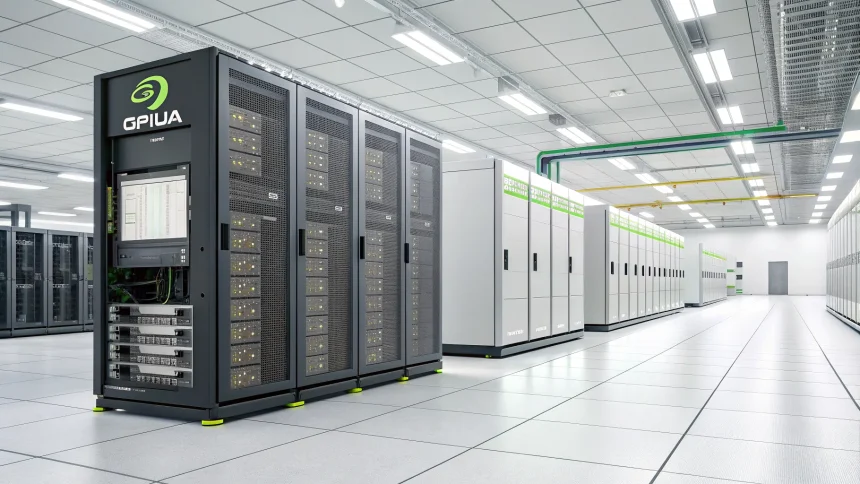
Nvidia is deepening its push into artificial intelligence by pairing strategic partnerships with direct financial stakes, tightening ties across the sector as demand for compute soars. The company has been aligning supply deals, software collaborations, and cloud access with capital support for select partners and customers, according to industry accounts and regulatory filings.
The approach connects who gets priority access to Nvidia chips with who receives backing, and it is reshaping how AI firms build and scale models. It also raises questions about competition, supply concentration, and the durability of these alliances as the market grows.
Background: GPUs, Shortages, and Leverage
Nvidia’s rise has been powered by its graphics processing units, which are now central to training and running large AI models. Over the past two years, limited supply of advanced chips and high demand from startups and cloud providers have given the company unusual leverage in setting terms with partners.
Previous tech cycles saw chipmakers sell hardware and exit. Today, Nvidia often goes further. It offers cloud-hosted platforms, software libraries, and reference systems, while taking equity or providing financing to key customers building AI infrastructure.
These ties have accelerated growth for firms that secure both chips and cash, while locking in long-term use of Nvidia’s hardware and software stack.
How the Deals Are Structured
While terms vary, common threads have emerged. Partners seek steady access to GPUs, favorable pricing, and early support for new architectures. Nvidia seeks commitments to its platform and visibility into demand.
- Hardware and cloud agreements tied to future chip generations.
- Equity stakes or financing that back data center buildouts.
- Joint work on software optimization, networking, and systems design.
Public reporting has highlighted examples in AI cloud providers and model startups. Data center operators serving AI workloads have received financing alongside long-term purchase plans. Founders say the capital helps them move faster, while Nvidia secures customers as they scale.
“Nvidia continues to strike AI relationships that come alongside financial investments.”
The result is a tighter loop between supplier and buyer in a market where time-to-compute can define winners.
Industry Impact and Tensions
The strategy has clear benefits. Startups get supply in a tight market. Nvidia improves forecast accuracy, supports the ecosystem using its software tools, and embeds its technology across the stack from chips to inference services.
But it also concentrates power. Competitors in chips may find it harder to dislodge incumbents if major AI providers are financially linked to Nvidia and have optimized their code for its platform. Smaller developers could face longer queues or higher costs if supply stays tight.
Policy analysts have asked whether large supplier-customer investments could reduce choice over time. So far, regulators have focused more on large mergers than on minority stakes or financing tied to supply. Still, the pattern is drawing attention as AI spending climbs and infrastructure needs expand.
Data Points and Comparisons
AI compute demand has surged alongside the use of large language models in search, productivity tools, and enterprise software. Cloud spending on AI infrastructure is measured in tens of billions of dollars each year, with training clusters requiring specialized chips, high-bandwidth memory, and fast networking.
Historically, chip vendors offered reference designs and marketing funds. Today’s model looks closer to strategic co-investment. In some cases, financing supports long-lead items like data center space and power. In others, it helps fund model development that will run most efficiently on Nvidia’s stack.
Competitors are responding. Alternate GPU and accelerator suppliers are building software support, courting cloud partners, and offering long-term supply roadmaps. Hyperscalers are also growing their own custom silicon to reduce reliance and improve cost control.
What to Watch Next
Key signals will include how future contracts balance supply access with independence for buyers. Investors will watch whether Nvidia continues to take more minority stakes and whether those positions expand over time. Another marker is how fast software portability improves, which could reduce lock-in and open room for rivals.
Power and data center constraints will also shape outcomes. Partners with access to reliable energy and cooling will gain an edge. Financing that bridges construction and chip delivery could become a standard term across the industry.
Nvidia’s blend of partnership and investment has helped set the pace of AI infrastructure buildouts. The approach is likely to continue as new chip generations arrive and model complexity grows. For startups and cloud providers, the trade-off remains clear: secure supply and support now, while managing dependence later.