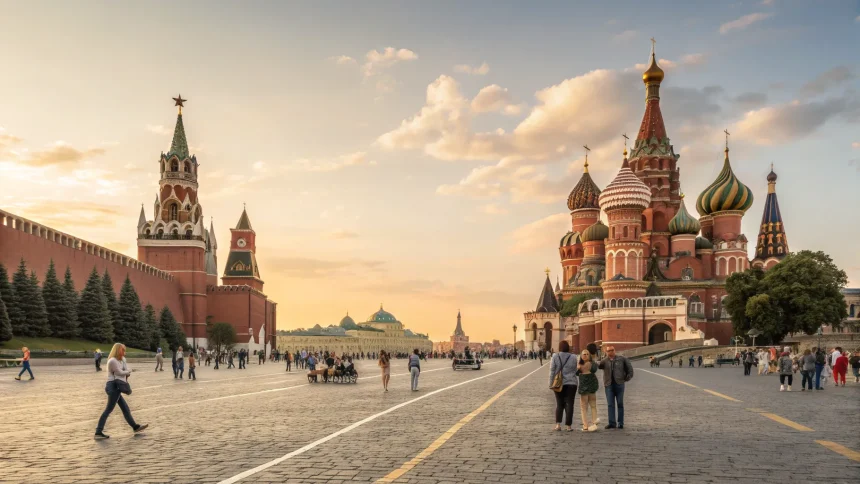
Moscow is polishing its image for visitors, and the effort is tied to foreign policy as much as city life. The push comes as Russia seeks new partners and new audiences for its capital. The changes are visible on streets, in transport hubs, and across cultural venues. City officials are staking Moscow’s future on visitors from non-Western markets, cultural diplomacy, and controlled openness.
“Russia is giving Moscow a tourist makeover. At the heart of this initiative is more than profit, but rather a geopolitical reorientation.”
The plan arrives after travel ties with Europe and North America weakened under sanctions and flight limits. City leaders are turning to Asia, the Middle East, and parts of Latin America. The goal is to keep hotels full, support jobs, and project influence through culture and design.
Background: From city upgrades to soft power
Over the past decade, Moscow has invested in parks, pedestrian zones, and transit. New walkways, riverfront projects, and upgraded stations improved daily life and tourist routes. These works set the stage for a pivot in visitor strategy.
Since 2022, the focus shifted from traditional Western tourists to markets less affected by sanctions. Authorities revived group travel with China and reintroduced an electronic visa for citizens of dozens of countries. Airlines reshaped routes through friendly hubs. Cultural institutions increased programming for new audiences, with more multilingual guides and curated events.
Tourism has become a tool for messaging. Showcasing safety, order, and heritage supports a foreign policy narrative. It invites visitors to see a capital open for business and culture, even as ties with the West remain strained.
What is changing for visitors
- Simplified entry for select countries via e-visas and group programs.
- More signage and audio guides in Asian and Middle Eastern languages.
- Expanded museum hours and city tours aligned with new flight schedules.
- Greater promotion of winter festivals and business events to extend stays.
Payment remains a hurdle for some travelers because foreign bank cards issued by major Western networks may not work in Russia. Hotels and tour agencies are steering guests to alternative payment options or prepayment through intermediaries. These workarounds shape where tourists book and spend.
Economics and the city’s bet on non-Western markets
Tourism supports hotels, restaurants, retail, and transport. With fewer Western visitors, Moscow is trying to fill rooms with travelers from China, the Gulf, India, and Central Asia. Business delegations and medical tourists are part of the mix. Conference planners are also targeting markets less exposed to sanctions.
The city’s gamble is that these segments can stabilize demand and raise spending. Hotel owners report steadier weekday occupancy tied to trade shows and corporate visits. Weekend demand depends on cultural events and sports. Small businesses in central districts are updating menus and hiring multilingual staff to capture new clientele.
Public space, security, and resident concerns
Tourist-friendly streets can boost local life, but they also bring trade-offs. Residents praise cleaner sidewalks and parks. They worry about rising rents, noise near nightlife zones, and a focus on showcase districts over outer neighborhoods. Security measures are visible, with cameras and frequent patrols in popular areas. This helps some visitors feel safe. Others see it as restrictive.
Analysts caution that a tourist makeover cannot fix broader economic limits. Flight options, payment systems, and political risk still shape demand. A sudden policy change in any partner country could shift arrivals overnight.
Cultural diplomacy in practice
Moscow’s museums and theaters are central to the strategy. Blockbuster exhibitions and city festivals aim to fill itineraries and social feeds. Partnerships with institutions in Asia and the Middle East bring touring shows and co-branded events. University programs recruit students who also bring visiting family and friends. These moves blur the line between culture, commerce, and foreign policy.
What to watch next
Several signals will show if the bet pays off: repeat visits from target markets, longer stays outside peak season, and more conferences booked well in advance. The city will likely expand e-visa access and add language services if demand grows. Payment options could broaden through regional networks and prepaid tools. Urban planners will face pressure to spread upgrades across districts, not just in postcard areas.
Russia’s capital is selling more than sights. It is selling a narrative of stability, culture, and new ties. Whether that resonates will depend on traveler experience, reliable transport, and a sense of welcome. For residents, the balance between livability and showpiece tourism will be the real test.