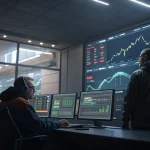
On Fox Business’ Making Money, host Charles Payne assessed the market’s early 2026 tone, weighing what is moving stocks now and what could shift momentum next. The segment focused on how investors are navigating fresh data, policy signals, and earnings guidance as the year gets underway.
Payne laid out the core debate: whether recent moves reflect a durable trend or a short-term reaction. The discussion centered on rate policy, corporate profits, and the health of consumer demand. It offered viewers a framework for reading near-term swings while keeping an eye on the longer arc of the cycle.
Setting the Stage for 2026
The start of a new year often brings recalibration. Portfolio managers reset positions. Companies issue guidance. Economic releases arrive in quick succession. This mix can raise volatility as traders test support and resistance levels.
Payne pointed to a familiar set of drivers. Interest rates still shape equity valuations. Earnings forecasts direct sector flows. Energy and commodity moves influence inflation expectations. He also flagged the role of mega-cap technology and how breadth matters for trend confirmation.
“Unpacks the action in the markets so far in 2026.”
The framing signaled a practical goal: help investors separate signal from noise. That means tracking data beats and misses, but also how the tape reacts to the news.
Rate Policy and Market Valuations
Interest rate expectations remain a key lever. When investors expect easier policy, growth sectors usually benefit. When the path looks tighter for longer, defensive groups tend to find support.
Payne emphasized the balance between inflation trends and employment strength. He noted that rate-sensitive corners such as housing and small caps can offer early tells on risk appetite. The bond market’s message, through yield levels and curve shape, also feeds into equity multiples.
Corporate Earnings and Sector Flows
Early earnings updates guide the year’s playbook. Companies that pair steady demand with cost control may defend margins. Those facing pricing pressure or slower unit growth can see estimates drift lower.
Payne highlighted the gap between mega-cap leaders and the rest of the market. Tech and AI-oriented names still anchor many portfolios, but investors are watching for rotation. Cyclicals could gain if growth steadies. Health care and utilities may help if volatility rises.
Consumer Strength and Retail Sentiment
Household spending drives a large share of economic activity. Retail updates, credit trends, and wage data shape that outlook. Payne suggested tracking big-box commentary and small business surveys for early reads.
He also addressed retail investor behavior. Positioning, options activity, and flows into index funds can amplify moves. Clear risk management—position sizing, diversification, and patience—remains important when headlines swing day to day.
What Investors Are Watching
- Policy path: Shifts in rate expectations and central bank tone.
- Profit guidance: Margin commentary and full-year outlooks.
- Leadership: Whether gains broaden beyond mega-caps.
- Costs and prices: Commodity moves and supply chain notes.
- Global risk: Trade, energy, and geopolitical hotspots.
Looking Ahead: Signals and Scenarios
Payne’s analysis framed a set of scenarios. A steady glide in inflation with resilient hiring could support a measured advance. A surprise jump in prices or a clear slowdown in demand could test valuations.
He urged viewers to watch how the market digests surprises. Strong news with weak price action, or soft news with strong action, often hints at the next swing. Liquidity and breadth are practical checks on the story the indexes tell.
The takeaway was clear. Early 2026 brings familiar crosscurrents: rates, earnings, and consumer health. Investors do not need to predict every data point. They need a process that reads the tape, respects risk, and adapts when facts change. Payne’s message aligned with that approach: focus on drivers, verify with price action, and stay disciplined as the year’s signals come into focus.