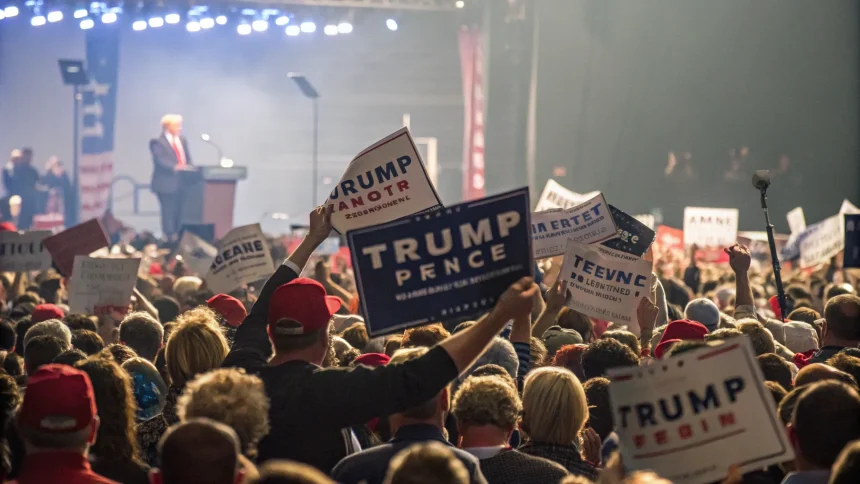
As the election season heats up, one candidate’s message strategy is again in focus for its simplicity and impact. President Donald Trump’s familiar mix of repetition, mockery, and vague sourcing has returned to rallies and social media, shaping headlines and voter attention. The approach is fast, memorable, and hard to ignore, forcing campaigns and newsrooms to respond in real time.
Three tactics that keep the spotlight
Trump’s communication style leans on three recurring tools that supporters recognize and critics debate. Each tactic draws attention and compresses complex issues into short, sticky lines.
He uses this phrase to lend weight to a claim without naming a source. It signals that a view is widespread, even when proof is thin.
He riffs on nicknames for his political enemies.
Labels are designed to be memorable. They compress an opponent’s image into a single word or phrase, then repeat it until it sticks.
He repeats a talking point relentlessly, hoping it’ll stick in people’s minds.
Repetition builds familiarity. Familiar lines can feel true, especially when echoed by allies and media coverage.
Why these methods work
Political messaging often rewards speed and clarity. Short phrases win the race for attention on television and social platforms. Research on the “illusory truth” effect shows that familiar claims can feel more credible over time, even when disputed. Nicknames serve a similar function. They frame opponents before policy debates start, shaping how voters process later news.
Vague sourcing plays another role. “Many people are saying” allows a speaker to promote a claim while avoiding direct ownership. It also nudges journalists to chase the story, which can amplify it. Supporters see this as plain talk. Critics say it muddies facts and shifts the burden of proof.
Media and campaign responses
News outlets have adjusted to these tactics with mixed results. Live coverage delivers immediacy but risks spreading unverified claims. Delayed reporting allows verification but can lose audience attention. Editors now balance speed with context, often adding instant fact boxes and sidebars.
Rival campaigns face a choice: ignore the nicknames and repeat lines, or rebut them and risk giving them oxygen. Some strategists favor a short rebuttal with a quick pivot to policy. Others mirror the simplicity by crafting their own sticky phrases. Both sides recognize that attention is a scarce resource.
What voters should watch for
- Listen for sourcing. If a claim rests on “many people are saying,” look for named experts or documents.
- Separate the label from the person. Check what the opponent has actually proposed or done.
- Notice repetition. If a line is new to you, ask whether it is supported by data.
The broader effect on politics
These tactics shape agendas by steering coverage toward drama over detail. Policy discussions can get crowded out by a single nickname or claim repeated across platforms. At the same time, supporters say the style cuts through what they view as media bias and bureaucratic language. The debate over form versus substance becomes the story itself.
Academics note that this pattern is not new. Past campaigns used slogans and one-liners to frame elections. What changed is the speed and scale of amplification. A line tested at a rally can move across the country in minutes, carried by influencers and partisan media.
Looking ahead
As the campaign continues, expect more short, repeatable lines and more pressure on fact-checkers. Voters will likely see competing narratives, each crafted for shareability. The test for the press will be to provide context without spreading falsehoods. The test for voters will be to demand sources and weigh records over labels.
Trump’s style remains clear: keep it simple, keep it sharp, and say it again. That method will shape coverage and conversation in the months ahead. The next stage belongs to audiences, editors, and opponents who decide what gets repeated, what gets checked, and what finally sticks.