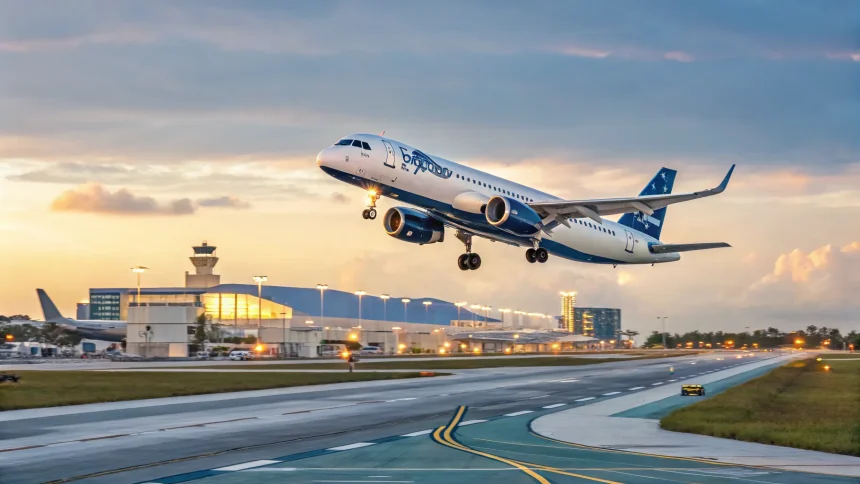
JetBlue is adding a new Fort Lauderdale–Cleveland route and stepping up flights on several existing lanes, signaling a sharper push into South Florida as travel demand holds. The move, announced as part of the airline’s JetForward strategy, aims to broaden the network while focusing on routes where leisure and visiting-friends-and-relatives travel remain strong.
“JetBlue’s Fort Lauderdale expansion adds a Cleveland route and boosts frequencies on key routes, part of its broader JetForward plan to expand its network.”
The carrier is doubling down on Fort Lauderdale-Hollywood International Airport, a longtime focus city and gateway to Caribbean and Latin American destinations. The new link to Cleveland adds fresh competition in the Midwest–Florida market, where travelers have faced volatile prices and limited nonstop choices outside peak season.
Why Fort Lauderdale, and why now
Fort Lauderdale has grown into one of the busiest airports in Florida, helped by steady population gains in the region and strong inbound tourism. JetBlue’s concentration there gives it room to adjust schedules and test new routes with lower risk than in congested Northeastern hubs.
By increasing frequencies on “key routes,” the airline is signaling confidence in demand that fills planes both on weekends and midweek. More frequency can win business travelers who value choice, but it also helps leisure flyers find better departure times and connections.
Inside the JetForward strategy
JetForward is JetBlue’s plan to reset growth, concentrate on profitable flying, and simplify operations after a period of legal and competitive strain. The strategy centers on reallocating planes to routes with steady demand, trimming underperformers, and improving day-to-day reliability.
Analysts say the plan also reflects a shift away from scattershot expansion. Instead, JetBlue appears to be reinforcing core stations like Fort Lauderdale and key Northeast cities while looking for point-to-point opportunities such as Cleveland that do not require connections in crowded hubs.
What the Cleveland addition signals
Cleveland has seen a rebound in air service since losing a major hub in the last decade. The city’s demand profile skews leisure on Florida runs, which often fill cabins in winter and spring. A direct link to Fort Lauderdale could support cruise traffic and connect to Caribbean flights with a single stop.
The market also has price-sensitive travelers who respond quickly to new capacity. More seats can pressure fares, at least at launch, and force rivals to match or adjust schedules.
Who wins, who adjusts
Travelers stand to gain from added choice and likely promotions around the route opening. South Florida’s tourism sector benefits when airlines deepen schedules outside peak holidays, keeping hotels, restaurants, and attractions busy for longer stretches of the year.
Competitors with a presence in Cleveland or Fort Lauderdale may face new pressure. Some could respond by adding flights, upgauging aircraft, or shifting capacity to stronger performers. Airports often welcome such moves for the added connectivity and fee revenue, but they also must manage gate and runway constraints during peak hours.
- More frequency can lift on-time performance by spreading demand across the day.
- New routes often launch with introductory fares and targeted marketing.
- Capacity growth can be seasonal, with schedules flexed after demand is tested.
Reliability and operations matter
A strong schedule is only as good as the operation behind it. Fort Lauderdale’s afternoon thunderstorms and tight turnaround times can strain punctuality. Adding frequency helps build buffer, but pilots, flight attendants, and maintenance support must align with the new plan.
JetForward’s promise rests on consistent execution. If the carrier can hold steady on on-time arrivals and baggage handling while growing, it improves customer sentiment and repeat business.
What to watch next
Look for follow-on updates that fill out the Fort Lauderdale schedule, including possible weekend-only runs or seasonal adds. Watch fare trends on the Cleveland route during the first 90 days, when promotional pricing is most common. Monitor whether the airline pairs the move with enhanced connections to Caribbean and Central American flights, which could turn Fort Lauderdale into a stronger bridge for Midwest travelers.
JetBlue’s latest step shows a carrier trying to match planes with places where people want to fly now. The Cleveland link and added frequencies in Fort Lauderdale are a test of that approach. If demand holds and operations stay steady, expect the airline to repeat the playbook in other mid-size markets, keeping pressure on rivals and giving travelers more choice at the times they want to fly.