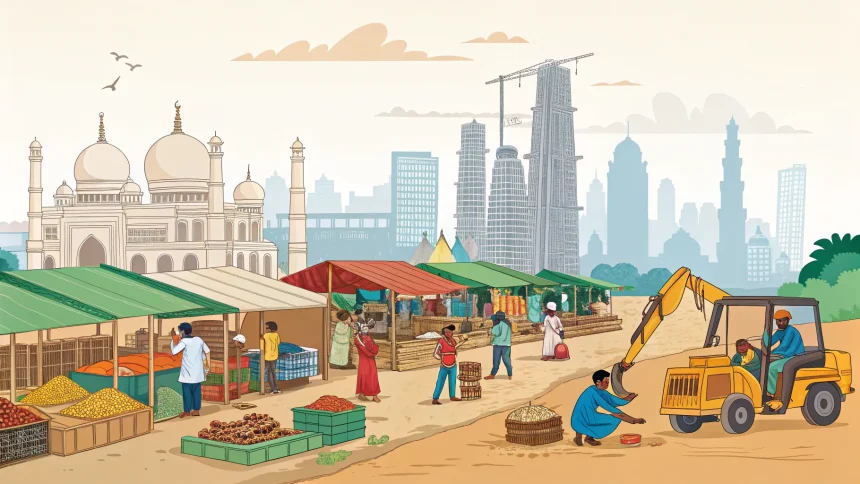
Global growth is expected to hold up in 2026, even as major economies cool. Goldman Sachs projects 2.8% global growth, with India at 6.7%, leading large economies by a wide margin. The firm sees emerging markets outpacing developed nations as inflation eases and investment returns.
The outlook points to steady demand, rising infrastructure spending, and fewer price pressures. The main risk sits in jobs. A weaker labor market could slow demand and dent confidence in several regions.
The forecast: steady, not spectacular
Goldman Sachs expects global activity to keep moving, but at a measured pace. The call is for 2.8% growth in 2026. That is consistent with a world that has cooled from the sharp post-pandemic rebound yet avoided a deep slump.
“Global economic growth is set for resilience in 2026.”
The bank’s view leans on easing inflation and a gradual recovery in investment. Lower inflation helps real incomes. It also gives central banks room to keep rates stable or lower them if needed.
India’s momentum: demand and building
India stands out in the forecast. The projection of 6.7% growth reflects thick domestic demand and heavy public works. Those drivers have supported jobs and lifted private investment in transport, power, and urban services.
“Strong domestic demand and infrastructure spending fuel India’s rise.”
Officials in New Delhi have kept capital spending high in recent budgets, aiming to ease supply bottlenecks and draw private capital. Lower inflation would support household spending and reduce pressure on borrowing costs. If the trend holds, India could widen its gap with slower peers in Asia and Europe.
Emerging markets vs. developed economies
Goldman Sachs expects emerging markets to outperform developed nations. Stronger population growth, earlier disinflation in some economies, and infrastructure cycles are part of the story. Meanwhile, many developed markets still face weak productivity and aging demographics.
“Emerging markets will outperform developed nations.”
Investors are watching for signs that rate cuts in major economies filter into cheaper financing for developing countries. If trade improves and commodity prices stay stable, the gap in growth could widen further.
Inflation trend: relief, with caveats
Price pressures have eased from their peaks. That relief helps real wages and steadies consumer demand. Goldman Sachs notes that an inflation cooldown supports growth into 2026.
Yet price shocks remain a risk. Food and energy costs, shipping disruptions, or supply setbacks could lift inflation again. Any flare-up would complicate the rate path and dampen household spending.
The risk to watch: labor market weakness
The most direct threat is softening jobs data. Slower hiring or rising layoffs could weigh on consumption and delay investment decisions. That risk is more acute in regions where household savings are already thin.
“Global labor market weakness is a noted risk.”
- Slower job growth could restrain consumer spending.
- Weak wage gains may pressure service sectors.
- Confidence effects can spill into housing and credit.
What this means for policy and markets
Central banks will likely proceed carefully. If inflation eases and jobs hold, modest rate cuts are possible. If labor markets falter, stimulus could come faster, though fiscal space varies by country.
For investors, the outlook favors selective exposure to emerging markets, with a focus on domestic demand stories. In developed markets, earnings resilience may hinge on cost control and productivity gains.
For businesses, the message is to plan for steady demand, monitor wage trends, and secure financing early. Supply chain resilience remains important if inflation risks reappear.
Global growth may not soar, but it looks stable. India’s expansion, supported by demand and infrastructure, is the bright spot. The balance of 2026 depends on jobs and prices. If inflation stays tame and labor markets hold, the forecast should stick. If not, expect a slower pace and a more cautious policy mix.