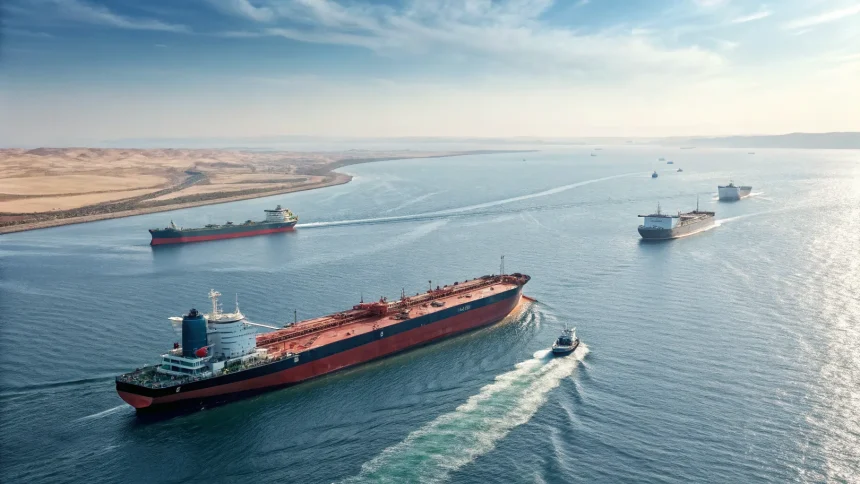
Oil prices slipped in Asia’s afternoon session as traders bet on an easier path for tankers through the Strait of Hormuz. The drop came as markets weighed signs that key shipping lanes could reopen soon, easing supply fears that had lifted crude in recent days. The move drew quick reactions across energy desks from Singapore to Tokyo, where buyers and sellers track this narrow waterway for clues on global flows and freight costs.
Oil prices fell in Asia’s afternoon trading session on hopes of the reopening of the Strait of Hormuz.
The shift reflects a familiar playbook. When risk to supply rises, prices climb. When risk appears to fade, prices adjust. The latest pullback shows how sensitive energy markets are to shipping access in the Gulf.
Why the Strait of Hormuz matters
The Strait of Hormuz is one of the world’s most important oil routes. It connects the Persian Gulf with the Gulf of Oman and the Arabian Sea. Tankers carrying crude and liquefied natural gas must pass through this narrow channel.
According to the U.S. Energy Information Administration, about one-fifth of the world’s oil trade moves through the strait in a typical year. Any delay there can ripple through prices, freight rates, and refinery schedules. Major producers in the region rely on this route to reach customers in Asia, Europe, and the United States.
Past tensions in the area have sparked price spikes and shipping detours. Insurers often raise premiums when risks climb. That can add costs to each barrel moved, even if no cargo is lost. When conditions stabilize, those costs can ease, and prices often retreat.
Market reaction and what drove it
Traders cited early signs that traffic could resume more freely, which would ease near-term supply bottlenecks. The expectation of smoother flows reduces the “risk premium” built into crude. That premium tends to swell during threats to transit and shrink when routes clear.
Refiners in Asia watch Hormuz closely because many import Middle Eastern grades. A reopened channel would help steady delivery times and crude slates. It may also cool spot freight rates, which jumped when delays mounted.
What could limit the price slide
Optimism can reverse quickly if new disruptions emerge. The strait is narrow, and naval escorts, inspections, or brief pauses can still slow traffic. Weather, port congestion, or technical issues can add fresh delays.
On the demand side, strong refinery runs into peak travel season can lift crude buying. If product inventories draw down, refiners may bid up specific grades even if overall sentiment softens.
Producers also have tools. Some Gulf exporters can route limited volumes through pipelines that bypass Hormuz. But these workarounds have finite capacity and cannot replace the strait at scale.
Signals traders will track next
- Actual tanker movements through Hormuz from vessel-tracking data.
- Insurance premiums and war-risk surcharges on Gulf routes.
- Spot freight rates for very large crude carriers on Middle East-to-Asia lanes.
- Refinery margins in Asia, which guide crude buying appetite.
- Official selling prices from key Middle East exporters.
- Inventory reports in the United States and OECD economies.
Wider economic stakes
Lower crude prices can ease fuel costs for consumers and businesses. Airlines, shippers, and logistics firms are among the first to feel any relief. If the decline holds, it could help temper inflation readings in oil-importing countries.
Central banks will watch energy costs as they assess interest-rate paths. A durable easing in oil could give policymakers more room if growth slows. But a quick rebound in prices would keep pressure on headline inflation.
The latest slide shows how a narrow channel can sway a global market. If traffic through Hormuz normalizes, the risk premium may fade further, and supply chains may find steadier footing. If not, volatility could return. For now, traders are watching ships, not speeches, for proof that flows are truly back on course.