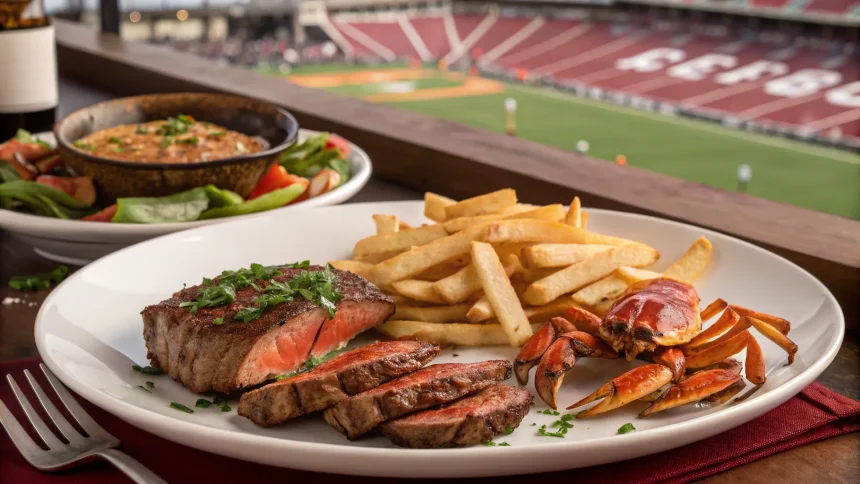
The Super Bowl returns to the Bay Area with a menu built to taste like home. Levy, the hospitality partner for the game, is rolling out dishes that highlight regional foodways for fans arriving this week at Levi’s Stadium in Santa Clara. The aim is simple: make the country’s biggest sporting event feel local, from kickoff to the last bite.
From steak frites to braised bone-in beef shank burgers and sourdough cinnamon rolls to fresh Dungeness crab, Super Bowl LX brings the Bay Area to life on the Levy menu
The stadium plan favors familiar ingredients, classic techniques, and portable formats fit for a four-hour event. It is a strategy that blends comfort food with Northern California seafood and bakery traditions. It also speaks to rising fan expectations for higher quality and regional character at major events.
Bay Area on a plate
Levy’s lineup mirrors the area’s mix of coastal seafood, bakery culture, and hearty proteins suited to winter football. The headline items reflect that range, with beef, fresh crab, and sourdough setting the tone.
- Steak frites: A brasserie staple adjusted for fast service.
- Braised bone-in beef shank burgers: Rich, slow-cooked meat in a handheld format.
- Sourdough cinnamon rolls: A nod to San Francisco’s signature dough, sweetened for game day.
- Fresh Dungeness crab: Peak-season seafood, served simply to showcase flavor.
The menu leans on seasonality. Dungeness crab is in market during winter, making it a timely choice. Sourdough points to a defining regional flavor that can be scaled without losing character.
Why local flavor matters
Major events have moved past one-size-fits-all menus. Stadiums now act like city gateways, and food is part of the welcome. Regional dishes help visitors connect with place, even during a brief stay.
For the Bay Area, that means seafood, sourdough, and slow cooking. It also means clear labeling and simple builds that keep lines moving. Fans want better food, but not at the cost of missing a drive.
The fan experience and price reality
Expect strong demand and premium pricing for fresh crab and large-format beef. Operators favor items that hold heat, assemble fast, and travel well to seats. That helps shorten lines and reduce waste.
Portion sizes are built for sharing. A braised shank burger can replace two standard sandwiches. Sides like fries and slaws will likely round out combos, offering value without slowing service.
Operations behind the menu
Bringing chef-driven items to a championship crowd requires planning. Slow-braised meats can be prepared ahead, then finished on site. Sourdough doughs and rolls scale well and reheat cleanly.
Seafood needs careful handling. Fresh crab will depend on secure supply and tight cold-chain controls. Clear signage will direct fans to specialty stands to keep queues balanced across the concourse.
What this signals for stadium food
Super Bowl menus have become showcases for regional identity. This year’s choices show that trend is holding. The focus is on quality ingredients and recognizable flavor rather than novelty alone.
Other venues are likely to follow. Expect more local bakery partnerships, seasonal seafood where coastal supply allows, and slow-cooked meats converted into handhelds for scale and speed.
What to watch on game day
- How quickly specialty stands move lines during peak halftime demand.
- Whether fresh crab sells through early, signaling strong appetite for seafood.
- Guest feedback on value, portion size, and flavor clarity.
The takeaway is clear. Super Bowl LX is using food to root the event in its host city. By centering sourdough, beef braises, and Dungeness crab, Levy is betting that fans want place-based flavor and comfort in one package. If service holds and supply meets demand, expect more stadiums to copy the model in seasons to come.