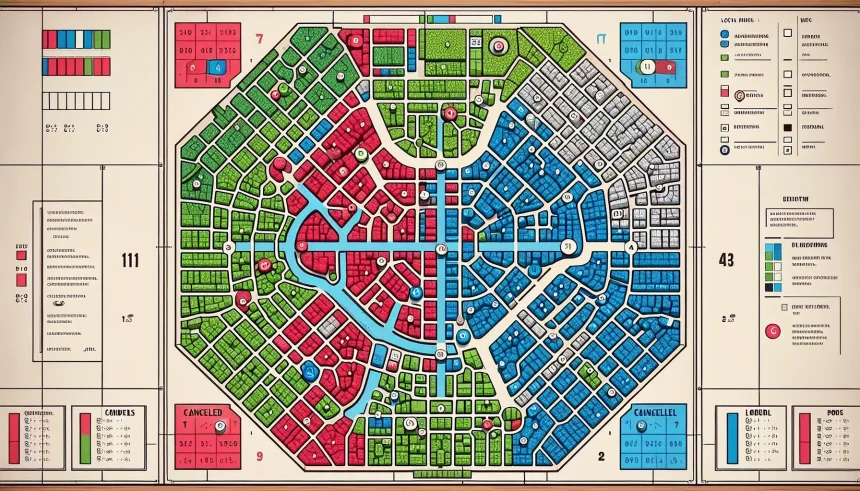
The BJP-led National Democratic Alliance has taken charge of the Thiruvananthapuram Municipal Corporation, breaking 45 years of CPI(M)-led Left rule in Kerala’s capital. In a 101-ward house, the NDA secured 50 seats, the Left Democratic Front won 29, and the Congress-led United Democratic Front took 19. Two seats went to Independents. Polling in one ward was cancelled due to the death of a candidate. The result lands as a clear signal before the upcoming Assembly elections, with urban seats such as Nemom, Vattiyoorkavu, and Kazhakkoottam in sharp focus.
“For the first time, the BJP-led NDA has won control of the Thiruvananthapuram Municipal Corporation.”
Why this city matters
Thiruvananthapuram has long been a stronghold for the Left, shaping narratives about urban governance, public services, and welfare in Kerala. Control of the civic body influences transport, housing, sanitation, and local employment projects. It also offers visibility and patronage networks that can affect Assembly polls.
For the BJP, Kerala has been difficult terrain. Urban gains offer a testing ground for policy messaging and grassroots work. The Left, which has dominated the city for decades, now faces a test of how to regroup. The Congress-led UDF must reckon with a squeezed urban base as it tries to remain competitive statewide.
The numbers at a glance
- NDA: 50 seats
- LDF: 29 seats
- UDF: 19 seats
- Independents: 2 seats
- One ward: polling cancelled
The seat split gives the NDA a simple majority, enabling it to steer key committees and appoint the Mayor. It also means the alliance must show quick results on civic services to consolidate support. The LDF and UDF, meanwhile, will be pressed to defend their vote banks in coastal and middle-class wards.
Urban wards and Assembly stakes
Parties are watching three Assembly segments closely: Nemom, Vattiyoorkavu, and Kazhakkoottam. These seats, anchored in the city’s growth corridors, reflect shifts among young professionals, first-time voters, and service-sector workers. Even small changes in ward-level margins can tilt Assembly races.
Strategists say municipal outcomes foreshadow campaign themes. The NDA is likely to spotlight roads, waste management, drainage, and digital services. The LDF will argue its model on health, education, and welfare remains superior at scale. The UDF may focus on local entrepreneurship, housing approvals, and project delivery.
What changed on the ground
The seat swing suggests a reordering of urban loyalties. Better organization in booths, sharper micro-targeting in contested wards, and candidate selection appear to have mattered. The message from voters seems focused on service delivery and responsiveness, especially after repeated monsoon flooding and waste disposal complaints.
Public perceptions of accountability in municipal works often carry into state races. If the new council addresses long-standing issues quickly, it could shift undecided voters in nearby constituencies. If not, opponents will argue the change was a protest vote rather than a mandate.
Competing narratives
Leaders from each front are framing the outcome to their advantage. NDA voices call it a sign of growing acceptance in Kerala’s cities and an opening in traditionally difficult terrain. Left leaders point to the broader statewide picture and argue they remain strong outside the capital. Congress figures warn that a split anti-incumbent vote can hand wins to rivals unless opposition unity firms up at the booth level.
“The result is being seen as a major political signal ahead of the upcoming Kerala Assembly elections.”
What to watch next
Coalitions will now recalibrate campaigns for urban voters. Watch for rapid municipal actions on road repairs, drainage upgrades, and waste processing. Expect targeted outreach in Nemom, Vattiyoorkavu, and Kazhakkoottam, where ward-level momentum can help shape Assembly outcomes.
The takeaway is straightforward: the capital’s voters asked for change. The new council must convert that message into visible work, while the LDF and UDF need a sharper urban plan. How quickly each side responds could set the tone for the Assembly race and determine who controls not just the city, but Kerala’s political map in the months ahead.