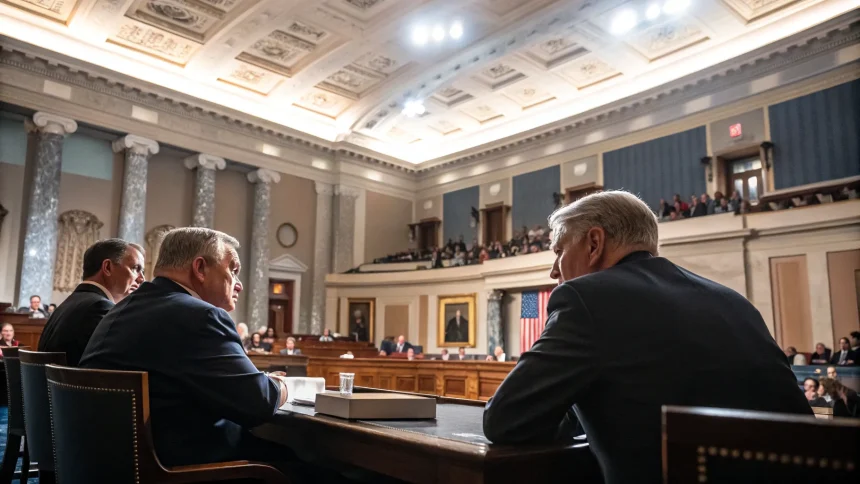
A Republican push to pass national voter ID requirements, backed by President Donald Trump and GOP allies, is running into a wall in the Senate. The effort highlights a sharp divide over election policy and sets up a test of political will, legislative strategy, and public opinion. Supporters say new rules would protect ballots. Opponents argue the plan would make voting harder for eligible citizens.
The proposal arrives as state-level election rules remain a patchwork. It also lands in a chamber where slim margins and the filibuster rule make passage hard. Without broad bipartisan support, any vote could stall before it starts.
Why the Senate is a hurdle
The Senate’s 60-vote threshold for most legislation looms large over this effort. Even with unified Republican support, the numbers likely fall short without Democrats crossing the aisle. Moderate senators in both parties often decide the fate of election bills. This dynamic turns policy fights into vote-by-vote negotiations.
“Voter ID legislation backed by President Donald Trump and his GOP allies faces an uphill climb in the Senate.”
The phrase reflects not only the vote math but also a deeper debate about federal authority. Election rules are largely set by states. Moving parts of that framework to Washington raises alarms for states’ rights advocates and voting-rights groups alike, albeit for different reasons.
What supporters say
Backers frame voter ID as a common-sense step. They argue that showing ID is routine for daily tasks and should be no different at the ballot box. They also say clear standards can boost trust in results, even when fraud cases are rare.
Republican strategists point to polling that often shows majority support for some form of ID at voting sites. They say a national rule would even out differences between states and prevent disputes after close elections.
- They claim ID checks deter wrongdoing and reassure skeptical voters.
- They argue uniform rules reduce confusion for voters who move between states.
Why critics push back
Democrats and civil rights groups say strict ID rules risk blocking lawful votes, especially among older adults, students, low-income workers, and people in rural areas who may lack required documents. They note that confirmed cases of in-person voter fraud are rare, and question whether new limits solve a real problem.
Legal experts warn of court fights if Congress sets ID standards that clash with state constitutions or the Voting Rights Act. They caution that any law must provide free IDs, flexible documentation options, and fail-safe methods, such as provisional ballots, to avoid wrongful rejections.
What the states can teach
More than 30 states ask for some form of voter ID, though the strictness varies. Some accept a wide list of documents, while others require a government photo ID. Studies of turnout under these rules show mixed results. The effects often depend on how easy it is to get an ID, what alternatives are allowed, and how poll workers apply the rules.
States that pair ID laws with free IDs, mobile enrollment units, and wide document options report fewer problems. Places that roll out strict rules quickly, or with poor voter education, have seen more provisional ballots and more rejections.
The political calculus
For Republicans, a floor vote could rally the base and draw a contrast with Democrats ahead of an election year. For Democrats, blocking the measure could energize voters who prioritize access to the ballot. Either way, the path through the Senate is lined with procedural hurdles and political risks.
Compromise is possible but complex. Narrow proposals that allow a broad set of IDs, provide free options, and include fallback methods could attract a few cross-party votes. Yet each concession risks angering core supporters.
What to watch next
The key signals will come from Senate committee chairs, moderate Republicans, and Democrats from swing states. Amendments that add free-ID programs, mail voting protections, or same-day options could shape the final math. Advocacy groups are already preparing for legal challenges and voter education campaigns in case a bill advances.
For now, the measure appears short of the votes needed to pass. The larger fight over how the country balances ballot access and election security will continue in states and in the courts. Any federal action will set a precedent that could echo through future cycles. Lawmakers face a choice: find a narrow path with broad safeguards, or watch another election law effort stall at the starting line.