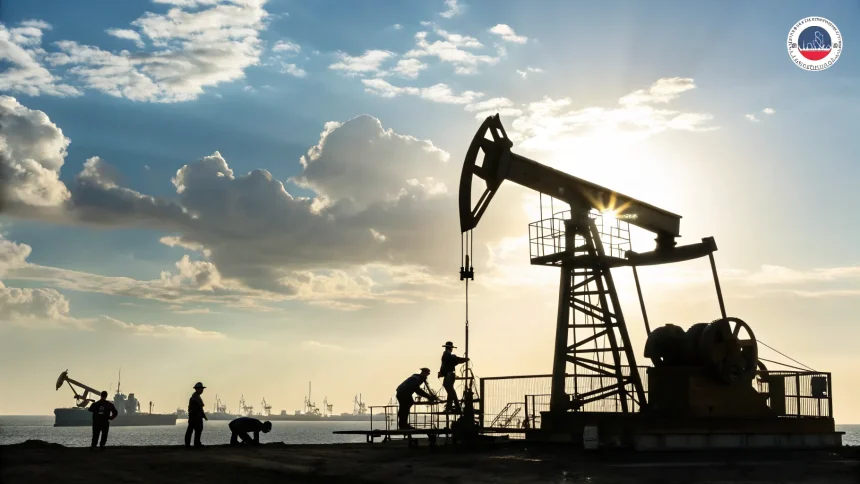
Exxon Mobil shares have climbed alongside higher oil prices as war and supply risks reshape energy markets, raising a key question for investors: how long can the run last?
The company sits at the center of a market driven by conflict in Eastern Europe and the Middle East, ongoing OPEC+ supply curbs, and steady demand. With new U.S. shale assets coming online and offshore projects ramping up, Exxon Mobil is positioned to benefit if crude stays firm. But volatility and policy shifts could test that momentum.
Market Backdrop: Prices Lifted By Risk And Restraint
Brent crude has traded in a higher range since Russia’s invasion of Ukraine, with further pressure from Red Sea shipping disruptions and periodic OPEC+ output cuts. These forces have supported energy stocks through much of the last two years.
Industry analysts point to three drivers: tight spare capacity, sanctions on Russian exports, and product shortages in diesel and jet fuel. The International Energy Agency has projected slower, but still positive, oil demand growth in 2024 and 2025, keeping balances taut.
“Exxon Mobil stock is riding the wave of rising prices for the energy market during conflict and geopolitical changes. Where is it headed now?”
The question reflects a market debate over whether today’s premium for risk will endure or fade if diplomatic tensions ease and non-OPEC supply grows.
Strategy And Scale: From Guyana To The Permian
Exxon Mobil has leaned into scale and low-cost barrels. Offshore Guyana remains a key growth engine. The Stabroek block, operated by Exxon, has moved from discovery to multi-phase production, with unit costs positioned at the lower end of the industry.
In the United States, the company completed its purchase of Pioneer Natural Resources, expanding its footprint in the Permian Basin. That deal concentrates more short-cycle oil into the portfolio, giving Exxon more flexibility to adjust output if prices swing.
The company has paired growth spending with shareholder returns through dividends and buybacks. Exxon reported record profits in 2022 and strong, though lower, earnings in 2023 as refining margins and gas prices cooled from peaks.
Financial Picture: Cash Flow, Returns, And Discipline
At current oil prices, Exxon’s cash generation supports capital spending on major projects, a rising dividend track record, and ongoing repurchases. Management has emphasized cost controls introduced after the 2020 downturn, which lowered the oil price needed to fund both investments and payouts.
- Record 2022 profit followed by solid 2023 earnings, though off the highs.
- Lower breakeven due to cost cuts and portfolio shift to higher-margin assets.
- Balance of long-life projects (offshore) and quick-turn shale wells.
That mix is designed to manage cycles. Long-life projects anchor volume, while short-cycle shale can respond faster to market signals.
Risks: Policy, Prices, And Project Delivery
Exxon’s outlook still hinges on forces it cannot control. A cease-fire that stabilizes shipping lanes could pull crude lower. A deep global slowdown would weaken fuel demand. Faster growth in U.S. and Brazilian supply could offset OPEC+ cuts.
Policy risk is another swing factor. Carbon rules, methane standards, and permitting timelines affect costs and schedules. Litigation and partner disputes can also weigh on project pacing, as seen in ongoing industry arbitration over Guyana interests.
Execution remains key. Any delay in Guyana phases, refinery turnarounds, or Permian well performance could dent near-term volumes and cash flow.
What To Watch: Signals For The Next Leg
Investors are tracking several signposts that could shape the stock’s path over the next year.
- Oil supply decisions by OPEC+ and compliance rates.
- Progress on new Guyana production stages and Permian well productivity.
- Refining and petrochemical margins as travel and manufacturing shift.
- Capital spending discipline and the size and pace of buybacks.
- Geopolitical flashpoints that could disrupt trade routes or exports.
Exxon Mobil’s recent strength reflects a market that still prices in risk and tight supply. The company’s larger shale position and offshore growth give it leverage to sustained oil in the mid-to-high range. Yet the same forces that lifted the stock could reverse if tensions ease or if new barrels flood the market. For now, the path ahead depends on how supply policy, project delivery, and global demand line up through the next few quarters.