As drought deepens across arid nations, desalination has become a lifeline for millions. But reliance on seawater treatment is stirring fresh concern across desert regions from North Africa to the Gulf. Utilities and policymakers face a pressing question: how to secure water supplies without creating new environmental, financial, and security risks.
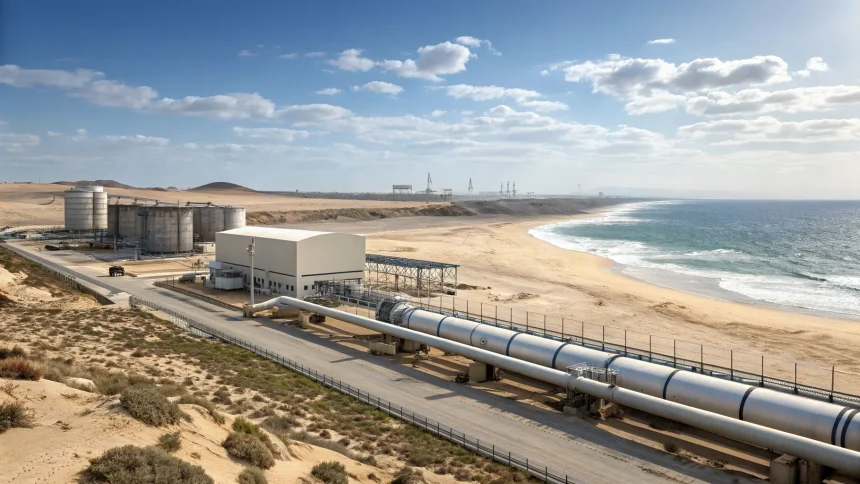
Desalination plants supply water to millions of residents in the region, raising new fears of risks in multiple parched desert nations.
The stakes are growing. Cities that once depended on dwindling groundwater now source a large share of drinking water from the sea. Energy prices, heat waves, and strained power grids add pressure. Officials warn the costs of failure could be severe, with knock-on effects for public health and economies.
Background: Growth Fueled by Drought and Demand
Desalination first expanded in oil-rich Gulf states decades ago, supported by cheap fuel and fast urban growth. As population and industry surged, plants multiplied along coasts. Israel and parts of North Africa followed, building large reverse osmosis facilities to stabilize supply during prolonged drought.
Today, many desert countries rely on desalination for a significant share of municipal water. The appeal is clear: seawater offers a steady source when rainfall and aquifers cannot. But dependence has deepened as climate change tightens the water cycle, making dry years more frequent and intense.
Environmental and Cost Pressures Mount
Experts point to two main stress points: energy use and marine impacts. Thermal and membrane systems consume large amounts of electricity. When grids strain in peak summer heat, water output can falter. Heavy fuel use also increases emissions unless plants are tied to low-carbon power.
Disposal of concentrated brine is another challenge. If discharged without care, brine can harm coastal ecosystems. Operators are improving diffusers and studying mineral recovery, yet regulators say enforcement varies and data are uneven.
- High energy demand links water supply to power stability.
- Brine discharge threatens nearshore habitats if mismanaged.
- Rising costs strain public budgets and household bills.
Costs are sensitive to fuel prices and financing terms. When energy prices spike, water tariffs or subsidies must absorb the shock. Economists warn that poorly designed pricing can widen inequality, leaving low-income neighborhoods at risk during outages or rationing.
Security and Reliability Concerns
Large plants centralize supply. That makes water systems efficient but also exposed to single-point failures. Storm surges, red tides, or equipment faults can disrupt service across entire cities. Cyber risks add another layer as plants integrate advanced controls and remote monitoring.
Officials are exploring redundancy through distributed plants, emergency storage, and stronger interconnections between networks. Some utilities are building inland reserves and expanding reuse to cover shortfalls if coastal facilities go offline.
Policy Shifts and New Technology Paths
Governments are pushing a mix of demand management and cleaner supply. Renewable-powered desalination is moving from pilots to larger projects, pairing plants with solar and wind to cut operating costs and emissions. Batteries and thermal storage can smooth power swings.
At the same time, cities are investing in leak reduction, smart metering, and wastewater reuse. These measures reduce the pressure to run energy-hungry plants at full tilt. Some regulators are revising procurement rules to reward efficiency and lifecycle performance rather than only upfront cost.
Researchers report progress in membranes that lower energy needs and in methods to turn brine into marketable salts and metals. While these approaches remain early, they could shrink environmental footprints and generate revenue to offset expenses.
What Balanced Planning Could Look Like
Analysts say a secure path blends diversified sources with stronger protections for the poor. That includes clear drought plans, transparent tariff structures, and safety nets for vulnerable households. Regional cooperation on standards can improve brine management and data sharing.
Utilities are urged to publish reliability metrics and stress-test plants for heat, storms, and power loss. Insurance and contingency contracts for mobile units can help bridge unexpected gaps. Public communication is key to maintain trust during rationing or maintenance shutdowns.
Desalination will remain central for many desert nations. The challenge now is to make it cleaner, steadier, and fairer. The warning is plain: millions depend on these plants. Action on energy, environment, and equity will decide whether this lifeline stays reliable as heat and drought intensify. Policymakers will watch upcoming summer peaks, the rollout of renewable-powered facilities, and new rules on brine to gauge whether risk is beginning to ease.