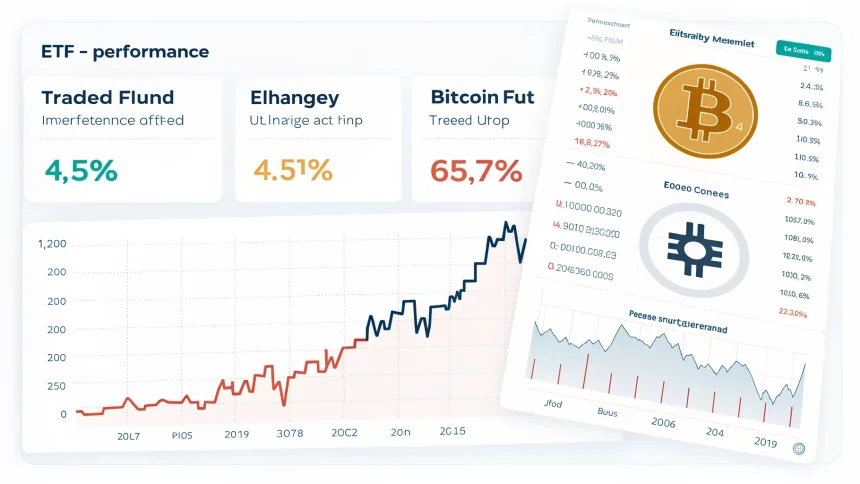
Bitcoin’s slide has rippled through crypto markets, and exchange-traded funds tracking digital assets are seeing money move out. Yet trading patterns suggest this is not a rush for the exits. Investors appear to be rebalancing as prices fall, rather than staging a broad retreat. The moves are drawing attention as funds have become a key gateway for mainstream exposure to crypto.
As the price of bitcoin and other cryptocurrencies has crashed, exchange-traded funds have seen outflows, but ETF selling doesn’t look like investor panic.
Background: From Inflows To A Test Of Nerves
Crypto funds have grown quickly during bull runs. Lower fees, intraday trading, and brokerage access have made ETFs a popular choice for both retail and advisors. Those same features are now being tested as prices fall. In past downturns, crypto markets have seen sharp drawdowns and volatile rebounds. Traditional asset classes often see similar cycles, with ETFs serving as a release valve for risk and liquidity.
ETFs in other sectors show a pattern during pullbacks. Money often leaves funds at the margin as investors trim positions or harvest losses. This behavior can look severe day to day, yet it does not always mark a lasting shift in sentiment. The current outflows echo that history.
Signals Point To Rebalancing, Not Capitulation
Several trading cues separate orderly repositioning from panic. Bid-ask spreads in large funds tend to widen dramatically in a stampede. So far, spreads have stayed near normal ranges for many crypto ETFs. Prices have also tracked closely to net asset value, which suggests ample liquidity from market makers.
Turnover is elevated but not extreme relative to headline price moves. That pattern fits a picture of investors reducing risk sizes or meeting policy limits, not emptying portfolios. Financial advisors often rebalance quarterly or when asset weights drift. Crypto’s drop likely pushed allocations over targets, triggering sales to restore balance.
- Rebalancing from over-weights to target allocations
- Tax-loss harvesting to offset gains elsewhere
- Profit-taking after earlier rallies
- Derivatives hedging reducing the need for spot exposure
ETF Mechanics Temper Primary Outflows
ETF outflows come from redemptions in the primary market. But many trades occur only between buyers and sellers on the exchange. If most activity stays in the secondary market, the fund does not need to redeem shares. That limits forced selling of the underlying assets.
Authorized participants create or redeem shares when imbalances arise. In calm order books, they can match flows with minimal impact. This setup helps maintain trading near fair value even on volatile days. It is one reason why heavy trading does not always equal deep redemptions.
Comparisons With Past Crypto Pullbacks
During prior crypto selloffs, stress appeared quickly in funding markets and on exchanges. Those episodes featured steep discounts, frozen liquidity, and cascades of forced selling. Today’s ETF action looks more routine. Prices are under pressure, but trading remains orderly, and funds continue to track their holdings.
Advisors have also become more familiar with crypto allocation policy. Many cap positions and use rebalancing bands. This discipline can produce steady selling into weakness without sudden spikes. It may also set the stage for measured buying if prices stabilize.
What Investors Are Watching
Key watch points now include the pace of redemptions relative to volume, the size of premiums or discounts to net asset value, and any signs of stress in market making. Flows around month-end and quarter-end could also shift as institutions adjust risk and taxes.
Policy news, macro data, and liquidity in futures markets remain swing factors. A strong move in rates or a surprise regulatory headline can change positioning quickly. Absent such shocks, ETF flow trends may continue to mirror standard rebalancing behavior.
The latest slide has tested crypto’s foothold in mainstream portfolios but has not triggered broad capitulation in funds. Outflows appear disciplined, driven by rules-based selling and risk control. The next phase will hinge on price stability, liquidity, and whether buyers step in as allocations fall below targets. If trading stays orderly and discounts remain small, ETF flows may prove to be a modest pressure valve rather than a distress signal.