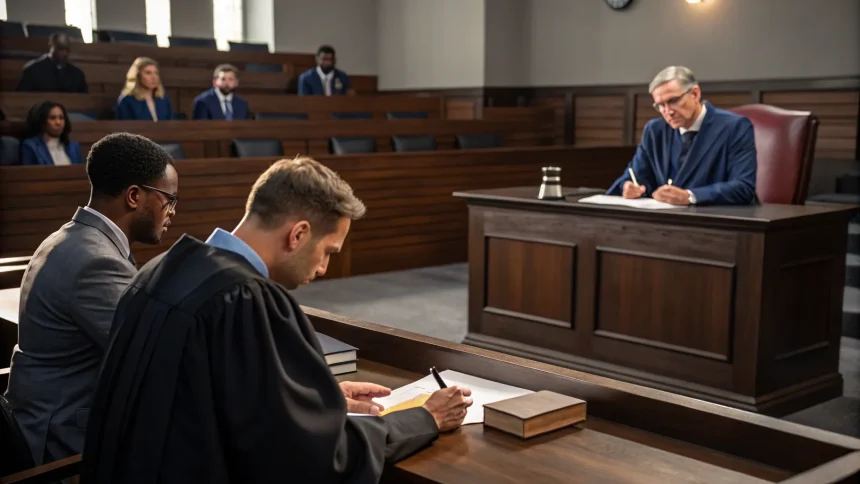
Bayer AG’s stock jumped after the US Supreme Court agreed to review a Roundup case, signaling a fresh turn in the yearslong fight over the weedkiller.
The company is asking the Court to limit state-law claims tied to warnings on glyphosate, the active ingredient in Roundup.
The decision to hear the appeal arrived this week in Washington and immediately moved markets in Europe.
Investors see a potential ruling that could curtail thousands of current and future claims.
“Bayer AG’s shares surged after the US Supreme Court said it would hear the company’s appeal in a Roundup case that could undercut thousands of lawsuits tied to the weedkiller.”
Why the Court’s review matters now
Roundup litigation has dogged Bayer since it bought Monsanto in 2018.
Plaintiffs argue the company failed to warn that glyphosate exposure can cause non-Hodgkin lymphoma.
Bayer denies causation and points to regulatory approvals and decades of widespread use.
The legal fight has produced mixed verdicts and large awards, some later reduced or overturned on appeal.
In 2020, Bayer announced a multibillion-dollar settlement plan to resolve many claims, but new suits continued.
In 2022, the Supreme Court declined to take up a similar Bayer appeal, leaving lower-court rulings in place.
This time, the Court’s decision to hear a case offers a potential nationwide signal on key legal questions.
The core legal issues at stake
The dispute turns on whether federal pesticide law preempts state failure-to-warn claims.
Bayer argues federal approval of Roundup labels should block state-law warnings that conflict with that approval.
Plaintiffs counter that states can still require warnings if federal labeling is inadequate.
- Preemption: Can federal labels override state warning laws?
- Causation standards: What evidence juries may weigh on risk.
- Warning adequacy: How much detail labels must include.
Market reaction and investor calculus
The stock bounce reflects hopes that a favorable ruling could narrow future liability.
Analysts say even partial relief—such as limits on warning claims—could change the settlement math.
Yet legal risk remains until the Court issues a decision, likely later this term.
If the Court sides with plaintiffs, litigation could intensify and pressure Bayer’s balance sheet.
Voices from the courtroom and the lab
Bayer has long maintained that glyphosate is safe when used as directed.
Regulators in the US and abroad have issued different views over the years.
Some agencies say glyphosate is unlikely to cause cancer; others flag hazard concerns.
Plaintiffs’ lawyers say juries deserve to hear that debate and decide if warnings were missing.
Legal scholars note that Supreme Court preemption rulings can reset mass-tort playbooks across industries.
Implications for consumers and agriculture
Roundup is a fixture on farms, in landscaping, and in home gardening.
Any ruling that changes warning duties could affect user instructions, training, and insurance costs.
Growers are watching for clarity that stabilizes supply decisions during the planting season.
Retailers could face new product labeling work if state or federal requirements shift.
What past cases tell us
Earlier trials produced headline verdicts that spurred more filings.
Appeals have cut some awards, but the volume of cases has remained high.
Prior Supreme Court denials left a patchwork of lower-court rulings.
This new review could bring a uniform standard, at least on labeling issues.
What to watch next
Briefing will frame how far federal preemption reaches in pesticide labeling.
States, industry groups, and consumer advocates may file friend-of-the-court briefs.
Oral argument timing will signal when a decision could arrive.
Investors will parse every step for clues on settlement strategy and reserve needs.
The Court’s move gives Bayer a long-sought opening to limit legal exposure.
Plaintiffs, however, will push to keep state-law tools intact for warning claims.
The outcome could reset rules for product labels far outside agriculture.
Watch for a ruling that defines how companies, states, and federal regulators share responsibility for what users see on the box.