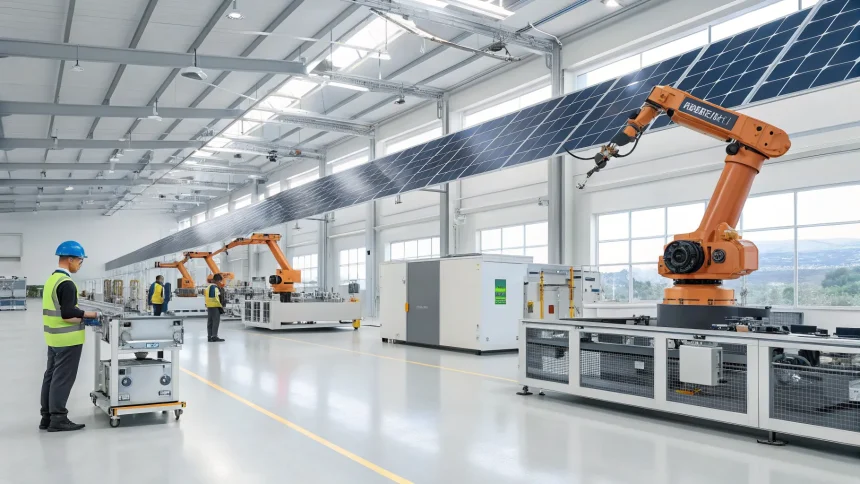
Factories are entering a new phase that could reshape how goods are made and who makes them. From automation and artificial intelligence to new energy rules and reshoring, manufacturers face choices that will set the pace for the next decade.
The central question is simple and urgent: how fast will change arrive, and who will benefit? Across North America, Europe, and Asia, companies are testing new tools, reworking plants, and racing to lock in reliable suppliers. The stakes include costs, jobs, and national security.
“Could factories be about to change beyond all recognition?”
What is driving the shift
Three forces are pushing industry leaders to act. First, supply shocks exposed weak links during the pandemic and after. Firms want shorter, steadier routes from plant to store.
Second, rapid gains in software, sensors, and machine vision make it easier to automate steps that were once manual. Quality checks, material handling, and even scheduling now rely on data.
Third, energy policy and climate goals are raising pressure to cut emissions. Plant managers are tracking power use in real time and redesigning lines to trim waste.
- Resilience: shorten supply chains and reduce single points of failure.
- Productivity: deploy automation to ease labor gaps and improve yield.
- Compliance: meet stricter reporting on emissions and materials.
Technology on the shop floor
Automation is no longer just about large, fixed robots behind cages. Collaborative robots now work near people, handling repetitive tasks. Machine vision spots defects at speed. Predictive systems flag when a motor will fail before it stops a line.
AI tools are moving from pilot to daily use. They help plan shifts, estimate scrap, and set ideal machine settings. In some plants, digital twins test changes in a virtual model before a single bolt is turned.
The payoff comes when systems link together. A sensor can alert a line manager, trigger a parts order, and update delivery dates for a customer. That flow limits downtime and raises on-time delivery.
Jobs, skills, and the human factor
Change on the floor raises hard questions about work. Some tasks will be automated. New roles will appear in maintenance, data, and process control. The net effect will vary by region and sector.
Unions and workforce groups want a say in how upgrades roll out. Training is the hinge. Firms that retrain operators to run and fix new gear tend to see smoother adoption and fewer safety issues.
Education partnerships are growing. Community colleges and technical schools are adding courses in mechatronics, PLC programming, and quality analytics. Micro-credentials let workers upskill while on the job.
Investment, risks, and payback
Modernizing a plant is expensive. Hardware, software, and integration costs can strain budgets, especially for small suppliers. Leaders warn against trying to do everything at once.
Successful programs often start with narrow goals and clear metrics. A company might target one bottleneck, measure scrap and uptime, and scale only after results hold for several quarters.
Cybersecurity is a growing worry. As machines connect, the attack surface grows. Segmenting networks, strict access controls, and regular audits are now part of plant hygiene.
Global competition and policy
Governments see manufacturing as a strategic asset. Incentives for chips, batteries, and clean tech are steering where new plants land. Rules on sourcing and reporting are also tightening.
For multinational firms, that means juggling different standards and subsidy rules. Local content targets can shift supplier maps. Export controls add another layer for advanced tools and materials.
What to watch next
Industry watchers are tracking three signals. First, the speed of pilot projects moving to full rollout. Second, hiring patterns for roles such as controls engineers and data analysts. Third, the rate of factory energy upgrades, from heat pumps to on-site storage.
Analysts also point to product design. If engineers design with automation in mind—standard parts, fewer fasteners, easier assembly—plants can move faster with fewer errors.
Customers will feel the changes through shorter lead times and more customized orders. The promise is stable pricing and higher quality. The risk is uneven progress across supplier networks.
The next phase in manufacturing will not arrive in a single leap. It will come line by line and shift by shift. Leaders who treat this as a series of measurable steps—pilot, prove, scale—will keep costs in check and workers on board. For everyone else, the question still hangs in the air: “Could factories be about to change beyond all recognition?” The answer will depend on choices made this year, not the next.