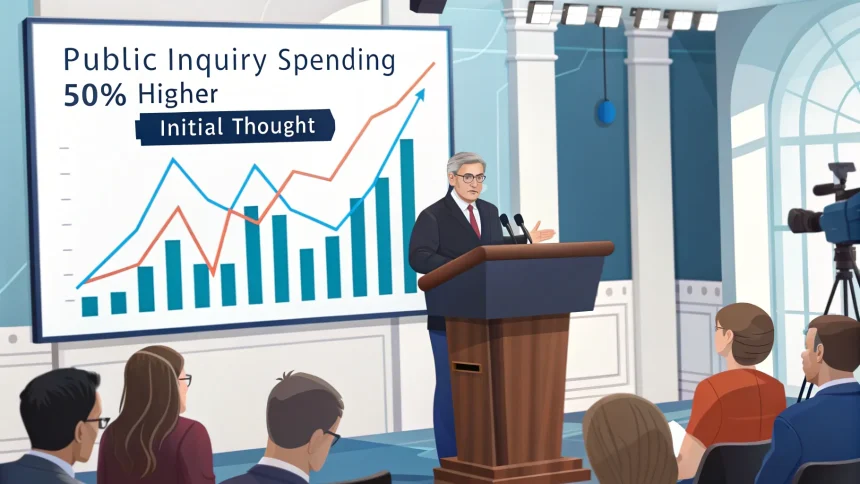
Public spending on a major government inquiry is far higher than first estimated, according to new figures that have intensified calls for tighter controls.
The latest analysis indicates the bill to taxpayers is 50% higher than expected, with the inquiry’s own operating costs reaching £192 million. The assessment, published by the BBC, has prompted scrutiny from lawmakers and campaigners who want clearer accounting and firmer timetables.
The findings arrive as the inquiry continues to gather evidence and hear testimony. The sharp rise in costs is now central to the political debate about how large investigations are funded and managed.
What the new numbers show
“BBC analysis shows cost to taxpayer is 50% higher than thought, with inquiry’s own costs at £192m.”
The figure of £192 million covers the inquiry’s direct spending on staff, venues, technology, document handling, and support services. The total bill to the public purse is higher once legal representation, disclosure work by government departments, and other related expenses are included.
Officials have not disputed the direction of travel but argue that the scope and complexity of the investigation demand extensive resources. The analysis, however, raises questions about early cost estimates and whether they captured the true scale of the task.
How inquiries grow more expensive
Public inquiries in the UK often expand as new evidence emerges and witness lists grow. Large volumes of documents must be reviewed and disclosed. Hearings can stretch over months or years, increasing staffing and legal costs.
The process is designed to be thorough and independent. Yet that thoroughness can produce spiralling bills that are hard to predict at the outset. Critics say the answer is better planning and more rigorous budgeting.
- Document review and disclosure can run into millions due to scale and complexity.
- Legal representation for core participants adds substantial cost.
- Technology platforms for evidence management, security, and remote access are expensive to build and maintain.
- Venue hire, transcription, and translation services add to the total.
Stakeholders weigh in
Campaigners argue that rising costs should not weaken the inquiry’s mandate. They say the public interest depends on a full and transparent record. Some lawmakers, however, are pressing for clearer milestones and regular budget updates to Parliament.
Financial experts suggest that early-stage scoping often underestimates IT demands and legal workloads. They recommend phased budgets tied to specific deliverables, along with quarterly reporting that separates the inquiry’s own spending from external obligations, such as legal aid and departmental search costs.
Comparisons and lessons
Large public investigations have a track record of overshooting early estimates. The drivers are similar: expanding evidence bases, growing witness lists, and complex legal challenges. These patterns are not unique to one case.
Good practice identified by auditors and watchdog groups includes rigorous cost baselines, scenario planning for evidence growth, and contingency funds that are publicly disclosed. Publishing these measures can help sustain trust while guarding against unexpected spikes in spending.
What tighter oversight could look like
Policy advisers are circulating a set of practical steps that would preserve independence while improving value for money. The objective is not to limit necessary inquiry work, but to make costs more predictable and transparent.
- Set a clear scope with defined review points to prevent drift.
- Adopt modular technology systems that scale without major redesign.
- Publish quarterly cost dashboards, separating core and external costs.
- Cap non-essential spending and require approval for scope changes.
- Use standard rate cards for routine legal and consultancy work.
The BBC’s finding that the taxpayer bill is 50% higher than expected has sharpened the focus on these reforms. It has also raised pressure on ministers and inquiry leaders to explain how future spending will be controlled.
For now, the inquiry continues its work, with the £192 million figure standing as a marker of its size and complexity. The outcome may yet justify the cost if it leads to clear findings and lasting reforms. But the debate over how to run large investigations without runaway budgets is set to intensify.
Expect lawmakers to demand more frequent financial reports and tighter procurement rules. Observers will watch whether current recommendations are adopted, and whether new inquiries commit to clearer scopes and phased budgets from the start.