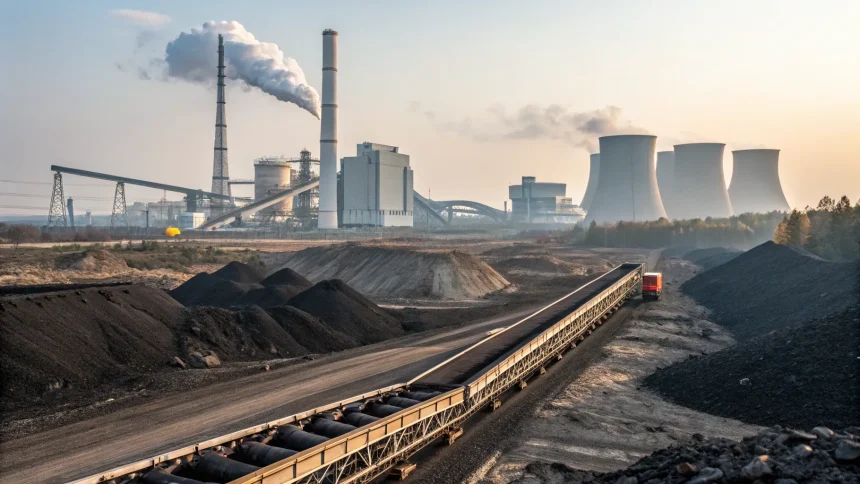
China set a new high for coal output last year while its power plants burned less of the fuel, reflecting a sharp rise in cleaner electricity and a firm focus on energy security. The shift came as Beijing worked to avoid blackouts and keep prices stable, even as wind, solar, hydro, and nuclear produced more of the nation’s power.
The move highlights a complex pivot. Supply is being reinforced, yet demand for coal-fired generation is easing in many provinces. The change matters for global emissions, commodity markets, and China’s drive to meet climate goals.
Energy security after past shortages
After a tight power market in 2021 and heat waves in 2022, officials pushed mines to raise output and keep stockpiles high. That policy helped guard against sudden demand spikes and weather swings. It also aimed to steady factory operations and household use.
At the same time, China built clean power at a record pace. Industry data show the country added more than 200 gigawatts of solar capacity in a single year, along with strong growth in wind. New nuclear units came online. Hydro output improved in some regions after earlier drought.
“China’s coal production reached a record last year, even as the country’s power plants burned less of the fossil fuel due to a flood of cleaner electricity, with Beijing continuing to prioritize energy security.”
Why coal output rose while coal burn fell
More mining does not always mean more coal-fired generation. Higher output also feeds stockpiles at plants and ports, lifts safety margins for the grid, and can ease price spikes. Cleaner electricity can still displace coal during normal conditions.
Analysts say two forces are at work:
- Supply cushion: Extra coal reduces the risk of shortages during heat waves, drought, or cold snaps.
- Clean power surge: Rapid growth in wind and solar cuts average coal use across many hours of the year.
That mix produced a paradox: record mining, yet lower consumption at power plants for long stretches. The country’s grid increasingly leans on renewables when the sun is shining and the wind is strong, then taps coal units for backup.
Winners, losers, and price signals
Coal miners benefited from steady demand for stockpiling, though domestic prices eased from peaks as inventories grew. Power producers saw fewer high-cost runs, lowering fuel bills when renewable output was strong. Consumers gained from more stable power and fewer supply scares.
Grid operators faced a different test. Managing variable wind and solar requires more storage, flexible gas or coal units, and stronger transmission. Curtailment of clean power can rise if new lines and batteries lag. Several provinces have moved to upgrade networks and add pumped hydro and batteries.
Climate goals and the path ahead
China has pledged to peak carbon emissions before 2030 and reach carbon neutrality by 2060. The recent pattern may help: more hours supplied by clean power can slow emissions growth even if coal capacity stands by for reliability.
Environmental groups argue that falling coal burn is a sign emissions could reach a plateau sooner if renewable growth continues. Industry voices counter that coal remains a critical backup for heavy industry and extreme weather.
Policy is now focusing on flexibility. Officials have encouraged coal plants to run more efficiently at lower output, add heat supply services where possible, and support frequency control. Storage targets are rising, and interregional transmission is expanding to smooth peaks and valleys in demand and supply.
What to watch
Key markers in the coming year will show whether the shift holds:
- Renewable additions: Another large buildout of solar and wind would keep pressure on coal burn.
- Storage growth: More batteries and pumped hydro would reduce the need for coal during evening peaks.
- Hydro and weather: Rainfall patterns will influence hydropower and test grid reserves.
- Coal stockpiles and prices: High inventories suggest stable supply, while price spikes could hint at stress.
The latest signals point to a power system in transition. China is adding clean capacity at speed while keeping coal supplies high to avoid past shocks. If clean generation continues to rise and flexibility improves, coal’s role could shift further from baseload to backup. That would cut emissions risk while preserving reliability, a balance policymakers appear determined to keep refining.