Warren Buffett is still leading Berkshire Hathaway as chairman and showing up at the Omaha headquarters, according to Vice Chairman Greg Abel. The comments, shared in Omaha, come as investors watch leadership plans at one of America’s largest companies and ask how long the famed investor will keep his day-to-day routine.
The update signals continuity at the conglomerate founded by Buffett’s longtime investing career. It also offers a clear message on the company’s near-term leadership while succession planning remains in place. Berkshire’s structure, with major operating businesses and large stock holdings, relies on steady oversight and clear decision-making.
Leadership Continuity in Omaha
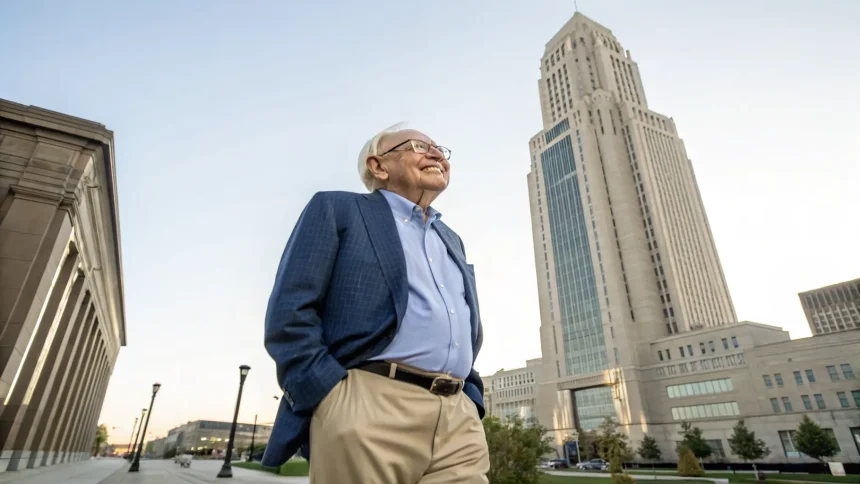
“Buffett remains chairman of the sprawling, Omaha, Nebraska-based conglomerate and continues to regularly come into the office,” Abel said.
The statement reinforces what many shareholders value most about Berkshire: steady leadership. Buffett, now in his 90s, has long described his work as energizing. Staying in the office keeps him close to managers, investment decisions, and capital allocation—functions at the heart of Berkshire’s model.
Abel’s role as day-to-day operator of non-insurance businesses also supports stability. He is widely viewed as the successor for the chief executive job when the time comes. His public affirmation of Buffett’s active presence is likely to calm speculation about any sudden changes.
A Conglomerate Built for the Long Term
Berkshire’s structure pairs a large insurance engine with a wide set of operating companies. Cash from insurance float has historically funded acquisitions and stock purchases. The group includes BNSF Railway, GEICO, and a wide range of industrial, retail, and energy businesses through Berkshire Hathaway Energy.
The firm also holds significant equity stakes in well-known companies. These positions provide dividend income and optionality for future capital moves, a defining feature of Buffett’s approach.
- Apple
- American Express
- Coca-Cola
- Chevron and other energy holdings (positions have shifted over time)
Investors track these holdings for clues to Berkshire’s outlook on technology, consumer demand, and energy markets. The mix changes as valuations and business prospects shift.
Succession Plan and Governance
Berkshire has laid out a succession plan that places Abel as the expected next chief executive. Ajit Jain continues to lead insurance operations, a core pillar of the group’s earnings. The company’s board has said the plan is in place to protect the culture and the decentralized model that empowers business leaders across subsidiaries.
Buffett has emphasized that capital allocation discipline, trust in managers, and conservative balance sheet practices should outlast any single leader. Abel’s comment supports that plan by showing alignment at the top and a measured handover whenever it occurs.
Why the Update Matters to Shareholders
Shareholders often look to Berkshire for calm during market swings. Clear signals on leadership help set expectations on buybacks, dividends, and acquisition appetite. An active chairman suggests continuity on these fronts, including the well-known preference for patience and value.
It also hints that Berkshire’s annual meeting in Omaha—long a major draw for investors—will continue to feature direct guidance from Buffett and Abel. Their joint presence provides a window into strategy, from risk tolerance to sector views.
Outlook: Cash, Deals, and Discipline
Berkshire’s future actions will likely focus on three areas. First, maintaining strong liquidity as a buffer and as dry powder for large deals. Second, opportunistic buybacks when the stock trades below what leaders see as fair value. Third, steady investment in core subsidiaries, including rail and energy, where returns can be improved over time.
Abel’s operational focus and Buffett’s continued involvement give Berkshire a two-track leadership structure. One centers on daily execution and capital projects. The other centers on portfolio decisions and the timing of large moves. That model has served the company through interest rate cycles, shifts in energy prices, and changing consumer habits.
For now, the message is clear: Buffett is still in the chair and at his desk, and Abel is in place to carry the model forward. Investors should watch for updates on buybacks, any sizable acquisitions, and changes in major stock positions. Those steps will say as much about Berkshire’s view of the market as any headline—and they will shape the company’s next chapter.