

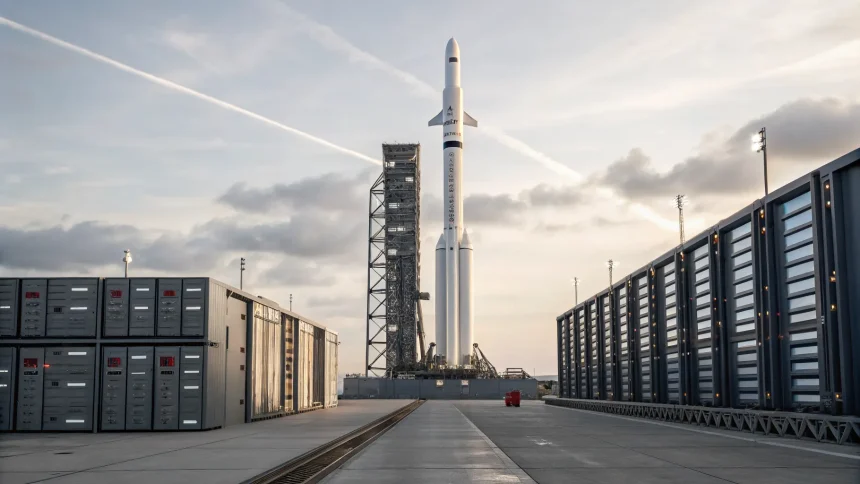
SpaceX has exercised an option to acquire Cursor in an all-stock deal, signaling a deeper push into artificial intelligence under Elon Musk. The move suggests a plan to expand AI capabilities across rockets, satellites, and software. Terms were not disclosed, but the decision points to a larger strategy linking space infrastructure with advanced computing.
SpaceX exercised its option to acquire Cursor in an all-stock deal, bolstering Elon Musk’s ambitions in artificial intelligence.
The acquisition, if completed as described, would tie a fast-growing space company to a software outfit focused on AI. It shows how Musk’s companies are aligning around shared data and engineering needs. It also raises questions about how AI will be used in launch operations, satellite services, and consumer products.
Background: AI ambitions meet orbital scale
Elon Musk has pushed AI across several ventures. He launched xAI in 2023 to build general-purpose models and tools. The company has trained systems that power chatbot features and developer tools. SpaceX, meanwhile, runs Starlink, a global satellite network that relies on automation for routing and operations.
Bringing a coding-focused AI team under the SpaceX umbrella could serve two aims. First, speed up internal software development. Second, apply machine learning to flight safety, ground systems, and satellite traffic. Musk has long argued that AI should be built close to real-world data and hardware. SpaceX generates vast streams of both.
What an all-stock deal signals
An all-stock structure suggests SpaceX wants to conserve cash while tying Cursor’s team to long-term goals. It can also reflect confidence in SpaceX’s private valuation. Stock-based deals are common when a buyer wants to align incentives and retain talent.
- Retain key engineers through equity vesting.
- Integrate codebases without short-term cash strain.
- Share upside if AI products drive new revenue.
For Cursor, stock could offer access to SpaceX’s growth and data scale. It could also speed deployment of AI assistants inside complex engineering workflows.
How SpaceX could use AI now
SpaceX already applies software to launch sequencing, telemetry, and fault detection. AI could aid in anomaly detection across engines and avionics. It could also support automated scheduling for launch pads and recovery ships.
Starlink operations are another target. Routing millions of connections through thousands of satellites is a hard problem. AI can help predict congestion, improve beam steering, and cut latency. On the ground, AI coding tools could shorten development cycles for firmware and network software.
Risks and open questions
There are clear risks. Integrating small AI teams into large operations can slow both sides if priorities clash. Safety-critical systems demand strict validation. Any model used in flight or network control must pass rigorous testing.
Regulatory oversight is also tightening. Governments are asking for more transparency around AI in critical infrastructure. Space and telecom services fall under that umbrella. SpaceX will need strong governance to match speed with safety.
Market impact and competition
Big tech firms are racing to pair AI with hardware and data networks. This deal would push SpaceX into that contest with a unique asset: global space infrastructure. If successful, the company could set standards for AI in launch and satellite services.
Competitors may respond in two ways. Satellite operators could seek AI partnerships to optimize constellations. Defense and aerospace firms may invest in in-house coding assistants to accelerate design and testing. The result could be faster cycles for new spacecraft and services.
What to watch next
Key milestones will show whether the deal delivers. Look for AI tools embedded in SpaceX’s engineering stack. Watch for gains in Starlink reliability and speed. Any new developer products tied to SpaceX data would also be a sign of deeper integration.
Investors will track hiring, model training needs, and compute sourcing. They will also look for governance disclosures on how AI touches safety systems. Customers will care about performance, pricing, and uptime.
The acquisition points to a clear direction. SpaceX wants AI talent tied closely to its hardest problems. If it can pair that talent with trusted processes, the effect could be felt from factory floors to orbit. The next phase will hinge on safe deployment, measurable results, and whether AI shortens the path to reliable launches and faster internet from space.