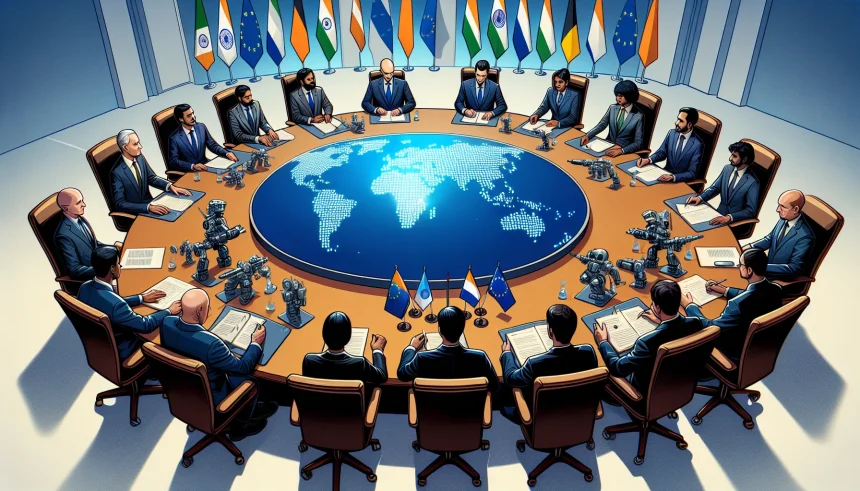
India and the European Union moved to reset their partnership at the 16th Summit with deals on trade, security, and technology, signaling a shared bid to stabilize a tense world order. The sides agreed to advance a Free Trade Agreement and a Security and Defence Partnership, while setting up joint work on artificial intelligence and innovation. The announcements point to a broader strategic turn, with both partners seeking reliable ties and new engines of growth.
Why the agreements matter now
Both India and the EU have looked for steady, diverse economic links as global supply chains shift. The push for a Free Trade Agreement marks a renewed effort to unlock market access and streamline standards. The security pact highlights the need to work together on maritime awareness, defense industry links, and information sharing. By pairing trade with security, the agenda tries to match economic goals with practical cooperation.
“These pacts, including a Free Trade Agreement and a Security and Defence Partnership, aim to deepen bilateral ties.”
The joint emphasis on technology reflects how growth and security now depend on trusted digital tools. Collaboration on AI research, governance, and startups is poised to create shared standards and faster commercialization of new ideas.
Background: a relationship in search of scale
India and the EU have met in regular summits for years, seeking a path to closer integration. Talks on trade have started and stalled before, often over market access, regulatory rules, and data protection. Security conversations have grown in importance with concerns over supply chain risks and regional tensions. This latest summit tries to knit these threads into a clearer plan.
Officials framed the outcome as part of a wider strategy to balance global power. The two sides cast their partnership as one that can add steadiness and reduce single points of failure in trade and technology networks.
“The summit is expected to bolster multipolarity and enhance global stability.”
What the trade track could change
A modern Free Trade Agreement could lower tariffs, align standards, and ease services and digital trade. For companies, predictability on rules would support long-term investment. For consumers, greater competition could pressure prices and widen choices.
- Lower barriers may help small and medium firms enter new markets.
- Clearer digital rules could support cross-border data and cloud services.
- Cooperation on sustainability standards may guide supply chain reporting.
Yet hurdles remain. Sensitive sectors, procurement rules, and data governance will test negotiators. Past efforts show that timelines slip when domestic politics or compliance costs rise.
Security and defence: from dialogue to delivery
The Security and Defence Partnership points to joint interests in maritime security, counterterrorism, and defense industry links. Training, joint exercises, and research tie-ups could follow if both sides sustain momentum.
Analysts say practical steps will define success. Shared maritime awareness, secure communications, and interoperable standards could make cooperation routine rather than episodic. Industry participation will matter for cost and speed.
“A Security and Defence Partnership [will] deepen bilateral ties.”
AI and innovation: research to market
The summit placed special weight on new technology. The sides plan joint research programs and startup partnerships to move ideas from labs to products. The goal is to scale trustworthy AI and encourage investment in responsible tools.
“Cooperation on AI and innovation was also highlighted, with plans for joint research programs and startup partnerships.”
Common frameworks on testing and safety could help companies meet rules in both markets. Shared pilot projects in health, climate, and public services would show early results and build public trust.
What to watch next
The immediate test is pace. Negotiators will set timelines, map sensitive issues, and schedule the first security working groups. On AI, the measure will be funded projects and cross-border startup accelerators.
Observers will look for three signals: a draft trade chapter on digital rules, a plan for joint maritime activities, and a roster of AI pilots with clear oversight. If those arrive on schedule, business and research communities are likely to follow with capital and talent.
The summit sets an ambitious course. By tying trade, security, and technology together, India and the EU seek more than a headline. The coming months will show whether they can turn intent into credible, shared standards and tangible benefits.