

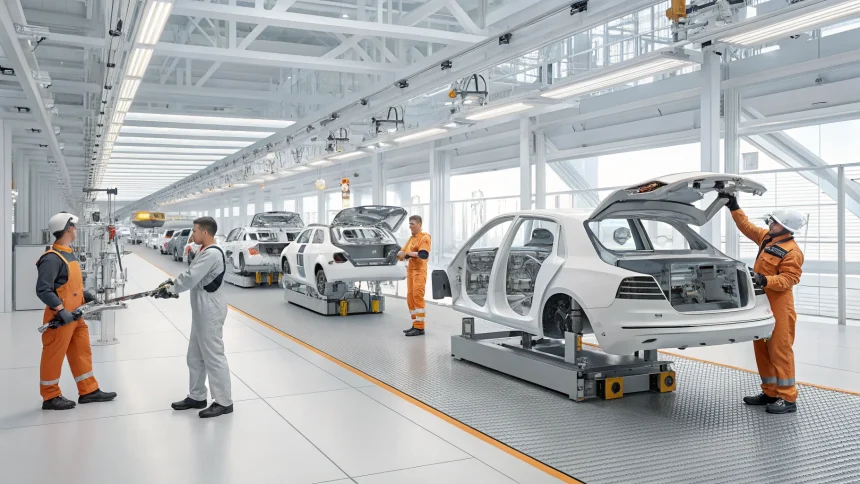
BMW plans to bring humanoid robots onto a European assembly line, extending trials it has already pursued in the United States. The move signals a new phase in carmaking, where machines shaped like people could take on physical tasks that strain human bodies and slow production.
The project aims to test humanoid robots inside an active plant, according to a brief company statement. Timing and exact deployment details were not disclosed, but the effort points to a broader race among automakers to automate difficult and repetitive work while keeping quality high and costs steady.
“BMW is introducing humanoid robots to a car plant in Europe, building on similar projects in the US.”
Why BMW is turning to humanoids now
Automakers have relied on industrial arms for welding and painting for decades. What has changed is the push to automate jobs that require walking, lifting, and adjusting to parts that vary in size or position. Humanoid robots promise to navigate the same spaces and tools designed for people, reducing the need for expensive retooling.
Analysts say the most likely near-term tasks include hauling totes, moving parts between stations, and supporting final assembly by holding or positioning components. These jobs are labor-intensive and can cause injury over time. If robots can take on those lifts, plants could reduce downtime and worker strain.
What this could mean for workers
Worker safety and training will be central. Labor groups in Europe and the US have pressed manufacturers to show how new automation will protect jobs and improve conditions. Experts point to a model where robots cover the most punishing motions, while people shift to oversight, quality checks, and troubleshooting.
Training programs often accompany such rollouts, preparing technicians to manage fleets of mobile and fixed robots. That can create new roles inside plants, from maintenance and safety monitoring to data analysis on production flow.
- Short term: trials on limited tasks under close supervision.
- Medium term: expansion to logistics and repetitive assembly support.
- Long term: integration with digital tracking of parts and quality.
Safety, standards, and the shop floor test
Humanoid robots must operate near people. That raises questions about speed limits, fall prevention, and how machines detect and avoid workers. European rules require extensive risk assessments for collaborative systems, along with emergency stops and clear zones. US plants follow similar guidelines through OSHA and industry standards.
Engineers will look for consistent performance under real factory noise, dust, and variable lighting. Even small gains matter. Saving a few seconds per station across a large line can add up to hours of output each week.
What we know from earlier US trials
US auto plants have piloted mobile robots and collaborative arms on tasks like material delivery and kitting. The lesson: start small, measure often, and redesign workflows where needed. Software updates and better grippers have widened what robots can handle, but human oversight remains essential.
BMW’s plan to “build on similar projects in the US” suggests it has data from those tests on cycle times, error rates, and safety events. Transferring those lessons to a European site could shorten the learning curve and reduce disruptions.
Cost, quality, and the competitive race
Automakers face pressure to control costs as they invest in electric and hybrid models. Labor shortages in some regions add urgency. If humanoid robots can slot into existing lines without major rebuilds, the return on investment may improve. Yet reliability will decide outcomes. Frequent resets or breakdowns would erase any gains.
Suppliers and startups see opportunity in grippers, vision systems, and maintenance services tailored to human-scale machines. That ecosystem could grow if large plants prove the case at limited scale first.
Key questions investors and workers will watch:
- Which tasks humanoids can perform at production speed without errors.
- How safety protocols hold up in peak shifts and tight spaces.
- Whether the rollout creates higher-skilled jobs on site.
BMW’s trial marks a careful step rather than a wholesale change. Success will depend on patient testing, clear safety rules, and open communication with the workforce. If early runs show real gains in reliability and ergonomics, more lines could follow. If not, the machines may remain pilots. For now, the industry will watch how well human-shaped robots fit into a workplace built for people—and what that means for the next generation of auto manufacturing.