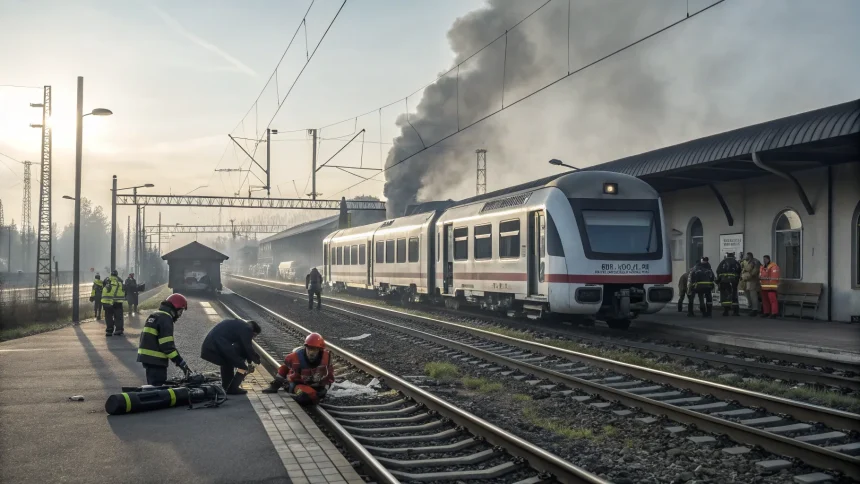
A deadly commuter train crash near Barcelona late Tuesday led authorities to shut down rail service across Catalonia on Wednesday, disrupting daily life for thousands. Emergency teams confirmed at least one death and dozens of injuries as recovery and investigation efforts continued at the site.
“Commuter rail service in Spain’s northeastern Catalonia region was suspended Wednesday after a Barcelona commuter train crashed the night before,” Spanish authorities said.
The suspension affects the broader Barcelona metropolitan area, where many residents depend on frequent local trains to reach work and school. Authorities said crews remained on site overnight to clear damaged cars, survey track conditions, and assess risks to neighboring lines.
“At least one person died in the Barcelona-area crash, and 37 others were injured as crews worked at …”
What happened and why it matters
Officials did not immediately release the cause of the crash. Investigators will examine train data recorders, signaling logs, and track maintenance records. Heavy equipment is needed to move damaged carriages, which has slowed efforts to restore service. Safety checks on adjacent track sections also take time, extending the outage.
Commuter rail is the spine of daily transport in the region. A full-day suspension adds strain to buses, roads, and metro lines. It also raises fresh questions about rail upkeep, traffic management, and emergency response in dense corridors.
Impact on commuters and the region
Morning travel patterns shifted in minutes as riders scrambled for alternatives. Buses reported heavy loads and longer waits. Drivers faced congestion on key ring roads. Employers encouraged remote work where possible.
- Trains halted across Catalonia interrupted routine trips to schools, hospitals, and offices.
- Emergency services coordinated detours and set up aid stations near the crash area.
- Authorities advised travelers to stagger journeys and avoid peak times.
Local officials urged patience while rescue crews stabilized the scene. The priority remained recovery and care for the injured, followed by safe removal of damaged equipment and a transparent inquiry.
Safety review and investigation steps
Rail crash investigations in Europe typically follow a set process. Inspectors secure the site, gather witness statements, and collect onboard data. They test signaling systems and look for track defects. Maintenance schedules, driver rosters, and communication records are reviewed to map out the minutes before impact.
If a technical fault is suspected, inspectors test similar equipment across the route. If human error is possible, training and staffing plans face scrutiny. The aim is to identify root causes and recommend fixes that can be applied across the network.
How this fits into broader rail safety trends
Spain’s passenger rail system is widely used, with commuter lines carrying large volumes in urban hubs. While serious crashes are uncommon, even single incidents can expose gaps in infrastructure or operations. Past European cases have led to upgrades in signaling, stricter maintenance checks, and better emergency coordination across agencies.
Experts often point to the value of layered protections. These include automatic train control, speed enforcement, and real-time monitoring of track assets. They also stress clear communication between dispatchers, drivers, and first responders when incidents occur.
What to watch next
Officials will first aim to reopen unaffected sections with temporary speed limits and additional checks. Shuttle bus bridges may fill gaps while damaged track is repaired. A phased restart is likely, with priority given to high-demand routes serving hospitals, schools, and key job centers.
Authorities are expected to release preliminary findings on the crash cause after the site examination and data downloads. Those findings could trigger targeted repairs, new operating rules, or tighter inspections across similar lines. Commuters should monitor official alerts for route-by-route updates and adjusted timetables.
The crash is a stark reminder that rail reliability depends on constant vigilance. The coming days will bring answers about what went wrong and how quickly service can return. For now, families mourn a life lost, dozens recover from injuries, and a region waits for a safe restart.